
Digital Watchdog V6563WTIR vs Digital Watchdog VA583WTIR: Specification Comparison
Both the Digital Watchdog DWC-V6563WTIR and DWC-VA583WTIR are 5MP outdoor analog-over-coax cameras sharing the same 1/2.8" CMOS sensor and vari-focal 2.7–13.5mm lens range. The V6563WTIR is a vandal dome with 100-foot Smart IR, while the VA583WTIR is a turret-style PTZ with Star-Light technology and 80-foot Smart IR. Both target HD-over-coax installations and carry identical resolution, temperature range, and warranty terms, making them genuine cross-shop candidates for perimeter and general surveillance deployments.

In This Guide
How do the imaging specs compare?
Both cameras share a 5MP 1/2.8" progressive-scan CMOS sensor resolving 2608×1960 pixels and identical minimum illumination figures: 0.08 lux in color and 0.0 lux in B/W. Both feature True WDR at 120dB, Smart DNR 3D digital noise reduction, a shutter range of 1/30–1/30000, Sense-Up gain from Off to ×32, and a gamma of 0.45. WDR, BLC, de-fog, motion detection, 24 privacy zones, mirror/flip, and auto white balance are present on both models.
The key imaging differentiators are IR range and field of view. The V6563WTIR delivers a 100-foot Smart IR range versus the VA583WTIR's 80-foot range—a 25% reach advantage. The V6563WTIR also covers a wider horizontal field of view at its widest setting (102° vs. 85°) and a wider vertical field of view (73.9° vs. 62°), giving it more scene coverage at the wide end. The VA583WTIR adds motorized zoom with auto-focus as a specified lens feature; the V6563WTIR lists P-iris only, with auto-focus not explicitly stated in its provided specs. The VA583WTIR is marketed under the Star-Light Technology feature designation; the V6563WTIR carries the Cleanview feature designation.
What about installation and environment?
Both cameras are rated IP66 for dust and water ingress and IK10 for impact resistance, constructed from aluminum die-casting, and rated for operation from -4°F to 122°F (-20°C to 50°C) at 10–90% non-condensing humidity. Both accept 24V AC and 12V DC power inputs and are specified as PoE-capable. The V6563WTIR is listed at PoE Class 2 (maximum draw 5.3W); the VA583WTIR specifies a higher maximum draw of 6.27W, though its PoE class is not stated in the provided specs.
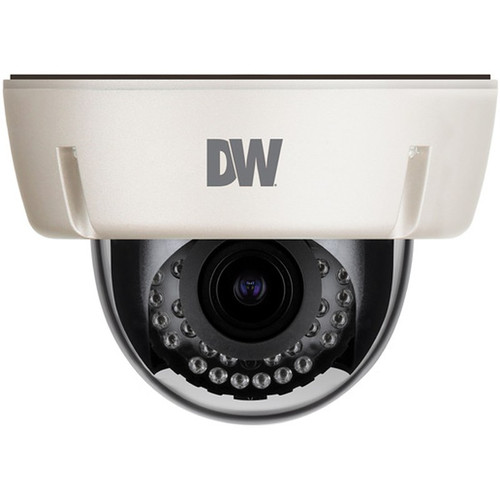
Form factor and footprint differ meaningfully. The V6563WTIR is a vandal dome measuring 5.7" × 4.26" (145 × 108.3 mm) and weighing 1.98 lbs (0.9 kg). The VA583WTIR is a turret/ball-turret design measuring 4.92" × 4.8" (125 × 122 mm) and weighing 1.58 lbs (0.72 kg)—lighter and slightly more compact. The V6563WTIR supports wall, ceiling, corner, and rack mounting per provided specs; the VA583WTIR lists wall, ceiling, and rack. Both note mounting accessories are optional and sold separately. The V6563WTIR includes a CVBS test video output; this feature is not specified for the VA583WTIR. The V6563WTIR also includes 1 alarm output I/O; the VA583WTIR does not list any alarm I/O in the provided specs.
Which fits your VMS and analytics better?
Both cameras operate over HD-over-coax signal technologies—CVBS, 960H, HD-Analog, HD-CVI, and HD-TVI—making them compatible with the same class of analog and hybrid DVR/XVR systems. Neither camera's provided specifications mention ONVIF compliance, IP/network connectivity, edge storage (SD card), onboard audio input or output, or specific VMS certifications. Buyers requiring IP network integration, ONVIF conformance, or edge recording should verify these capabilities directly with Digital Watchdog, as they are absent from the supplied spec data for both models.
For camera control, the V6563WTIR lists Pelco C, UTC, and UTP built-in protocols. The VA583WTIR lists Pelco C and UTC, with UTP not specified. The V6563WTIR's inclusion of a 1-alarm output provides a basic integration point for external devices (lights, buzzers, access control) that the VA583WTIR does not list. Analytics beyond motion detection—such as line crossing, intrusion detection, or face detection—are not specified for either model in the provided data.
Which should you choose: the V6563WTIR or the VA583WTIR?
Our take: The V6563WTIR is the stronger choice when IR reach, wider scene coverage, and alarm integration are the primary requirements. It outreaches the VA583WTIR by 20 feet of Smart IR (100 ft vs. 80 ft) and provides a significantly wider field of view at the wide end (102° HFOV vs. 85°), which translates to more scene area captured without repositioning. It also includes a listed 1-alarm output that the VA583WTIR does not specify, useful for triggering external devices. The VA583WTIR holds advantages in form factor—it is lighter (1.58 lbs vs. 1.98 lbs) and smaller, and it explicitly specifies motorized zoom with auto-focus, which simplifies remote lens adjustment in the field. Its Star-Light feature designation may indicate low-light tuning optimizations, though both cameras share identical lux ratings. Where auto-focus on motorized zoom is operationally critical or where a lower-profile turret housing is required, the VA583WTIR is the more appropriate selection.
Side-by-Side Comparison
Spec-for-spec, from manufacturer data.
| Specification | Digital Watchdog V6563WTIR | Digital Watchdog VA583WTIR |
|---|---|---|
| Product Type / Form Factor | Vandal Dome | Turret (Vandal Ball Turret) |
| Resolution | 5MP | 5MP |
| Active Pixels | 2608 × 1960 | 2608 × 1960 |
| Image Sensor | 5MP 1/2.8" CMOS | 5MP 1/2.8" CMOS |
| Lens / Focal Length | Vari-focal 2.7–13.5mm, P-iris | Motorized vari-focal 2.7–13.5mm, P-iris, auto-focus |
| Horizontal FOV | 102° ~ 31.4° | 85° ~ 32° |
| Min Illumination (Color / B/W) | 0.08 lux / 0.0 lux | 0.08 lux / 0.0 lux |
| IR Range | 100 ft Smart IR™ | 80 ft Smart IR™ |
| Wide Dynamic Range | True WDR 120dB | True WDR 120dB |
| Signal Technology | CVBS, 960H, HD-Analog, HD-CVI, HD-TVI | CVBS, 960H, HD-Analog, HD-CVI, HD-TVI |
| Camera Control Protocols | Pelco C, UTC, UTP | Pelco C, UTC |
| Alarm I/O | 1 output | — |
| IP Rating | IP66 | IP66 |
| Vandal / Impact Rating | IK10 | IK10 |
| Operating Temperature | -4°F ~ 122°F (-20°C ~ 50°C) | -4°F ~ 122°F (-20°C ~ 50°C) |
| Power Input | 24V AC / 12V DC / PoE Class 2 | 24V AC / 12V DC / PoE (class not specified) |
| Max Power Draw | 5.3W | 6.27W |
| Dimensions (H × W) | 5.7" × 4.26" (145 × 108.3 mm) | 4.92" × 4.8" (125 × 122 mm) |
| Weight | 1.98 lbs (0.9 kg) | 1.58 lbs (0.72 kg) |
| Housing Material | Aluminum die-casting, Ivory | Aluminum die-casting, White |
| Warranty | 5 Year | 5 Year |
Frequently Asked Questions
Which should you choose: the V6563WTIR or the VA583WTIR?
The V6563WTIR is the stronger choice when IR reach, wider scene coverage, and alarm integration are the primary requirements. It outreaches the VA583WTIR by 20 feet of Smart IR (100 ft vs. 80 ft) and provides a significantly wider field of view at the wide end (102° HFOV vs. 85°), which translates to more scene area captured without repositioning. It also includes a listed 1-alarm output that the VA583WTIR does not specify, useful for triggering external devices. The VA583WTIR holds advantages in form factor—it is lighter (1.58 lbs vs. 1.98 lbs) and smaller, and it explicitly specifies motorized zoom with auto-focus, which simplifies remote lens adjustment in the field. Its Star-Light feature designation may indicate low-light tuning optimizations, though both cameras share identical lux ratings. Where auto-focus on motorized zoom is operationally critical or where a lower-profile turret housing is required, the VA583WTIR is the more appropriate selection.
Is the V6563WTIR or VA583WTIR better for low light?
Both cameras specify identical minimum scene illumination: 0.08 lux in color and 0.0 lux in B/W, along with the same Sense-Up range (Off to ×32) and True WDR at 120dB. The VA583WTIR carries the Star-Light Technology feature label, while the V6563WTIR carries Cleanview, but the provided specifications do not show a numeric low-light advantage for either model over the other.
Which camera has longer night vision range?
The V6563WTIR has the longer Smart IR range at 100 feet, compared to the VA583WTIR's 80-foot Smart IR range—a 25% reach difference. For perimeter coverage or longer corridors where IR distance matters, the V6563WTIR has a documented specification advantage.
Can either camera be used with an IP or network VMS, and do they support PoE switches?
Both cameras transmit over HD-over-coax signal formats (HD-CVI, HD-TVI, HD-Analog, 960H, CVBS) and are designed for analog/hybrid DVR or XVR systems, not IP networks. Neither ONVIF conformance nor IP connectivity is specified for either model in the provided data. Both are listed as PoE-capable, but this likely refers to power delivery over coax (PoC) rather than IEEE 802.3 PoE—buyers should confirm compatibility with their specific power sourcing equipment with Digital Watchdog before purchase.
Get a Second Opinion on Your Camera Choice
Share your site layout, coverage goals, and budget. Our team will validate the camera selection, flag anything we would change, and recommend products that match the use case.