
Digital Watchdog V4283WD vs Digital Watchdog V4283WTIR: Specification Comparison
The Digital Watchdog DWC-V4283WD and DWC-V4283WTIR are both 2MP (1080p) analog-over-coax vandal dome cameras sharing the same 1/3" CMOS sensor, motorized vari-focal lens, and aluminum Snapit™ housing. Both target outdoor perimeter and general surveillance applications where HD-Analog, HD-CVI, HD-TVI, or CVBS signal compatibility is required. The comparison centers on IR night-vision implementation, minimum scene illumination, a few specification deltas, and which model better fits a given installation scenario.
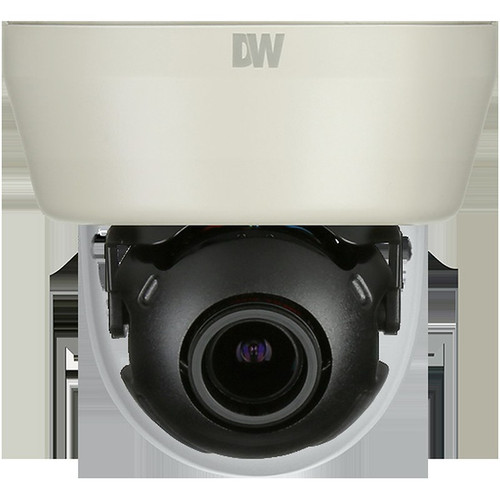
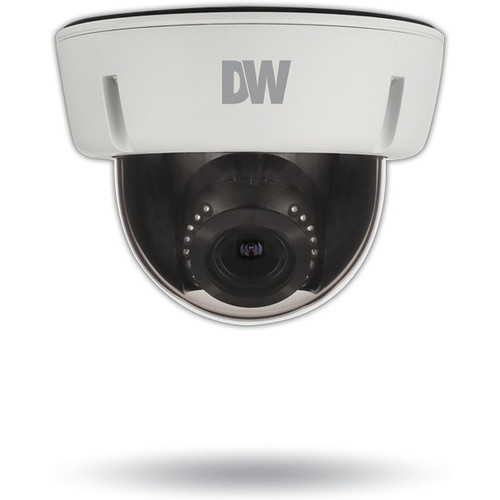
In This Guide
How do the imaging specs compare?
Both cameras share identical core imaging hardware: a 2.1MP/1080p 1/3" progressive-scan CMOS sensor with 1944 × 1092 active pixels, a motorized vari-focal 2.8–12mm lens with auto-focus and P-iris, a horizontal field of view of 91° to 28°, and True WDR rated at 100dB. Star-Light Sense-Up (x2–x32) and Smart DNR™ 3D noise reduction are present on both. The minimum color illumination is 0.03 lux on both models. The DWC-V4283WTIR specifies an additional 0.0 lux (B/W) floor, confirming it reaches complete darkness in monochrome mode; the DWC-V4283WD's spec sheet does not publish a B/W minimum lux figure.
The most significant imaging delta is IR range. The DWC-V4283WTIR specifies a 100-foot (approximately 30m) Smart IR™ range. The DWC-V4283WD's primary spec table does not list an IR distance; a supplemental field notes 'Up to 10m (typical),' which is substantially shorter if accurate. Both models support the same shutter range (1/30–1/30,000s), gamma adjustment (0.45–0.75), and identical WDR, BLC, DRC, de-fog, and motion-detection feature sets.
What about installation and environment?
Both cameras carry identical environmental ratings: IP68 ingress protection, IK10 vandal resistance, and an operating temperature range of -40°F to 122°F (-40°C to 50°C) with 10–90% non-condensing humidity. Housing material is aluminum die-casting with Snapit™ design on both, and physical dimensions and weight are the same: 139 × 121.8mm and 2.05 lbs (0.93 kg).
Power requirements are consistent across both: 24V AC and 12V DC dual-voltage input with a 2.3W maximum draw. The DWC-V4283WD's spec data includes a PoE Class 2 notation and references PoE (802.3af); the DWC-V4283WTIR's spec sheet does not explicitly list a PoE class. Both support cable type AWG #18. The DWC-V4283WTIR lists Wall, Ceiling, and Rack mount types; the DWC-V4283WD lists Wall and Rack only, though both note mounting accessories are sold separately.
Which fits your VMS and analytics better?
The DWC-V4283WD's spec data includes ONVIF compliance, two-way audio with a built-in microphone, H.264 and MJPEG compression, and microSD local storage support. The DWC-V4283WTIR's provided specifications do not list ONVIF conformance, audio capability, video compression formats, or edge storage. Buyers requiring any of these integration features should verify the DWC-V4283WTIR datasheet directly before specifying it. Camera control on both models uses Pelco C, Pelco D, and UTP built-in protocols. Both list 16 programmable privacy masks and identical analytics including motion detection and de-fog.
Which should you choose: the V4283WD or the V4283WTIR?
Our take: The DWC-V4283WTIR is the stronger choice when IR night-vision range is the primary criterion: its spec sheet explicitly rates Smart IR™ at 100 feet versus the DWC-V4283WD's supplemental notation of only 10m typical—a roughly 3× advantage in illumination distance. It also publishes a 0.0 lux B/W minimum illumination figure the V4283WD does not. Conversely, the DWC-V4283WD is the documented choice for IP-based VMS integration: it explicitly lists ONVIF, H.264/MJPEG compression, two-way audio with built-in mic, and microSD edge storage—none of which appear in the V4283WTIR's provided specifications. Both are physically identical and environmentally rated IP68/IK10 at -40°F to 122°F. Specify the V4283WD for network-integrated, analytics-driven deployments requiring audio and edge recording; specify the V4283WTIR for long-range coax IR coverage where VMS integration details will be confirmed against the full datasheet.
Side-by-Side Comparison
Spec-for-spec, from manufacturer data.
| Specification | Digital Watchdog V4283WD | Digital Watchdog V4283WTIR |
|---|---|---|
| Resolution | 2.1MP / 1080p | 2.1MP / 1080p |
| Active Pixels | 1944 × 1092 | 1944 × 1092 |
| Image Sensor | 1/3" CMOS, Progressive Scan | 1/3" CMOS, Progressive Scan |
| Focal Length (Lens) | 2.8mm – 12mm motorized vari-focal, auto-focus, P-iris | 2.8mm – 12mm motorized vari-focal, auto-focus, P-iris |
| HFOV | 91° – 28° | 91° – 28° |
| Min. Illumination (Color) | 0.03 lux | 0.03 lux |
| Min. Illumination (B/W) | Not specified | 0.0 lux |
| IR Range | Up to 10m typical (supplemental note only) | 100 ft Smart IR™ |
| WDR | True WDR 100dB | True WDR 100dB |
| Star-Light Sense-Up | x2 – x32 | x2 – x32 |
| Signal Technology | CVBS, 960H, HD-Analog, HD-CVI, HD-TVI, HD-Coax | CVBS, 960H, HD-Analog, HD-CVI, HD-TVI, Universal HD over Coax |
| Video Compression | H.264, MJPEG | — |
| ONVIF | Yes | — |
| Audio | Two-way; built-in microphone | — |
| Edge Storage | microSD | — |
| IP Rating | IP68 | IP68 |
| Vandal / Impact Rating | IK10 | IK10 |
| Operating Temperature | -40°F to 122°F (-40°C to 50°C) | -40°F to 122°F (-40°C to 50°C) |
| Power Input | 24V AC / 12V DC, 2.3W max | 24V AC / 12V DC, 2.3W max |
| PoE | Class 2 (802.3af) | — |
| Dimensions | 139 × 121.8mm (5.47" × 4.79") | 139 × 121.8mm (5.47" × 4.79") |
| Weight | 2.05 lbs (0.93 kg) | 2.05 lbs (0.93 kg) |
| Warranty | 5 Year | 5 Year |
Frequently Asked Questions
Which should you choose: the V4283WD or the V4283WTIR?
The DWC-V4283WTIR is the stronger choice when IR night-vision range is the primary criterion: its spec sheet explicitly rates Smart IR™ at 100 feet versus the DWC-V4283WD's supplemental notation of only 10m typical—a roughly 3× advantage in illumination distance. It also publishes a 0.0 lux B/W minimum illumination figure the V4283WD does not. Conversely, the DWC-V4283WD is the documented choice for IP-based VMS integration: it explicitly lists ONVIF, H.264/MJPEG compression, two-way audio with built-in mic, and microSD edge storage—none of which appear in the V4283WTIR's provided specifications. Both are physically identical and environmentally rated IP68/IK10 at -40°F to 122°F. Specify the V4283WD for network-integrated, analytics-driven deployments requiring audio and edge recording; specify the V4283WTIR for long-range coax IR coverage where VMS integration details will be confirmed against the full datasheet.
Is the V4283WD or V4283WTIR better for low-light performance?
Both share a 0.03 lux color minimum and x2–x32 Star-Light Sense-Up. The V4283WTIR additionally specifies 0.0 lux in B/W mode and a 100-foot Smart IR range; the V4283WD lists only 'up to 10m (typical)' IR range in supplemental data and does not publish a B/W lux floor. For the longest IR throw and confirmed total-darkness B/W operation, the V4283WTIR has the documented advantage.
Does either camera support ONVIF for use with a third-party VMS?
ONVIF compliance is listed in the DWC-V4283WD's specifications. The DWC-V4283WTIR's provided spec data does not include an ONVIF listing. Verify the V4283WTIR's full datasheet before integrating it with an ONVIF-dependent VMS platform.
Are there differences in how the two cameras are powered?
Both accept 24V AC and 12V DC with a 2.3W maximum draw. The V4283WD explicitly states PoE Class 2 (802.3af); the V4283WTIR's spec sheet does not list a PoE class. If PoE is the intended power source, the V4283WD has the confirmed specification; the V4283WTIR should be verified against its datasheet before assuming PoE compatibility.
Get a Second Opinion on Your Camera Choice
Share your site layout, coverage goals, and budget. Our team will validate the camera selection, flag anything we would change, and recommend products that match the use case.