
Digital Watchdog DWC-MF2Wi4TW vs Digital Watchdog V4283WD: Specification Comparison
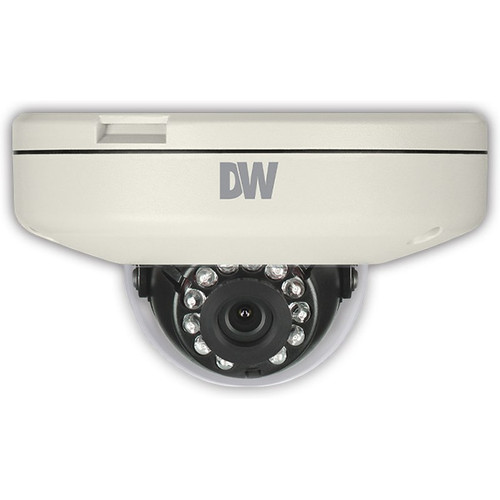
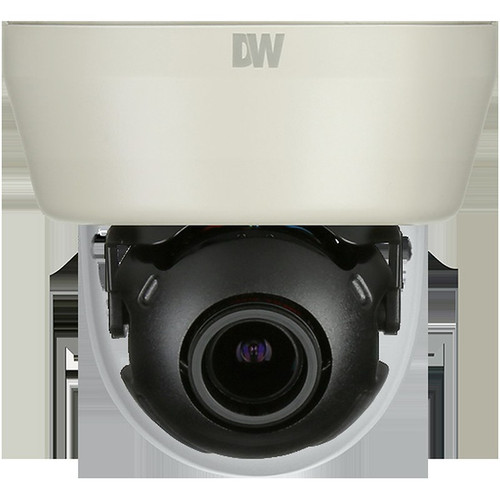
Both the Digital Watchdog DWC-MF2Wi4TW and DWC-V4283WD are 2MP/1080p outdoor vandal dome cameras sharing IK10 impact ratings and aluminum die-cast housings. However, they target fundamentally different infrastructure: the MF2Wi4TW is an IP/network camera powered by PoE with H.264/H.265 streaming, while the V4283WD is an analog/HD-Coax camera supporting CVBS, HD-TVI, HD-CVI, and 960H signal formats. This comparison examines how their imaging, installation, and integration specs differ for a buyer evaluating each platform.
In This Guide
How do the imaging specs compare?
Both cameras use a 2.1MP/1080p CMOS sensor with auto day/night switching, Smart DNR 3D noise reduction, True WDR, de-fog, and 16 programmable privacy masks. The MF2Wi4TW uses a 1/2.8" sensor and offers fixed lenses at 2.8mm (111° HFOV) or 4.0mm (86° HFOV) with a minimum color illumination of 0.09 lux and 0.0 lux in B/W mode, backed by 50-foot Smart IR. The V4283WD uses a smaller 1/3" sensor with a motorized varifocal 2.8–12mm lens (91° to 28° HFOV, 46.8° to 19.6° VFOV) featuring auto focus and P-iris control; its minimum color illumination is 0.03 lux, achieved partly through a Star-Light Sense-Up feature (x2–x32). The IR range for the V4283WD is specified as up to 10m (approximately 33 feet), compared to 50 feet on the MF2Wi4TW.
WDR is rated at 120dB on the MF2Wi4TW versus 100dB on the V4283WD, a meaningful difference for scenes with simultaneous bright and dark areas. The V4283WD adds DRC (Dynamic Range Compression) and adjustable gamma (0.45–0.75) not listed for the MF2Wi4TW. The MF2Wi4TW supports slow shutter speeds (up to x7.5) and a shutter range of 8–1/50000s, while the V4283WD covers 1/30–1/30000s with an Anti-Flicker mode. The MF2Wi4TW's active pixel array is listed as 4x 1944(H)×1092(V), whereas the V4283WD lists 1944(H)×1092(V) for a single channel — consistent with its single-output analog design.
What about installation and environment?
The MF2Wi4TW carries an IP66 rating (dust-tight, protected against powerful water jets) and operates from -4°F to 122°F (-20°C to 50°C). It is powered exclusively via PoE (Class 2, max 4.0W per spec; 5.5W per datasheet field) — no separate power adapter is included. Its compact footprint measures 4.92" × 1.88" (125×48mm) and weighs 0.88 lbs (0.4 kg). The V4283WD carries the higher IP68 rating (dust-tight, continuous submersion protection) and has a wider operating temperature range of -40°F to 122°F (-40°C to 50°C), making it more suitable for extreme cold environments. It is powered by 24V AC (max 2.3W); PoE Class 2 is listed as a spec field but the primary listed power requirement is 24V AC — installers should verify the actual power input against the datasheet. The V4283WD is physically larger at 5.47" × 4.79" (139×121.8mm) and weighs 2.05 lbs (0.93 kg). Both cameras use IK10 vandal ratings, aluminum die-casting, and support #18 AWG cabling. The V4283WD features Snapit™ housing and lists Pelco C/D and UTP built-in camera control protocols.
Which fits your VMS and analytics better?
The MF2Wi4TW is a network IP camera transmitting H.264, H.265, and MJPEG over IPv4 with dual-stream capability at up to 30fps across all resolutions (QFHD through CIF). It is ONVIF-compatible and lists native VMS support for DW Spectrum, ExacqVision, and Milestone Systems. It includes an extensive onboard IVA analytics suite (intrusion, line crossing, counting line, loitering, enter/exit, tamper) with an IVA+ tier adding logical rules, object removed, tailgating, direction, stopped, appear/disappear, and object left. Audio is supported via G.711 (1 audio in, 1 audio out), and there is 1 alarm input and 1 alarm output. Edge storage supports Micro SD/SDHC/SDXC up to 1TB. The web viewer supports Chrome, Edge, Firefox, and Safari on Windows, Mac, and Linux.
The V4283WD is a multi-format analog/HD-Coax camera (CVBS, 960H, HD-Analog, HD-CVI, HD-TVI, HD-Coax) and does not list IP network streaming, ONVIF, or VMS integration in its provided specifications. ONVIF and H.264/MJPEG compression are listed in supplemental spec fields, and audio (two-way, built-in mic) is also noted there — however, these fields conflict with the primary spec listing of HD-Coax signal technology and 24V AC power, so buyers should verify against the manufacturer datasheet before assuming full IP capability. No edge analytics or onboard storage (microSD) are confirmed in the primary spec data for the V4283WD. The V4283WD's alarm I/O is listed as 1 output only (no input listed).
Which should you choose: the DWC-MF2Wi4TW or the V4283WD?
Our take: The DWC-MF2Wi4TW is the stronger choice when deploying a modern IP/PoE network infrastructure with VMS integration and onboard analytics. Its 120dB True WDR outperforms the V4283WD's 100dB, and its 50-foot Smart IR range is substantially longer than the V4283WD's specified 10m (~33 feet). As a PoE Class 2 device it requires only a single Cat5e/6 cable run versus the V4283WD's 24V AC power requirement and coax signal cabling. The MF2Wi4TW also provides confirmed dual-stream H.264/H.265 IP output, ONVIF compliance, full IVA/IVA+ analytics, 1TB edge storage, and bidirectional audio — none of which are unambiguously confirmed for the V4283WD in the provided primary specs. The V4283WD holds advantages in IP68 submersion resistance (vs IP66), a wider cold-temperature rating (-40°C vs -20°C), and a motorized varifocal 2.8–12mm lens enabling remote zoom adjustment — making it preferable for harsh-cold or analog-coax legacy deployments where remote lens tuning is required.
Side-by-Side Comparison
Spec-for-spec, from manufacturer data.
| Specification | Digital Watchdog DWC-MF2Wi4TW | Digital Watchdog V4283WD |
|---|---|---|
| Resolution | 2.1MP / 1080p | 2.1MP / 1080p |
| Image Sensor | 1/2.8" CMOS | 1/3" CMOS |
| Lens / Focal Length | Fixed: 2.8mm or 4.0mm | Motorized varifocal: 2.8–12mm |
| Horizontal FOV | 111° (2.8mm) / 86° (4.0mm) | 91° – 28° |
| Min. Illumination (Color) | 0.09 lux | 0.03 lux |
| Min. Illumination (B/W) | 0.0 lux | Not specified |
| IR Range | 50 feet (Smart IR™) | Up to 10m (~33 ft) |
| Wide Dynamic Range | True WDR 120dB | True WDR 100dB |
| Video Compression | H.264 / H.265 / MJPEG | H.264 / MJPEG (primary spec: HD-Coax analog) |
| IP Rating | IP66 | IP68 |
| IK / Impact Rating | IK10 | IK10 |
| Operating Temperature | -4°F to 122°F (-20°C to 50°C) | -40°F to 122°F (-40°C to 50°C) |
| Power Input | PoE (Class 2, max 4.0W) | 24V AC (max 2.3W; PoE listed in supplemental fields — verify) |
| Edge Storage | Micro SD/SDHC/SDXC up to 1TB | microSD (listed in supplemental fields — verify) |
| Audio | G.711; 1 in / 1 out | Two-way / built-in mic (supplemental fields — verify) |
| Alarm I/O | 1 input / 1 output | 1 output only |
| Onboard Analytics | IVA + IVA+ (full suite) | Not listed in primary specs |
| ONVIF | Yes | Listed in supplemental fields — verify against datasheet |
| Dimensions (H×W) | 4.92" × 1.88" (125×48 mm) | 5.47" × 4.79" (139×121.8 mm) |
| Weight | 0.88 lbs (0.4 kg) | 2.05 lbs (0.93 kg) |
| Warranty | 5 Year | 5 Year |
Frequently Asked Questions
Which should you choose: the DWC-MF2Wi4TW or the V4283WD?
The DWC-MF2Wi4TW is the stronger choice when deploying a modern IP/PoE network infrastructure with VMS integration and onboard analytics. Its 120dB True WDR outperforms the V4283WD's 100dB, and its 50-foot Smart IR range is substantially longer than the V4283WD's specified 10m (~33 feet). As a PoE Class 2 device it requires only a single Cat5e/6 cable run versus the V4283WD's 24V AC power requirement and coax signal cabling. The MF2Wi4TW also provides confirmed dual-stream H.264/H.265 IP output, ONVIF compliance, full IVA/IVA+ analytics, 1TB edge storage, and bidirectional audio — none of which are unambiguously confirmed for the V4283WD in the provided primary specs. The V4283WD holds advantages in IP68 submersion resistance (vs IP66), a wider cold-temperature rating (-40°C vs -20°C), and a motorized varifocal 2.8–12mm lens enabling remote zoom adjustment — making it preferable for harsh-cold or analog-coax legacy deployments where remote lens tuning is required.
Is the DWC-MF2Wi4TW or DWC-V4283WD better for low-light performance?
The V4283WD reaches 0.03 lux in color mode with Star-Light Sense-Up (x2–x32), compared to 0.09 lux color on the MF2Wi4TW. However, the MF2Wi4TW adds 0.0 lux B/W mode via its 50-foot Smart IR, which extends further than the V4283WD's specified 10m IR range. For near-total darkness at longer distances, the MF2Wi4TW's IR reach is the spec-documented advantage; for color detail in very dim ambient light at closer ranges, the V4283WD's 0.03 lux sensor sensitivity and Sense-Up are the relevant numbers.
Can the DWC-V4283WD work on an IP/PoE network like the DWC-MF2Wi4TW?
Based on the primary specifications provided, the V4283WD is listed as an analog/HD-Coax camera (CVBS, 960H, HD-CVI, HD-TVI) requiring 24V AC power. Supplemental spec fields list ONVIF, H.264/MJPEG, and PoE (802.3af), which conflict with the primary signal and power specs. Buyers should verify directly against the manufacturer's datasheet before assuming IP network compatibility. The MF2Wi4TW is unambiguously an IP camera with confirmed PoE, ONVIF, and dual-stream H.264/H.265 support.
Which camera handles a wider temperature range and tougher weather exposure?
The V4283WD is rated to -40°F (-40°C) at the cold end versus -4°F (-20°C) for the MF2Wi4TW — a significant advantage in extreme cold climates. For water and dust ingress, the V4283WD carries IP68 (continuous submersion) versus the MF2Wi4TW's IP66 (powerful water jets). Both are IK10 vandal-rated aluminum domes. For installations in sub-freezing or potentially submerged environments, the V4283WD's environmental ratings are superior per the provided specifications.
Get a Second Opinion on Your Camera Choice
Share your site layout, coverage goals, and budget. Our team will validate the camera selection, flag anything we would change, and recommend products that match the use case.