
Camden CV-WTX4H-H26SE vs Camden CV-WTX2-H26: Specification Comparison
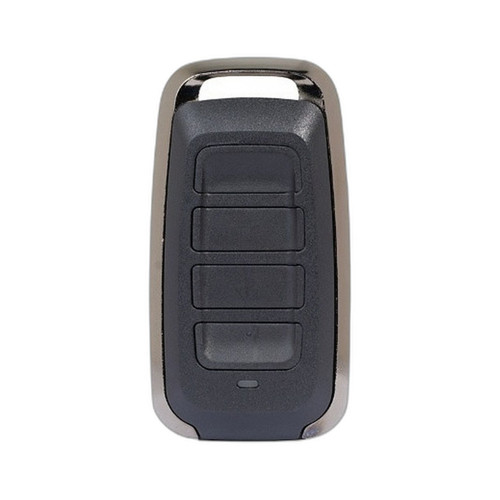
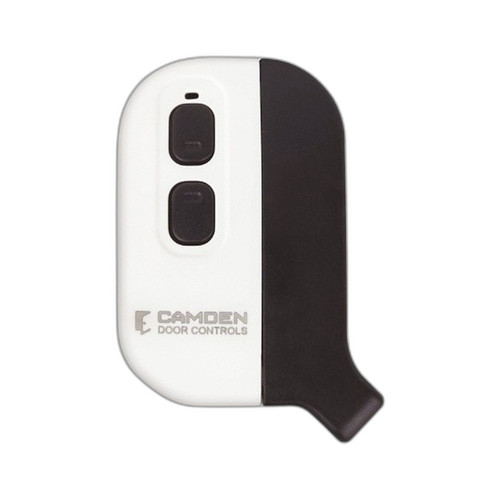
The Camden CV-WTX4H-H26SE and CV-WTX2-H26 are both multi-channel Wiegand proximity readers targeting commercial access control installations where a single reader module must serve more than one door. Both operate on 16 VDC, output via Wiegand and OSDP, and read 125 kHz HID proximity credentials. The primary decision axes are channel count and door capacity, credential breadth, and operating-voltage flexibility — the three dimensions that most directly affect panel selection, card-stock compatibility, and installation economics in multi-door clusters.
In This Guide
- Which reader handles more doors per unit, and how does that affect panel port and wiring economics?
- Which credentials does each reader support, and does either preserve existing card or key-tag stock better?
- What are the operating-voltage requirements and communication protocol options for each model?
- Which should you choose: the CV-WTX4H-H26SE or the CV-WTX2-H26?
- Side-by-Side Specs
- FAQ
Which reader handles more doors per unit, and how does that affect panel port and wiring economics?
The CV-WTX4H-H26SE is a four-channel device, meaning a single unit presents four independent Wiegand or OSDP outputs to the access control panel — one per door. In a four-door cluster this eliminates the need for a second reader module entirely, halving the number of power drops, data cables, and panel port pairs consumed.
The CV-WTX2-H26 is a two-channel device. It covers two doors per unit, which is a meaningful reduction in hardware count versus single-door readers but will require two modules to match the CV-WTX4H-H26SE's four-door coverage. For smaller deployments of exactly two doors, the CV-WTX2-H26 avoids over-provisioning unused channels.
Which credentials does each reader support, and does either preserve existing card or key-tag stock better?
The CV-WTX4H-H26SE reads 125 kHz HID proximity cards and HID iCLASS SE smart cards. The iCLASS SE support adds a higher-security, encrypted smart-card tier on top of the legacy proximity layer, making this reader viable for sites migrating from 125 kHz to contactless smart-card credentials without swapping hardware.
The CV-WTX2-H26 reads HID 125 kHz proximity and AWID 34-bit credentials. It does not list iCLASS SE support in the provided specifications. The AWID 34-bit compatibility is a distinct advantage where existing AWID key tags or cards are already deployed — a credential type not covered by the CV-WTX4H-H26SE per its published spec.
What are the operating-voltage requirements and communication protocol options for each model?
The CV-WTX4H-H26SE specifies a single operating voltage of 16 VDC. Its dual-protocol output (Wiegand and OSDP) supports both legacy panels and modern OSDP-compliant controllers, enabling phased panel upgrades without reader replacement.
The CV-WTX2-H26 specifies a 5–16 VDC operating range, providing meaningful flexibility to power the unit from lower-voltage sources (5 VDC USB-class supplies, some PoE-derived rails) without a dedicated 16 VDC supply. Like the CV-WTX4H-H26SE, it supports both Wiegand and OSDP outputs. Its wider voltage window can simplify power planning in retrofit environments where a regulated 16 VDC rail is not already present.
Which should you choose: the CV-WTX4H-H26SE or the CV-WTX2-H26?
Our take: The CV-WTX4H-H26SE is the stronger choice when a single installation point must serve four doors and the site is deploying or migrating to HID iCLASS SE smart-card credentials. Its four-channel architecture delivers twice the door coverage of the CV-WTX2-H26 per module, cutting cable runs and panel port consumption in half for four-door clusters. It adds HID iCLASS SE smart-card reading on top of 125 kHz proximity, a capability absent from the CV-WTX2-H26's published spec. Conversely, the CV-WTX2-H26 is the better fit for two-door applications, sites carrying AWID 34-bit card or key-tag stock (not supported by the CV-WTX4H-H26SE per spec), or installations where supply-voltage flexibility (5–16 VDC versus a fixed 16 VDC) eases power infrastructure constraints. Both carry a three-year warranty and support Wiegand plus OSDP output.
Side-by-Side Comparison
Spec-for-spec, from manufacturer data.
| Specification | Camden CV-WTX4H-H26SE | Camden CV-WTX2-H26 |
|---|---|---|
| Product Type | Four-Channel Wiegand Proximity Reader | Two-Channel Wiegand Proximity Reader |
| Channels / Door Capacity | 4-channel (four doors) | 2-channel (two doors) |
| Communication Protocols | Wiegand and OSDP | Wiegand and OSDP |
| HID 125 kHz Proximity | Yes | Yes |
| HID iCLASS SE Smart Card | Yes | Not listed in spec |
| AWID 34-bit | Not listed in spec | Yes |
| Legacy Proximity Card Support | Yes | Yes |
| Operating Voltage | 16 VDC | 5–16 VDC |
| Mount Type | Wall; Rack | Wall; Rack |
| Reader Type | Proximity | Proximity |
| Compatible With | Multi-door | Door |
| Warranty | 3 Year(s) | 3 Year(s) |
| Datasheet Available | Yes (CV-WTX4H-H26SE.pdf) | Yes (CV-WTX2-H26.pdf) |
| SKU | CV-WTX4H-H26SE | CV-WTX2-H26 |
Frequently Asked Questions
Which should you choose: the CV-WTX4H-H26SE or the CV-WTX2-H26?
The CV-WTX4H-H26SE is the stronger choice when a single installation point must serve four doors and the site is deploying or migrating to HID iCLASS SE smart-card credentials. Its four-channel architecture delivers twice the door coverage of the CV-WTX2-H26 per module, cutting cable runs and panel port consumption in half for four-door clusters. It adds HID iCLASS SE smart-card reading on top of 125 kHz proximity, a capability absent from the CV-WTX2-H26's published spec. Conversely, the CV-WTX2-H26 is the better fit for two-door applications, sites carrying AWID 34-bit card or key-tag stock (not supported by the CV-WTX4H-H26SE per spec), or installations where supply-voltage flexibility (5–16 VDC versus a fixed 16 VDC) eases power infrastructure constraints. Both carry a three-year warranty and support Wiegand plus OSDP output.
Is the CV-WTX4H-H26SE or CV-WTX2-H26 better for larger multi-door deployments?
The CV-WTX4H-H26SE is purpose-built for larger multi-door clusters: its four-channel architecture serves four independent doors from one module, reducing the number of reader units, cable runs, and panel ports required compared to the two-channel CV-WTX2-H26. For deployments of four or more doors, the CV-WTX4H-H26SE typically lowers total reader hardware count.
Can either reader support smart-card credentials, or are both limited to 125 kHz proximity cards?
Only the CV-WTX4H-H26SE lists smart-card support in its published specifications — specifically HID iCLASS SE in addition to 125 kHz HID proximity. The CV-WTX2-H26's published spec covers HID 125 kHz and AWID 34-bit proximity credentials only; iCLASS SE capability is not listed for that model.
Does either reader work with AWID credentials, and does that affect which model I should choose?
Yes — the CV-WTX2-H26 explicitly lists AWID 34-bit credential support alongside HID 125 kHz. The CV-WTX4H-H26SE does not list AWID compatibility in its provided specifications. If existing card or key-tag stock is AWID 34-bit, the CV-WTX2-H26 is the only option of the two that confirms support for that credential format.
More Access Control Reader Comparisons
- HID 5365EGP00 vs Comelit 909020116
- HID 5365EGP00 vs Speco Technologies AP500HA
- HID 5365EGP00 vs Comelit 909020113
- HID 5365EGP00 vs HID 20NKS-00-000000
- HID 5365EGP00 vs HID 40NKS-00-000000
- Comelit 909020116 vs Speco Technologies AP500HA
Access Control Reader Buying Guides
Get a Second Opinion on Your Camera Choice
Share your site layout, coverage goals, and budget. Our team will validate the camera selection, flag anything we would change, and recommend products that match the use case.