
Bosch MIC-7522-Z30W vs Bosch MIC-7602-Z30WR: Specification Comparison
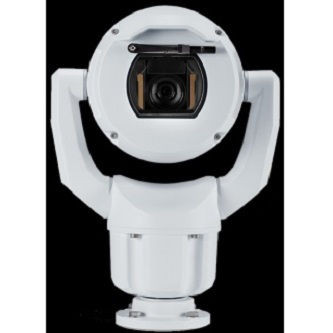
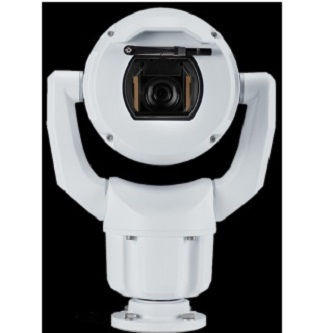
Both the Bosch MIC-7522-Z30W and MIC-7602-Z30WR are outdoor-rated, 2MP PTZ cameras in the MIC 7100i series, sharing the same 30x motorized zoom lens, 1/2" CMOS sensor, and IP67/IK10 housing. The MIC-7522-Z30W runs the MIC IP starlight 7100i platform while the MIC-7602-Z30WR runs the MIC inteox 7100i platform. Buyers cross-shopping these two will find near-identical optics and environmental ratings but meaningful differences in frame rate, analytics depth, edge storage, and network interface capability.
In This Guide
How do the imaging specs compare?
Both cameras share the same core optical and sensor package: a 1/2" CMOS imaging device, a 30x motorized varifocal lens spanning 6.6–198mm (F1.5), a minimum illumination of 0.0047 lux color / 0.0013 lux B/W, 120dB wide dynamic range, and 940nm invisible IR with day/night switching. Neither product's spec sheet lists an explicit IR illumination distance, so that value cannot be compared here.
The one substantive imaging-output difference is frame rate at full 1080p resolution: the MIC-7522-Z30W is rated at 60 fps @ 1080p, while the MIC-7602-Z30WR is rated at 30 fps @ 1080p. For applications requiring smooth motion capture of fast-moving subjects — vehicle tracking, crowd monitoring — the 7522's 60 fps advantage is directly spec-supported. Both support H.265, H.264, and MJPEG compression with 3 simultaneous streams.
What about installation and environment?
Both cameras carry IP67 ingress protection and IK10 impact resistance, and both are rated for an operating temperature range of -40°C to +65°C (-40°F to +149°F). Both are designated for outdoor use with a white housing. Power is PoE 802.3af on both models, meaning a single-cable installation is supported on each without an external power injector beyond a standard 802.3af budget.
Mounting options listed for both are identical: wall, pole, corner, and rack. Neither spec set includes dimensions or weight for the MIC-7602-Z30WR; the MIC-7522-Z30W lists a weight of 8.7 kg (19.2 lb). The MIC-7522-Z30W specifies a 10BASE-T/100BASE-TX Ethernet interface; the MIC-7602-Z30WR specifies a 100BASE-TX/1000BASE-T interface, indicating Gigabit Ethernet support on the inteox platform that is absent from the starlight model's listed spec.
Which fits your VMS and analytics better?
Both cameras are NDAA-compliant and ONVIF-conformant. The MIC-7602-Z30WR additionally specifies ONVIF Profile M, which is not listed for the MIC-7522-Z30W. Profile M supports metadata streaming for analytics events, making the 7602 more directly suitable for VMS platforms that leverage that profile. The MIC-7602-Z30WR also lists AES128 and AES256 encryption; the MIC-7522-Z30W lists DES, 3DES, and AES without specifying key length.
Analytics capability diverges significantly: the MIC-7522-Z30W lists Intelligent Video Analytics (IVA) and People Counting; the MIC-7602-Z30WR lists IVA Pro Buildings, IVA Pro Perimeter, IVA Pro Privacy, and People Counting — a broader edge analytics suite associated with the inteox open-platform architecture. On-board storage is specified only for the MIC-7602-Z30WR (microSD/SDHC/SDXC); the MIC-7522-Z30W spec does not list local storage. Both include a built-in audio input and alarm inputs/outputs, and both support cloud connectivity.
Which should you choose: the MIC-7522-Z30W or the MIC-7602-Z30WR?
Our take: The MIC-7602-Z30WR is the stronger choice when edge analytics depth, on-board storage redundancy, or ONVIF Profile M VMS integration are requirements. The MIC-7522-Z30W holds one concrete imaging advantage: 60 fps at 1080p versus 30 fps on the 7602, which matters for fast-motion forensic capture. The 7602 counters with three spec-backed advantages: IVA Pro Buildings/Perimeter/Privacy analytics versus basic IVA on the 7522; microSD/SDHC/SDXC local storage not listed on the 7522; and a Gigabit Ethernet interface (100BASE-TX/1000BASE-T) versus the 7522's Fast Ethernet (10/100BASE-TX). Both cameras are otherwise optically equivalent — same sensor, same lens, same minimum illumination, same WDR, same IP67/IK10 housing. Choose the 7522 for high-frame-rate capture on a standard Fast Ethernet infrastructure; choose the 7602 for open-platform analytics, edge recording, and Gigabit-ready deployments.
Side-by-Side Comparison
Spec-for-spec, from manufacturer data.
| Specification | Bosch MIC-7522-Z30W | Bosch MIC-7602-Z30WR |
|---|---|---|
| SKU | MIC-7522-Z30W | MIC-7602-Z30WR |
| Platform | MIC IP starlight 7100i | MIC inteox 7100i |
| Resolution | 2MP (1920×1080) | 2MP (1920×1080) |
| Image Sensor | 1/2" CMOS | 1/2" CMOS |
| Lens / Focal Length | 30x motorized, 6.6–198mm, F1.5 | 30x motorized, 6.6–198mm, F1.5 |
| Min. Illumination | 0.0047 lux color / 0.0013 lux B/W | 0.0047 lux color / 0.0013 lux B/W |
| IR Illumination | 940nm invisible IR | 940nm invisible IR |
| Wide Dynamic Range | 120dB | 120dB |
| Max Frame Rate | 60 fps @ 1080p | 30 fps @ 1080p |
| Video Compression | H.265, H.264, MJPEG | H.265, H.264, MJPEG |
| Multi-Streaming | 3 streams | 3 streams |
| IP Rating | IP67 | IP67 |
| Impact Rating | IK10 | IK10 |
| Operating Temperature | -40°C to +65°C (-40°F to +149°F) | -40°C to +65°C (-40°F to +149°F) |
| Power Input | PoE 802.3af | PoE 802.3af |
| Ethernet Interface | 10BASE-T / 100BASE-TX | 100BASE-TX / 1000BASE-T |
| ONVIF | Yes | Yes — Profile M listed |
| Edge Storage | — | microSD / SDHC / SDXC |
| Audio | Built-in audio input | Built-in audio input |
| Alarm I/O | Yes | Yes |
| Video Analytics | Intelligent Video Analytics, People Counting | IVA Pro Buildings, IVA Pro Perimeter, IVA Pro Privacy, People Counting |
| Intelligent Tracking | Yes | Yes |
| NDAA Compliant | Yes | Yes |
| Encryption | TLS 1.0/1.1/1.2, DES, 3DES, AES | TLS 1.0/1.1/1.2, AES128, AES256 |
| Weight | 8.7 kg (19.2 lb) | — |
| Warranty | Manufacturer Warranty | Manufacturer Warranty |
Frequently Asked Questions
Which should you choose: the MIC-7522-Z30W or the MIC-7602-Z30WR?
The MIC-7602-Z30WR is the stronger choice when edge analytics depth, on-board storage redundancy, or ONVIF Profile M VMS integration are requirements. The MIC-7522-Z30W holds one concrete imaging advantage: 60 fps at 1080p versus 30 fps on the 7602, which matters for fast-motion forensic capture. The 7602 counters with three spec-backed advantages: IVA Pro Buildings/Perimeter/Privacy analytics versus basic IVA on the 7522; microSD/SDHC/SDXC local storage not listed on the 7522; and a Gigabit Ethernet interface (100BASE-TX/1000BASE-T) versus the 7522's Fast Ethernet (10/100BASE-TX). Both cameras are otherwise optically equivalent — same sensor, same lens, same minimum illumination, same WDR, same IP67/IK10 housing. Choose the 7522 for high-frame-rate capture on a standard Fast Ethernet infrastructure; choose the 7602 for open-platform analytics, edge recording, and Gigabit-ready deployments.
Is the MIC-7522-Z30W or MIC-7602-Z30WR better for low-light performance?
Based on the provided specifications, both cameras are equivalent in low-light performance. Each uses the same 1/2" CMOS sensor, achieves the same minimum illumination of 0.0047 lux color and 0.0013 lux B/W, uses the same 940nm invisible IR, and carries the same 120dB wide dynamic range. Neither spec sheet includes an explicit IR illumination distance, so that metric cannot be used to differentiate them.
Does the MIC-7602-Z30WR support on-board recording if the network goes down?
Yes — the MIC-7602-Z30WR spec lists microSD/SDHC/SDXC local storage, which supports edge recording. The MIC-7522-Z30W spec does not list any local storage capability, so on-board recording is not a documented feature of that model.
Which camera is better suited for a VMS that uses ONVIF Profile M metadata streaming?
The MIC-7602-Z30WR explicitly lists ONVIF Profile M conformance. Profile M enables structured metadata and analytics event streaming to compatible VMS platforms. The MIC-7522-Z30W lists ONVIF conformance but does not specify Profile M, so Profile M compatibility cannot be confirmed for that model from the provided specifications.
Get a Second Opinion on Your Camera Choice
Share your site layout, coverage goals, and budget. Our team will validate the camera selection, flag anything we would change, and recommend products that match the use case.