
Axis Q6074-E vs Geovision SD4825W-IR00: Specification Comparison
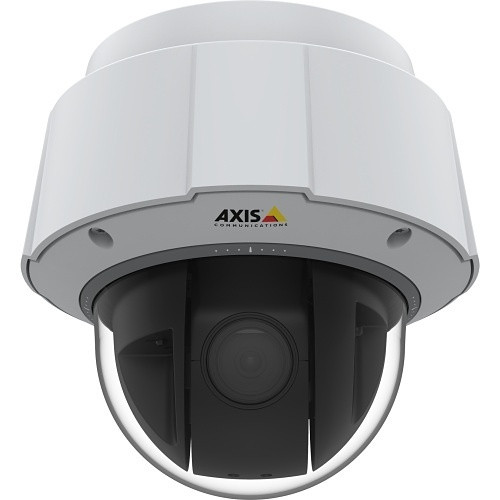
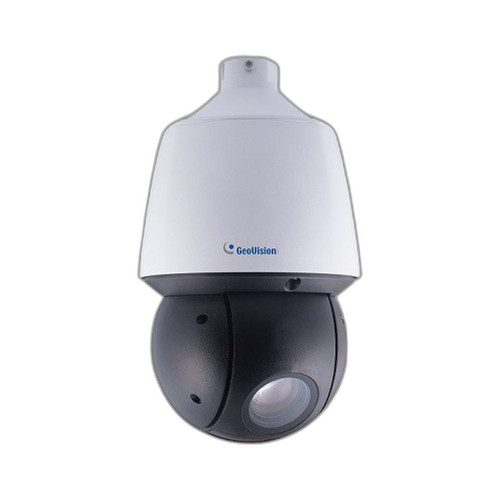
Both the Axis Q6074-E and the Geovision SD4825W-IR00 are 4MP outdoor PTZ speed-dome cameras designed for wide-area surveillance requiring optical zoom and pan/tilt coverage. This comparison examines how their imaging capabilities, installation requirements, and integration features stack up for installers and IT buyers evaluating a single-cable IP PTZ deployment in commercial or perimeter security applications.
In This Guide
How do the imaging specs compare?
The Axis Q6074-E uses a 1/2.8" CMOS sensor with a 4.25–127.5 mm varifocal lens delivering 30x optical zoom and 12x digital zoom, with a horizontal field of view ranging from 63.8° wide to 2.6° telephoto. It achieves color imaging down to 0.1 lux via Lightfinder 2.0 and supports a maximum frame rate of 60 fps. WDR is confirmed. The sensor captures at up to 1280×720 per the listed max resolution spec, though the product is marketed as a 4MP device — this is a noted inconsistency in the provided spec data. The Geovision SD4825W-IR00 is specified at 4MP resolution with 25x optical zoom. Minimum illumination is listed as 'Super Low Lux' — no numeric lux value is provided in the available specifications. IR is confirmed as the low-light mechanism; no Lightfinder-class color-in-darkness technology is documented for this model.
On zoom reach, the Q6074-E's 30x optical zoom exceeds the SD4825W-IR00's 25x, providing a longer effective telephoto range. The Q6074-E's 0.1 lux color sensitivity is a concrete, measurable figure; the SD4825W-IR00's 'Super Low Lux' descriptor does not translate to a comparable numeric value based on available specs. Both cameras support WDR. Frame rate for the SD4825W-IR00 is not stated in the provided specifications.
What about installation and environment?
The Axis Q6074-E carries IP66 and IK10 ratings, confirming full dust exclusion, resistance to powerful water jets, and resistance to 20-joule impacts — making it suitable for exposed, vandal-prone outdoor locations. Its operating temperature range spans -50 °C to +50 °C, covering extreme cold environments. Power is supplied via 24V AC per the spec sheet; the product also lists PoE (802.3af) as a power option, though these two are noted inconsistently across the provided data fields. The SD4825W-IR00 is powered by PoE+ (802.3at), simplifying single-cable installation on standard PoE+ switches. No IP rating, IK rating, or operating temperature range is documented in the available specifications for the SD4825W-IR00. Mount styles listed for the SD4825W-IR00 include wall and ceiling; the Q6074-E's mounting configuration is not detailed in the provided specs beyond its dome form factor.
Which fits your VMS and analytics better?
The Axis Q6074-E includes Autotracking 2 and preset position guard tours as documented edge analytics, enabling autonomous subject tracking without VMS intervention. Audio support is confirmed via a built-in microphone. Video compression includes H.265, H.264, MJPEG, and Zipstream (Axis's GOP-optimization technology). Signed firmware and Secure Boot are referenced in the spec data. TPM is listed as present. ONVIF compatibility for the Q6074-E is not explicitly stated in the provided specifications.
The Geovision SD4825W-IR00 explicitly lists ONVIF compliance and native compatibility with Geovision's GV-Control Center VMS. No edge analytics beyond PTZ control are documented in the available specs. H.265 and H.264 compression are confirmed; MJPEG and any bandwidth-optimization equivalent to Zipstream are not listed. Audio support, onboard storage, and TPM/secure boot status are not documented in the provided specifications for the SD4825W-IR00.
Which should you choose: the Q6074-E or the SD4825W-IR00?
Our take: The Q6074-E is the stronger choice when low-light color performance, extreme-temperature operation, and edge analytics are primary requirements. Its 30x optical zoom outreaches the SD4825W-IR00's 25x, its 0.1 lux color sensitivity is a verified numeric figure versus the SD4825W-IR00's unquantified 'Super Low Lux,' and its -50 °C to +50 °C operating range covers environments where the SD4825W-IR00's thermal limits are entirely unspecified. Autotracking 2 and Zipstream add autonomous tracking and bandwidth efficiency absent from the SD4825W-IR00's documented feature set. The SD4825W-IR00 may be preferred where PoE+ single-cable simplicity, explicit ONVIF interoperability, and native Geovision GV-Control Center integration are the deciding factors — and where the buyer accepts that key specs including IP rating, IK rating, operating temperature, and minimum illumination lux are not available for verification.
Side-by-Side Comparison
Spec-for-spec, from manufacturer data.
| Specification | Axis Q6074-E | Geovision SD4825W-IR00 |
|---|---|---|
| Resolution | 4MP (marketed); 1280×720 listed as max resolution — verify datasheet | 4MP |
| Image Sensor Size | 1/2.8" CMOS | — |
| Lens / Focal Length | 4.25–127.5 mm | Not specified |
| Optical Zoom | 30x | 25x |
| Digital Zoom | 12x | — |
| Horizontal Field of View | 63.8°–2.6° | — |
| Min Illumination (Color) | 0.1 lux (Lightfinder 2.0) | Super Low Lux (no numeric value specified) |
| IR / Low-Light Mode | Lightfinder 2.0; OptimizedIR; Day/Night | IR; Super Low Lux |
| WDR | Yes | Yes |
| Max Frame Rate | 60 fps | — |
| Video Compression | H.265; H.264; MJPEG; Zipstream | H.265; H.264 |
| IP Rating | IP66 | — |
| IK / Impact Rating | IK10 | — |
| Operating Temperature | -50 °C to +50 °C | — |
| Power Input / PoE Class | 24V AC / PoE 802.3af (verify datasheet) | PoE+ 802.3at |
| Pan Range | 360° endless | — |
| Tilt Range | 220° | — |
| Edge Analytics | Autotracking 2; Preset Position Guard Tours | — |
| Audio | Built-in microphone | — |
| ONVIF | — | Yes |
| Native VMS | — | Geovision GV-Control Center |
| Signed Firmware / Secure Boot | Yes / Yes | — |
| TPM | Yes | — |
| Warranty | 3-year | — |
Frequently Asked Questions
Which should you choose: the Q6074-E or the SD4825W-IR00?
The Q6074-E is the stronger choice when low-light color performance, extreme-temperature operation, and edge analytics are primary requirements. Its 30x optical zoom outreaches the SD4825W-IR00's 25x, its 0.1 lux color sensitivity is a verified numeric figure versus the SD4825W-IR00's unquantified 'Super Low Lux,' and its -50 °C to +50 °C operating range covers environments where the SD4825W-IR00's thermal limits are entirely unspecified. Autotracking 2 and Zipstream add autonomous tracking and bandwidth efficiency absent from the SD4825W-IR00's documented feature set. The SD4825W-IR00 may be preferred where PoE+ single-cable simplicity, explicit ONVIF interoperability, and native Geovision GV-Control Center integration are the deciding factors — and where the buyer accepts that key specs including IP rating, IK rating, operating temperature, and minimum illumination lux are not available for verification.
Is the Q6074-E or SD4825W-IR00 better for low-light performance?
Based on available specs, the Q6074-E is documented to maintain color imaging at 0.1 lux via Lightfinder 2.0. The SD4825W-IR00 lists 'Super Low Lux' and IR as its low-light mechanisms, but no numeric lux value is provided in the available specifications, making a direct numeric comparison impossible. If a verified lux figure is required for system design, only the Q6074-E supplies one in the provided data.
Which camera is easier to install on a standard PoE switch?
The SD4825W-IR00 specifies PoE+ (802.3at) as its power input, which is supported by most modern managed switches with PoE+ ports. The Q6074-E's power requirements appear as both 24V AC and PoE (802.3af) across different spec fields — installers should verify the actual power requirement against the Axis datasheet before planning switch capacity, as 802.3af and 24V AC have different infrastructure implications.
Does either camera work with third-party VMS platforms via ONVIF?
The SD4825W-IR00 explicitly lists ONVIF compliance in its specifications. ONVIF compliance for the Q6074-E is not stated in the provided spec data. Buyers requiring confirmed ONVIF interoperability with a third-party VMS should verify Q6074-E ONVIF profile support directly via the Axis datasheet or Axis ONVIF conformance listings.
Get a Second Opinion on Your Camera Choice
Share your site layout, coverage goals, and budget. Our team will validate the camera selection, flag anything we would change, and recommend products that match the use case.