
Hanwha L7082R vs i-PRO A-475-P: Specification Comparison
Both the Hanwha ANV-L7082R and the i-PRO A-475-P are 4MP outdoor PTZ dome cameras powered by PoE 802.3af, targeting commercial and enterprise physical-security installations where pan-tilt-zoom coverage and IR night vision are required from a single-cable Ethernet drop. This comparison examines sensor and optics performance, installation and environmental suitability, and VMS/analytics integration to help integrators and IT buyers determine which unit fits their deployment.
In This Guide
How do the imaging specs compare?
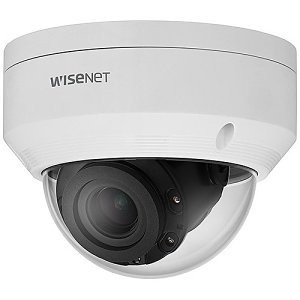
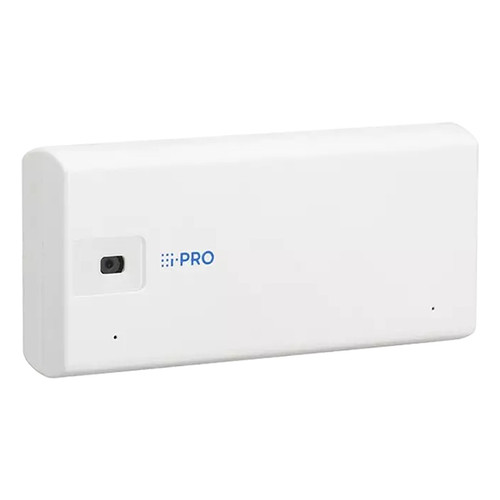
The Hanwha ANV-L7082R uses a 1/2.8" CMOS sensor at 2560×1440 (4MP) delivering 30fps. Its motorized varifocal lens spans 3.3–10.3mm with a 3.1× optical zoom ratio, a wide-end aperture of F1.6, and an angular field of view of 95° horizontal at wide. Minimum illumination is 0.1 lux in color and 0 lux with IR assist via an 850nm LED array rated to 30m (98ft). WDR is specified at 120dB. DORI detection distances reach 26.5m wide / 70.3m tele, with identification at 2.7m wide / 7.0m tele. The i-PRO A-475-P delivers 2688×1520 (4MP) with a 4× optical zoom varifocal lens. Beyond resolution, sensor size, aperture, minimum illumination, IR range, and WDR rating are not specified in the available data.
The Hanwha unit's 120dB WDR and documented 0-lux IR floor give installers concrete low-light performance numbers. The i-PRO A-475-P's 4× optical zoom marginally exceeds the Hanwha's 3.1×, which may extend its tele-end DORI reach, but no equivalent DORI table or IR distance figure is published for the A-475-P to allow a direct numeric comparison.
What about installation and environment?
The Hanwha ANV-L7082R is rated IP66 and IK10, confirming weatherproof sealing and impact resistance suitable for exposed outdoor mounting. Its operating temperature range is −30°C to +55°C. Power draw is a maximum of 8.0W (typical 6.0W) on PoE 802.3af Class 3. The unit weighs 550g and measures ø137.8×107.1mm, fitting standard dome surface and pendant mounts. The i-PRO A-475-P also specifies PoE 802.3af but draws up to 13W — more than double the Hanwha's typical draw — leaving less headroom on budget PoE switches. IP/IK rating, operating temperature range, weight, and dimensions are not provided for the A-475-P in the available specifications.
For deployments requiring a confirmed ingress-protection rating or a wide thermal envelope (cold storage, outdoor northern climates), the Hanwha's published IP66/IK10 and −30°C floor are verifiable design criteria. The i-PRO's 13W draw versus the Hanwha's 8W maximum is a meaningful switch-port budget difference on multi-camera runs.
Which fits your VMS and analytics better?
The Hanwha ANV-L7082R supports ONVIF Profile S, G, and T plus Hanwha's SUNAPI HTTP API. On-board edge analytics include Deep Learning (DLPU) object classification, line crossing, loitering detection, and tampering detection. Edge storage is a single MicroSD/SDHC/SDXC slot supporting up to 128GB with SD card partition encryption. Network security features include 802.1X (EAP-TLS/LEAP/PEAP), HTTPS, SRTP, digest authentication, brute-force prevention, and a Hanwha Private Root CA device certificate.
The i-PRO A-475-P declares ONVIF Profile S and lists named compatibility with Milestone, Genetec, i-PRO NVR, and Axis Camera Station. Its analytics are limited to VMD (Video Motion Detection) per available specs — no deep-learning object classification, line crossing, or loitering is listed. Audio input and streaming are specified. On-board SD storage capacity, encryption, and detailed network security features are not documented in the available data. Integrators running Milestone or Genetec with existing i-PRO infrastructure will find the A-475-P's named VMS compatibility useful, while those needing ONVIF Profile G or T for edge recording workflows will require the Hanwha.
Which should you choose: the L7082R or the A-475-P?
Our take: The ANV-L7082R is the stronger choice when documented environmental ratings, deep-learning edge analytics, and switch-port efficiency are decision criteria. Concretely: the Hanwha publishes IP66/IK10 and a −30°C to +55°C operating range while the i-PRO A-475-P provides none of those figures; the Hanwha draws a maximum 8W versus the A-475-P's 13W, a 5W per-port saving that materially affects PoE switch budgeting on large camera counts; and the Hanwha's DLPU analytics (line crossing, loitering, object classification) go substantially beyond the A-475-P's VMD-only capability per available specs. The A-475-P's 4× optical zoom slightly exceeds the Hanwha's 3.1×, and its named compatibility with Milestone, Genetec, and Axis Camera Station may simplify procurement on those specific platforms. Choose the A-475-P only if the extra zoom reach or pre-validated i-PRO VMS integration outweighs the absence of published environmental, power, and security specifications.
Side-by-Side Comparison
Spec-for-spec, from manufacturer data.
| Specification | Hanwha L7082R | i-PRO A-475-P |
|---|---|---|
| Resolution | 4MP (2560×1440) | 4MP (2688×1520) |
| Sensor Size | 1/2.8" CMOS | — |
| Optical Zoom | 3.1× motorized varifocal | 4× optical zoom varifocal |
| Focal Length | 3.3–10.3mm | Not specified |
| Max Aperture (Wide) | F1.6 | — |
| Min. Illumination (Color) | 0.1 lux | — |
| Min. Illumination (IR) | 0 lux | — |
| IR Range | 30m (98ft) @ 850nm | — |
| WDR | 120dB | — |
| Frame Rate | 30fps @ 4MP | Not specified |
| PoE Standard | 802.3af Class 3 | 802.3af |
| Max Power Draw | 8.0W | 13W |
| IP / IK Rating | IP66 / IK10 | — |
| Operating Temperature | -30°C to +55°C | — |
| ONVIF Profiles | S, G, T | S |
| Edge Analytics | DLPU: object classification, line crossing, loitering, tampering | VMD only |
| On-board Storage | MicroSD up to 128GB (encrypted) | — |
| Audio | — | Audio input; Streaming |
| 802.1X Network Auth | EAP-TLS, EAP-LEAP, EAP-PEAP | — |
| Warranty | 3-year | — |
Frequently Asked Questions
Which should you choose: the L7082R or the A-475-P?
The ANV-L7082R is the stronger choice when documented environmental ratings, deep-learning edge analytics, and switch-port efficiency are decision criteria. Concretely: the Hanwha publishes IP66/IK10 and a −30°C to +55°C operating range while the i-PRO A-475-P provides none of those figures; the Hanwha draws a maximum 8W versus the A-475-P's 13W, a 5W per-port saving that materially affects PoE switch budgeting on large camera counts; and the Hanwha's DLPU analytics (line crossing, loitering, object classification) go substantially beyond the A-475-P's VMD-only capability per available specs. The A-475-P's 4× optical zoom slightly exceeds the Hanwha's 3.1×, and its named compatibility with Milestone, Genetec, and Axis Camera Station may simplify procurement on those specific platforms. Choose the A-475-P only if the extra zoom reach or pre-validated i-PRO VMS integration outweighs the absence of published environmental, power, and security specifications.
Which camera has better low-light performance?
Based on available specifications, the Hanwha ANV-L7082R is documented to 0 lux with IR active (850nm LEDs, 30m range) and 0.1 lux in color mode with 120dB WDR. The i-PRO A-475-P lists IR as a feature but provides no minimum illumination figure, IR range, or WDR rating in its published specs, so a numeric comparison cannot be made.
Will either camera work with my existing Milestone or Genetec VMS?
Both cameras support ONVIF Profile S, which is the baseline integration standard for Milestone and Genetec. The i-PRO A-475-P explicitly names Milestone and Genetec as compatible VMS platforms. The Hanwha ANV-L7082R additionally supports ONVIF Profile G and T, enabling edge-recording and PTZ metadata workflows that Profile S alone does not cover.
Can both cameras run on a standard PoE switch port?
Both use PoE 802.3af. The Hanwha ANV-L7082R draws a maximum of 8.0W, well within the 802.3af Class 3 budget of 15.4W. The i-PRO A-475-P draws 13W, which also falls within 802.3af limits but consumes significantly more switch-port budget — relevant when calculating total switch load across many cameras.
Get a Second Opinion on Your Camera Choice
Share your site layout, coverage goals, and budget. Our team will validate the camera selection, flag anything we would change, and recommend products that match the use case.