
Axis Q6074-E vs Axis Q6075-E: Specification Comparison
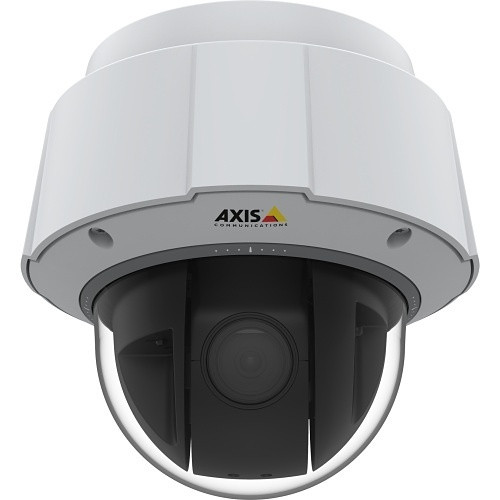
The Axis Q6074-E (01974-004) and Q6075-E (01752-004) are both 4MP-class, high-speed PTZ outdoor dome cameras sharing the same sensor size, housing type, and environmental ratings. Both target perimeter and wide-area surveillance applications requiring long-range optical zoom and 60 fps tracking. The primary differentiators are optical zoom reach, maximum resolution output, and power input requirements—factors that directly affect site planning, cabling, and target-capture performance at distance.
In This Guide
How do the imaging specs compare?
Both cameras use a 1/2.8-inch CMOS sensor with Lightfinder 2.0, achieving 0.1 lux minimum color illumination, WDR, and Day/Night operation. The Q6074-E delivers a maximum resolution of 1280×720 while the Q6075-E steps up to 1920×1080 Full HD—a meaningful difference for pixel-density at range, facial or license-plate capture, and forensic review. Both support 50/60 fps at their respective maximum resolutions.
The lens is where the two models diverge most sharply. The Q6074-E covers 4.25–127.5 mm with 30x optical zoom and a horizontal field of view of 63.8–2.6°. The Q6075-E extends to 4.25–170 mm with 40x optical zoom and a horizontal field of view of 65.1–2.00°, providing approximately 33% greater reach at maximum telephoto. Both offer 12x digital zoom on top of optical. The wider tele end on the Q6075-E, combined with its higher sensor resolution, yields substantially more usable detail at long range.
What about installation and environment?
Both units carry IP66 and IK10 ratings and are rated for operation from -50 to 50 °C, making them equally suited for harsh outdoor deployments including high-vandal-risk and extreme-temperature environments. Both feature 360° endless pan and 220° tilt with Autotracking 2. The Q6074-E is specified at 24V AC power input; the Q6075-E is specified at 110V AC power input—a significant installation consideration that affects transformer requirements and cable runs. Both are listed as High PoE class in their spec fields, though this conflicts with the AC power specs noted above; installers should verify final power requirements against the manufacturer datasheet for each model before finalizing infrastructure.
Physical dimensions and weight are provided only for the Q6075-E (Ø232×271 mm, 3.75 kg). No dimensional or weight data is present in the available specifications for the Q6074-E, so a direct mechanical comparison cannot be made from these specs alone.
Which fits your VMS and analytics better?
ONVIF compliance is explicitly stated in the available specs for the Q6075-E. The Q6074-E specs do not include an ONVIF declaration in the provided data; buyers requiring confirmed ONVIF conformance should verify against the Axis datasheet (01974-004.pdf). Both cameras support H.265, H.264, MJPEG (Q6074-E spec includes MJPEG; Q6075-E spec does not list it explicitly), and Zipstream for bandwidth efficiency. Both include Autotracking 2, preset position guard tours, and orientation aid PTZ.
Edge analytics are more fully documented for the Q6075-E, whose specs list AXIS Motion Guard, AXIS Fence Guard, and AXIS Loitering Guard, along with VAPIX and Open API support and One-Click Cloud Connection. The Q6074-E specs do not enumerate these analytics by name in the available data. Audio support (built-in microphone) is listed for the Q6074-E; the Q6075-E lists audio support but the built-in mic is not explicitly confirmed in the provided specs. On-board memory is specified only for the Q6075-E (1024 MB RAM, 512 MB Flash). Both carry a 3-year warranty and Secure Boot, TPM, and Signed Firmware security features.
Which should you choose: the Q6074-E or the Q6075-E?
Our take: The Q6075-E is the stronger choice when maximum detail at distance is the priority: it delivers 1920×1080 versus the Q6074-E's 1280×720, pairs that with a 40x optical zoom (4.25–170 mm) versus the Q6074-E's 30x (4.25–127.5 mm), and explicitly lists AXIS Motion Guard, Fence Guard, and Loitering Guard edge analytics. For sites where the additional reach and Full HD resolution justify the 110V AC power infrastructure requirement, the Q6075-E is the appropriate selection. The Q6074-E remains relevant where 24V AC power is already provisioned, lower zoom reach is acceptable, and the MJPEG codec or built-in microphone (both confirmed in its specs) are required. Both cameras are otherwise identical in sensor size, low-light floor, environmental ratings, and PTZ mechanics.
Side-by-Side Comparison
Spec-for-spec, from manufacturer data.
| Specification | Axis Q6074-E | Axis Q6075-E |
|---|---|---|
| Max Resolution | 1280×720 | 1920×1080 |
| Resolution Class | 1MP | 2MP (Full HD) |
| Image Sensor Size | 1/2.8" | 1/2.8" |
| Sensor Type | CMOS | CMOS |
| Min Illumination (Color) | 0.1 lux | 0.1 lux |
| Low-Light Technology | Lightfinder 2.0 | Lightfinder 2.0 |
| Optical Zoom | 30x | 40x |
| Focal Length | 4.25–127.5 mm | 4.25–170 mm |
| Horizontal FoV | 63.8–2.6° | 65.1–2.00° |
| Digital Zoom | 12x | 12x |
| Max Frame Rate | 50/60 fps | 50/60 fps |
| Video Compression | H.265, H.264, MJPEG, Zipstream | H.265, H.264, Zipstream |
| WDR | Yes | Yes |
| Pan Range | 360° endless | 360° endless |
| Tilt Range | 220° | 220° |
| IP Rating | IP66 | IP66 |
| IK / Impact Rating | IK10 | IK10 |
| Operating Temperature | -50 to 50 °C | -50 to 50 °C |
| Power Input (specified) | 24V AC | 110V AC |
| PoE Class (listed) | High PoE | High PoE |
| Audio | Built-in mic confirmed | Audio support listed; mic not explicitly confirmed |
| Edge Analytics | Autotracking 2, Preset Position Tours (others not listed) | Autotracking 2, Motion Guard, Fence Guard, Loitering Guard |
| ONVIF | — | Yes |
| On-board Memory | — | 1024 MB RAM, 512 MB Flash |
| Dimensions | — | Ø232×271 mm (Ø9.13×10.7 in) |
| Weight | — | 3.75 kg (8.3 lb) |
| Warranty | 3 years | 3 years |
| TPM / Secure Boot / Signed Firmware | Yes / Yes / Yes | Yes / Yes / Yes |
Frequently Asked Questions
Which should you choose: the Q6074-E or the Q6075-E?
The Q6075-E is the stronger choice when maximum detail at distance is the priority: it delivers 1920×1080 versus the Q6074-E's 1280×720, pairs that with a 40x optical zoom (4.25–170 mm) versus the Q6074-E's 30x (4.25–127.5 mm), and explicitly lists AXIS Motion Guard, Fence Guard, and Loitering Guard edge analytics. For sites where the additional reach and Full HD resolution justify the 110V AC power infrastructure requirement, the Q6075-E is the appropriate selection. The Q6074-E remains relevant where 24V AC power is already provisioned, lower zoom reach is acceptable, and the MJPEG codec or built-in microphone (both confirmed in its specs) are required. Both cameras are otherwise identical in sensor size, low-light floor, environmental ratings, and PTZ mechanics.
Is the Q6074-E or Q6075-E better for low-light performance?
Both cameras are rated identically for low-light performance: 1/2.8-inch CMOS sensor, Lightfinder 2.0, and 0.1 lux minimum color illumination. Neither model has a specified advantage over the other in low-light sensitivity based on the available specifications.
Which camera has better zoom range—the Q6074-E or Q6075-E?
The Q6075-E has greater optical zoom reach: 40x optical zoom across a 4.25–170 mm focal length, versus the Q6074-E's 30x optical zoom across 4.25–127.5 mm. Both add 12x digital zoom on top of optical. The Q6075-E's additional reach provides approximately 33% more telephoto extension.
Do the Q6074-E and Q6075-E use the same power input?
No. The Q6074-E is specified at 24V AC and the Q6075-E at 110V AC in the available data. Both are also listed under High PoE class in their feature fields, which conflicts with the AC power entries; installers should confirm the exact power requirements against each model's official Axis datasheet before designing power infrastructure.
Get a Second Opinion on Your Camera Choice
Share your site layout, coverage goals, and budget. Our team will validate the camera selection, flag anything we would change, and recommend products that match the use case.