
ACTi E911 vs Geovision FD34100-001U: Specification Comparison
Both the ACTi E911 and Geovision FD34100-001U are 3MP indoor fixed dome cameras positioned for lobbies, retail floors, and similar mixed-light environments. This comparison evaluates their imaging capabilities, installation requirements, and integration features to help installers and IT buyers determine which unit better suits a specific deployment. Neither is a PTZ; both mount to ceiling or wall and connect via PoE over Ethernet, making them genuine cross-shop candidates for a 3MP fixed-dome procurement decision.
In This Guide
How do the imaging specs compare?
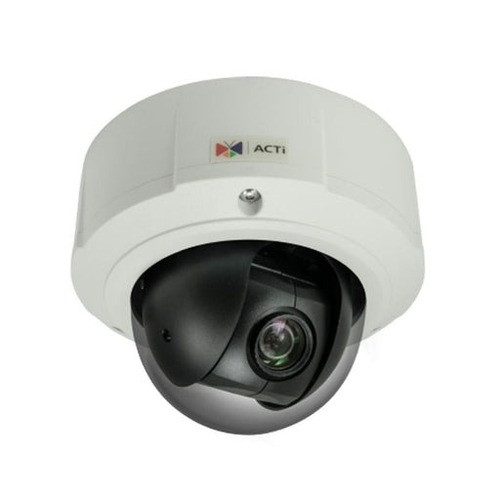
The ACTi E911 ships with a fixed 2.1 mm lens at F1.8, delivering a 117.5° horizontal field of view — a wide-angle perspective well suited to compact lobbies, elevator cabs, or open retail floors where maximum scene coverage from a single mounting point matters. It supports up to 1080p at 60 fps and is specified with Extreme WDR, ACTi's highest WDR tier for managing simultaneous bright and dark zones in a single frame. No IR or minimum-illumination figure is listed in the provided specifications.
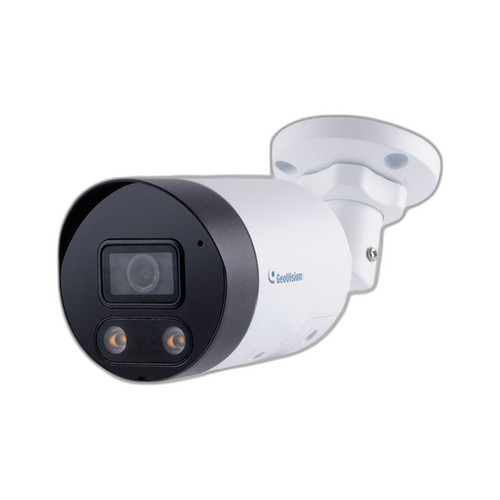
The Geovision FD34100-001U counters with a 3–9 mm motorized lens, giving installers a 3× optical zoom range adjustable post-mount without swapping optics. It carries integrated IR illumination for low-light and no-light operation, and its WDR is listed as WDR Pro. Maximum frame rate and minimum illumination values are not stated in the supplied specifications for either model, and the E911's 3 MP sensor operates at full resolution while the FD34100-001U's maximum resolution output specification is similarly listed only as 3 MP without additional frame-rate detail.
What about installation and environment?
The ACTi E911 is rated IK08 for impact resistance, meaning it withstands 5-joule impacts — relevant in corridors, stairwells, or public-access areas where vandal resistance is a design criterion. It draws less than 13 W over 802.3af PoE, confirming compatibility with standard 802.3af midspans and switches without requiring a higher-wattage 802.3at port. Operating temperature range is not listed in the provided specifications. Mount options are ceiling and wall; the dome form factor is indoor-rated.
The Geovision FD34100-001U specifies PoE as a power input but does not state the IEEE PoE class or wattage draw in the provided specifications. It also lists DC 12 V and AC 24 V as power options per the card bullet, giving installers flexibility where a PoE switch is unavailable. No IK impact rating or operating temperature range is listed for the FD34100-001U. Both cameras share ceiling and wall mounting compatibility.
Which fits your VMS and analytics better?
The ACTi E911 declares compatibility with 'Standard ONVIF IP platforms' and includes on-board Video Analytics as a listed feature. Local storage via MicroSD/MicroSDXC is supported, enabling edge buffering or standalone recording without NVR dependency. Audio in/out capability is not stated in the provided specifications.
The Geovision FD34100-001U lists ONVIF: Yes, confirming profile-level interoperability with third-party VMS platforms. Edge analytics, on-board storage, and audio capabilities are not stated in the provided specifications for this model. Both cameras are therefore ONVIF-compatible, but only the E911 has confirmed edge analytics and local storage in the specs supplied.
Which should you choose: the E911 or the FD34100-001U?
Our take: The E911 is the stronger choice when vandal resistance, edge analytics, and on-board storage are priorities in a fixed wide-angle deployment. Concretely: the E911 carries an IK08 impact rating while the FD34100-001U lists none; the E911 confirms Video Analytics and MicroSD/MicroSDXC edge storage while neither feature is specified for the FD34100-001U; and the E911's 802.3af draw under 13 W guarantees compatibility with existing standard PoE infrastructure without wattage guesswork. The FD34100-001U holds a clear advantage when post-installation coverage flexibility is required — its 3–9 mm motorized lens eliminates lens-swap service calls and its IR illuminator extends usability into low-light or no-light conditions not covered by the E911's spec sheet. Choose the FD34100-001U for IR-dependent scenes or when zoom range must be tuned after mounting; choose the E911 for vandal-rated, analytics-capable, wide-angle fixed coverage on a standard 802.3af switch.
Side-by-Side Comparison
Spec-for-spec, from manufacturer data.
| Specification | ACTi E911 | Geovision FD34100-001U |
|---|---|---|
| Resolution | 3 MP | 3 MP |
| Lens / Focal Length | 2.1 mm fixed, F1.8 | 3–9 mm motorized |
| Horizontal FOV | 117.5° | — |
| IR / Low-Light | — | IR |
| WDR | Extreme WDR | WDR Pro |
| Max Frame Rate | 1080p / 60 fps | — |
| Video Compression | H.265; H.264 | — |
| IK / Impact Rating | IK08 | — |
| Power Input | PoE 802.3af (<13 W) | PoE; DC 12V; AC 24V |
| Edge Storage | MicroSD / MicroSDXC | — |
| ONVIF | Yes (Standard ONVIF platforms) | Yes |
| Edge Analytics | Video Analytics | — |
| Mount Type | Ceiling; Wall | Ceiling; Wall |
Frequently Asked Questions
Which should you choose: the E911 or the FD34100-001U?
The E911 is the stronger choice when vandal resistance, edge analytics, and on-board storage are priorities in a fixed wide-angle deployment. Concretely: the E911 carries an IK08 impact rating while the FD34100-001U lists none; the E911 confirms Video Analytics and MicroSD/MicroSDXC edge storage while neither feature is specified for the FD34100-001U; and the E911's 802.3af draw under 13 W guarantees compatibility with existing standard PoE infrastructure without wattage guesswork. The FD34100-001U holds a clear advantage when post-installation coverage flexibility is required — its 3–9 mm motorized lens eliminates lens-swap service calls and its IR illuminator extends usability into low-light or no-light conditions not covered by the E911's spec sheet. Choose the FD34100-001U for IR-dependent scenes or when zoom range must be tuned after mounting; choose the E911 for vandal-rated, analytics-capable, wide-angle fixed coverage on a standard 802.3af switch.
Is the E911 or FD34100-001U better for low-light and night coverage?
Based on the provided specifications, only the Geovision FD34100-001U lists integrated IR illumination for low-light and no-light operation. The ACTi E911 does not specify IR capability or a minimum illumination figure, so the FD34100-001U is the documented choice for scenes that require night vision.
Can I adjust the field of view after mounting without calling a technician back?
Yes — but only on the Geovision FD34100-001U. Its 3–9 mm motorized lens allows coverage adjustment post-installation. The ACTi E911 uses a fixed 2.1 mm lens (117.5° HOV) that cannot be optically zoomed or refocused after mounting.
Which camera works with my existing 802.3af PoE switch?
The ACTi E911 is explicitly specified at under 13 W on 802.3af, confirming it will operate on any standard 802.3af port. The Geovision FD34100-001U lists PoE as a power option but does not state the IEEE PoE class or wattage in the provided specifications, so you should verify draw requirements with Geovision before assuming 802.3af compatibility.
Get a Second Opinion on Your Camera Choice
Share your site layout, coverage goals, and budget. Our team will validate the camera selection, flag anything we would change, and recommend products that match the use case.