
ACTi E53 vs Geovision VD121-D01U: Specification Comparison
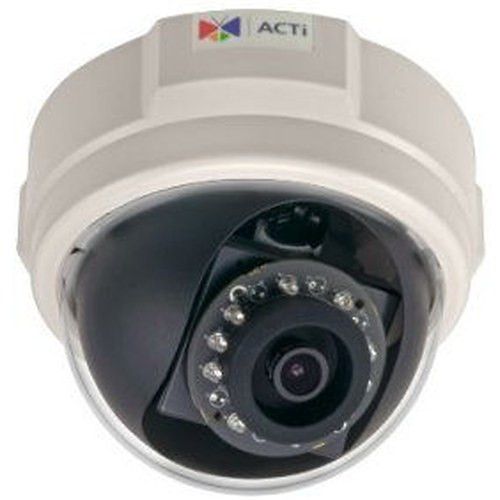
Both the ACTi E53 and Geovision VD121-D01U are 3MP fixed PoE IP dome cameras competing in the same entry-to-mid-tier indoor/light-commercial surveillance segment. This comparison examines how their imaging capabilities, physical protection ratings, power requirements, and VMS integration specs differ — giving installers and IT buyers a factual basis to select the right unit for their deployment environment, whether that is a controlled interior space or a semi-exposed location requiring hardened enclosure protection.
In This Guide
How do the imaging specs compare?
Both cameras deliver 3MP resolution (the ACTi E53 specifies 2048×1536 pixels explicitly; the Geovision VD121-D01U lists 3MP without a stated pixel-dimension breakdown in the provided specs). The E53 includes a named WDR feature, which is relevant in lobbies, entrance corridors, or any scene with simultaneous bright windows and shadowed areas. The VD121-D01U's provided specifications do not list WDR support — buyers deploying in high-contrast lighting environments should treat this as an unconfirmed capability and verify with Geovision before specifying.
On low-light and night-vision, both cameras carry IR illumination and Day/Night functionality; however, the ACTi E53 spec explicitly labels both 'Day/Night' and 'IR,' while the Geovision VD121-D01U lists 'IR' only — Day/Night (mechanical or electronic IR-cut filter operation) is not confirmed in the supplied data for the VD121-D01U. The E53 uses a fixed 3.6mm lens; the VD121-D01U's focal length is not stated in the provided specifications. Neither unit's IR range distance, minimum illumination lux value, frame rate, nor video compression codec is present in the supplied specs for either model.
What about installation and environment?
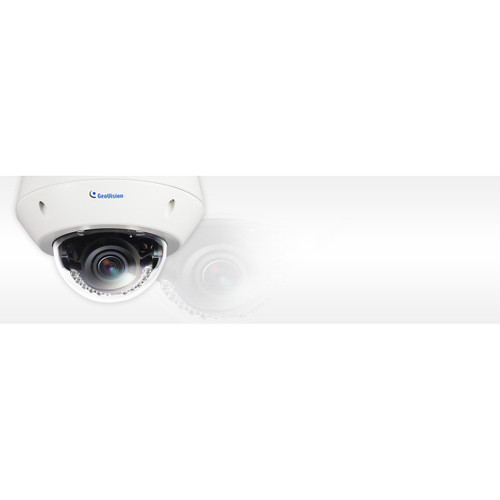
The Geovision VD121-D01U carries IP66 and IK10 ratings, meaning it is certified dust-tight, protected against powerful water jets, and resistant to 20-joule mechanical impacts — making it suitable for exposed corridors, parking structures, building exteriors, or any location subject to vandalism or wash-down. The ACTi E53 carries no IP or IK rating in the provided specifications, and its spec sheet describes it as an indoor camera. Installers should not deploy the E53 in wet, dusty, or vandal-risk environments without independent confirmation of an enclosure rating from ACTi.
Power delivery differs in one documented respect: the ACTi E53 explicitly cites IEEE 802.3af compliance and a consumption figure of under 13W, giving the installer a confirmed PoE class budget for switch port planning. The Geovision VD121-D01U lists PoE connectivity but neither the 802.3af/at standard nor a wattage draw is stated in the provided specs — verify with Geovision before deploying on a tightly budgeted 802.3af switch. The E53 specifies an operating temperature range of 0°C to 50°C (32°F to 122°F); no operating temperature range is provided for the VD121-D01U. Both cameras support ceiling and wall mounting in a dome form factor.
Which fits your VMS and analytics better?
Both the ACTi E53 and Geovision VD121-D01U declare ONVIF Profile S compliance, which provides a baseline guarantee of interoperability with any Profile S-compatible NVR or VMS platform — including Milestone, Genetec, Avigilon, and others. Profile S covers live streaming, PTZ control (not applicable here), and event handling at a standardized level. Neither camera's provided specifications include mention of ONVIF Profile G (on-board recording), Profile T (H.265/metadata), or Profile M (metadata/analytics).
Edge analytics, on-board audio (microphone input or speaker output), and local SD card or edge storage capabilities are not listed in the provided specifications for either model. Buyers requiring these features — such as audio detection triggers, facial recognition at the edge, or local failover recording — must consult each manufacturer's full datasheet before specifying. Neither warranty term nor physical dimensions or weight are included in the supplied data for either camera.
Which should you choose: the E53 or the VD121-D01U?
Our take: The VD121-D01U is the stronger choice when the deployment site carries any risk of physical impact, moisture, dust, or outdoor exposure, given its confirmed IK10 vandal-resistance and IP66 weatherproofing — specs the E53 does not present. Conversely, the E53 is the more document-verified option for controlled indoor environments: it explicitly confirms WDR capability for high-contrast scenes, a precise 2048×1536 pixel count, a 3.6mm fixed focal length, 802.3af PoE compliance at under 13W, and a 0–50°C operating range — none of which are confirmed in the VD121-D01U's provided data. Both share ONVIF Profile S. Choose the E53 for lit, climate-controlled interiors where switch budget and WDR matter; choose the VD121-D01U for hardened or semi-exposed locations where IK10/IP66 protection is the primary requirement.
Side-by-Side Comparison
Spec-for-spec, from manufacturer data.
| Specification | ACTi E53 | Geovision VD121-D01U |
|---|---|---|
| Resolution | 3MP (2048×1536) | 3MP (pixel dimensions not specified) |
| Lens / Focal Length | 3.6mm fixed | — |
| WDR | Yes | — |
| Day/Night (IR-Cut Filter) | Yes | — |
| IR Night Vision | Yes | Yes |
| IP Rating | — | IP66 |
| IK / Impact Rating | — | IK10 |
| Operating Temperature | 0°C to 50°C (32°F to 122°F) | — |
| Power Input / PoE Standard | 802.3af | PoE (standard not specified) |
| PoE Power Consumption | <13W | — |
| Form Factor | Indoor Dome | Vandal Dome |
| Mount Type | Ceiling; Wall | Ceiling; Wall |
| VMS Compatibility | ONVIF Profile S | ONVIF Profile S |
Frequently Asked Questions
Which should you choose: the E53 or the VD121-D01U?
The VD121-D01U is the stronger choice when the deployment site carries any risk of physical impact, moisture, dust, or outdoor exposure, given its confirmed IK10 vandal-resistance and IP66 weatherproofing — specs the E53 does not present. Conversely, the E53 is the more document-verified option for controlled indoor environments: it explicitly confirms WDR capability for high-contrast scenes, a precise 2048×1536 pixel count, a 3.6mm fixed focal length, 802.3af PoE compliance at under 13W, and a 0–50°C operating range — none of which are confirmed in the VD121-D01U's provided data. Both share ONVIF Profile S. Choose the E53 for lit, climate-controlled interiors where switch budget and WDR matter; choose the VD121-D01U for hardened or semi-exposed locations where IK10/IP66 protection is the primary requirement.
Is the E53 or VD121-D01U better for low-light performance?
Both cameras list IR night vision, but neither model's provided specifications include a minimum illumination lux value or IR range distance — the two most meaningful low-light metrics. The E53 explicitly states Day/Night (IR-cut filter) operation; the VD121-D01U lists IR only and does not confirm Day/Night filter operation in the supplied data. A definitive low-light comparison requires consulting each manufacturer's full datasheet for lux ratings and IR throw distance.
Can the Geovision VD121-D01U be used outdoors?
Based on the provided specifications, the VD121-D01U carries an IP66 rating (dust-tight, protected against powerful water jets) and IK10 impact resistance, which are standard qualifications for outdoor and semi-exposed installations. The ACTi E53, by contrast, is described in its specifications as an indoor camera with no stated IP or IK rating, making it unsuitable for outdoor use without further manufacturer confirmation.
Will either camera work with my existing ONVIF-compatible NVR or VMS?
Yes — both the ACTi E53 and Geovision VD121-D01U declare ONVIF Profile S compliance in the provided specifications. Profile S is the baseline interoperability standard covering live video streaming and event handling, and is supported by the major VMS platforms. Neither camera's provided specs confirm higher ONVIF profiles (G, T, or M), so advanced features like on-board recording or metadata-driven analytics should be verified against each manufacturer's full compatibility matrix before purchasing.
Get a Second Opinion on Your Camera Choice
Share your site layout, coverage goals, and budget. Our team will validate the camera selection, flag anything we would change, and recommend products that match the use case.