
ACTi E53 vs Geovision FD320-D01U: Specification Comparison
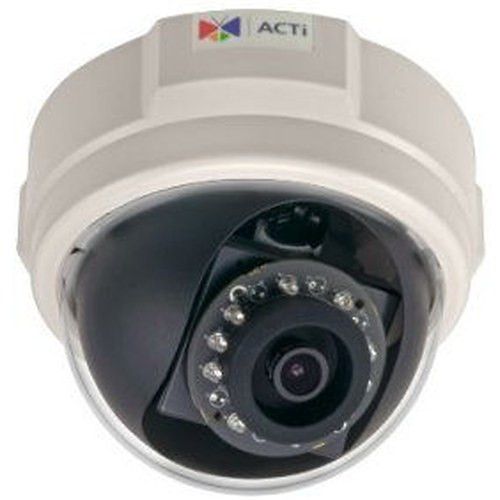
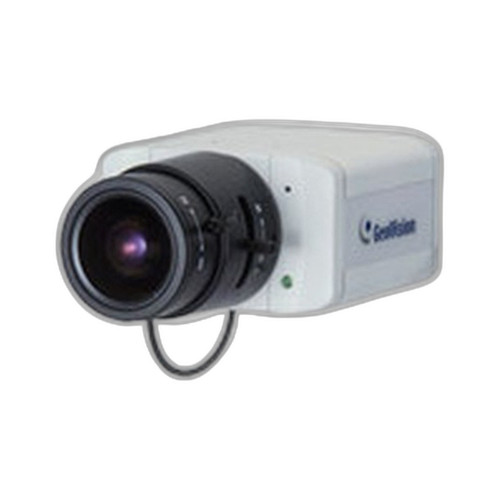
Both the ACTi E53 and Geovision FD320-D01U are 3MP indoor PoE dome cameras aimed at facility surveillance, access control, and general interior monitoring. This comparison examines how their imaging capabilities, installation requirements, and VMS/integration profiles differ so installers and IT buyers can match the right unit to their deployment. Neither product is a PTZ or specialty device; both occupy the same fixed-dome, single-cable PoE entry-to-mid tier of the IP camera market.
In This Guide
How do the imaging specs compare?
Both cameras deliver 3MP resolution. The ACTi E53 publishes a specific pixel array of 2048×1536, giving a concrete frame-size reference for storage and analytics calculations. The Geovision FD320-D01U specs do not state a pixel array beyond '3 MP.' On lens, the two diverge significantly: the E53 uses a fixed 3.6mm focal length, which suits a pre-planned field of view and simplifies commissioning but offers no on-site angle adjustment. The FD320-D01U ships with a varifocal 2.7–9mm F2.7 lens, enabling installers to tune horizontal coverage across a 3.3× zoom range at the time of mounting without swapping optics.
For low-light performance, the E53 lists Day/Night operation with IR illumination and WDR (Wide Dynamic Range), which helps resolve detail in scenes with mixed bright and shadowed zones—a common indoor lobby or corridor condition. The FD320-D01U specifies IR illumination at 850nm wavelength but does not list a WDR spec in the provided data. Neither datasheet provided minimum illumination lux figures in the supplied specs, so a direct lux comparison cannot be made. Compression: the FD320-D01U explicitly lists H.264; the E53's compression codec is not stated in the provided specs.
What about installation and environment?
Both cameras are PoE-powered over a single cable, eliminating a separate power run. The E53 specifies IEEE 802.3af compliance with a consumption figure under 13W, placing it clearly within the af budget and simplifying switch port planning. The FD320-D01U lists PoE but does not specify the PoE standard (802.3af vs. 802.3at) or wattage draw in the provided specs, which means installers should verify switch compatibility with the manufacturer before deployment.
On environmental range, the E53 states an operating temperature of 0°C to 50°C (32°F to 122°F), appropriate for conditioned indoor spaces. The FD320-D01U does not provide an operating temperature range in the supplied specs. Both cameras support ceiling and dome form-factor mounting; the E53 adds wall mount as a listed option, while the FD320-D01U lists ceiling and pendant. Neither camera provides an IP ingress-protection rating or IK impact rating in the supplied specs, so neither can be confirmed for wet or vandal-prone indoor environments based on available data.
Which fits your VMS and analytics better?
The E53 is certified to ONVIF Profile S, which governs video streaming, PTZ control messaging, and event handling—Profile S is the baseline interoperability standard supported by Milestone, Genetec, Avigilon, and most enterprise VMS platforms. The FD320-D01U lists ONVIF (profile level not specified in the provided specs) alongside explicit Geovision VMS compatibility and a 'third-party VMS' notation. Buyers running Geovision's own VMS platform will benefit from the FD320-D01U's native driver support. Neither product lists edge analytics, onboard audio (microphone or speaker), or onboard/SD card storage in the provided specs, so those capabilities cannot be compared or confirmed from available data.
Which should you choose: the E53 or the FD320-D01U?
Our take: The FD320-D01U is the stronger choice when the installer needs on-site field-of-view flexibility, while the E53 is the stronger choice when PoE budget certainty and ONVIF Profile S certification are the primary integration requirements. On lens: the FD320-D01U's varifocal 2.7–9mm covers a 3.3× adjustment range versus the E53's fixed 3.6mm—a concrete commissioning advantage in spaces where mounting position is constrained. On power: the E53 explicitly declares 802.3af at under 13W; the FD320-D01U does not state its PoE class, introducing switch-planning uncertainty. On WDR: the E53 lists WDR capability for mixed-light scenes; the FD320-D01U does not list WDR in the provided specs. Shops standardized on Geovision VMS will gain native driver support from the FD320-D01U. Sites running third-party VMS with strict Profile S requirements align better with the E53.
Side-by-Side Comparison
Spec-for-spec, from manufacturer data.
| Specification | ACTi E53 | Geovision FD320-D01U |
|---|---|---|
| Resolution | 3 MP (2048×1536) | 3 MP (pixel array not specified) |
| Lens Type | Fixed | Varifocal |
| Lens Focal Length | 3.6mm | 2.7–9mm F2.7 |
| IR Illumination | Yes | Yes — 850nm |
| WDR | Yes | — |
| Day/Night | Day/Night (ICR not specified) | IR (mode not specified) |
| Video Compression | — | H.264 |
| ONVIF | Profile S | Yes (profile not specified) |
| VMS Compatibility | ONVIF Profile S | ONVIF; Geovision; Third-party VMS |
| PoE Standard | 802.3af | PoE (standard not specified) |
| PoE Power Draw | <13W | — |
| Operating Temperature | 0°C to 50°C (32°F to 122°F) | — |
| Form Factor | Dome | Dome |
| Mount Type | Ceiling; Wall | Ceiling; Pendant |
Frequently Asked Questions
Which should you choose: the E53 or the FD320-D01U?
The FD320-D01U is the stronger choice when the installer needs on-site field-of-view flexibility, while the E53 is the stronger choice when PoE budget certainty and ONVIF Profile S certification are the primary integration requirements. On lens: the FD320-D01U's varifocal 2.7–9mm covers a 3.3× adjustment range versus the E53's fixed 3.6mm—a concrete commissioning advantage in spaces where mounting position is constrained. On power: the E53 explicitly declares 802.3af at under 13W; the FD320-D01U does not state its PoE class, introducing switch-planning uncertainty. On WDR: the E53 lists WDR capability for mixed-light scenes; the FD320-D01U does not list WDR in the provided specs. Shops standardized on Geovision VMS will gain native driver support from the FD320-D01U. Sites running third-party VMS with strict Profile S requirements align better with the E53.
Is the E53 or FD320-D01U better for low-light indoor use?
Both cameras include IR illumination. The E53 additionally lists WDR, which helps in mixed-light conditions such as lobbies with windows. The FD320-D01U specifies an 850nm IR wavelength but does not list WDR in the provided specs. Minimum illumination lux figures are absent from both spec sets, so a definitive low-light ranking cannot be made from available data alone.
Can I adjust the field of view on either camera after mounting?
Yes—but only on the FD320-D01U. Its varifocal 2.7–9mm F2.7 lens lets you dial coverage at commissioning across a 3.3× zoom range. The E53 has a fixed 3.6mm lens; field of view is set at the factory and cannot be adjusted in the field without a lens swap.
Will either camera work with Milestone or Genetec VMS?
The E53 is certified to ONVIF Profile S, which is the baseline standard supported by Milestone, Genetec, and most enterprise VMS platforms. The FD320-D01U lists ONVIF support and third-party VMS compatibility, but the specific ONVIF profile level is not stated in the provided specs. Verify driver availability with your VMS vendor before specifying either unit for a new deployment.
Get a Second Opinion on Your Camera Choice
Share your site layout, coverage goals, and budget. Our team will validate the camera selection, flag anything we would change, and recommend products that match the use case.