
ACTi B928 vs i-PRO S65501-Z1: Specification Comparison
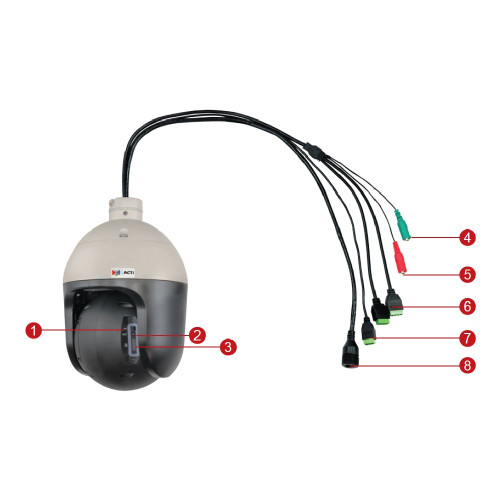
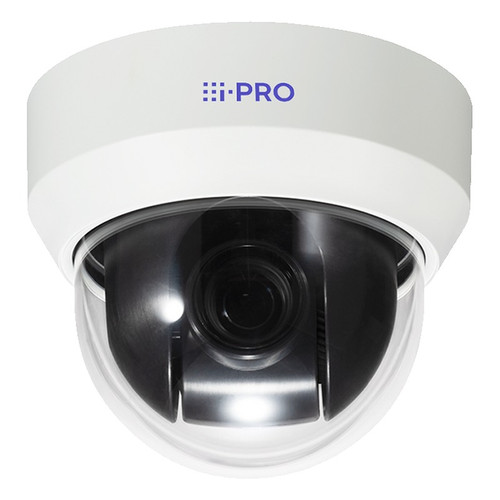
Both the ACTi B928 and i-PRO WV-S65501-Z1 are 5MP outdoor PTZ IP cameras targeting perimeter and wide-area surveillance. They share the same resolution class and PTZ form factor, making them genuine cross-shop candidates for integrators specifying long-range outdoor tracking systems. The comparison below examines how their imaging capabilities, environmental and power profiles, and VMS/analytics ecosystems differ—drawing exclusively from published specifications for each model.
In This Guide
How do the imaging specs compare?
The B928 delivers a 36x optical zoom range on a 4.6–165.6mm lens with a 1/2.9" CMOS sensor, reaching IR illumination out to 200m via 850nm LEDs. Its minimum illumination is rated at 0.003 lux in color mode and 0 lux (IR on) in monochrome, supported by 120dB Extreme WDR. Maximum frame rate is 30fps at full 5MP, with resolution scaling down to 320×240. The WV-S65501-Z1 uses a narrower 10x optical zoom (4.7–47mm) on a slightly larger 1/2.8" CMOS sensor. Its WDR is rated at 132dB (limited to 15fps above level 30), and minimum illumination is 0.004 lux monochrome (0.007 lux color). The i-PRO model does not specify a dedicated IR illumination range beyond a 1.5m focus minimum; IR capability is confirmed but a maximum throw distance is not published in the provided specs.
On zoom reach, the B928's 36x ratio substantially outranges the WV-S65501-Z1's 10x, making it the stronger choice for wide-area identification at distance. The WV-S65501-Z1 compensates with a higher WDR ceiling (132dB vs. 120dB), a marginally larger sensor, and a published DORI detection range of up to 945.4m in telephoto mode—derived from its optics and AI analytics rather than zoom ratio alone. The B928 has a clear advantage in zero-lux IR performance (0 lux vs. 0.004 lux), while the WV-S65501-Z1 leads in dynamic range headroom and built-in image stabilization via gyro sensor, a feature absent from the B928 spec sheet.
What about installation and environment?
Both cameras share IP66 and IK10 ratings, and both carry NEMA 4X designations, placing them on equal footing for moisture, dust, and impact resistance. The B928 operates across a wider temperature range: −40°C to +55°C, versus the WV-S65501-Z1's −30°C to +55°C operational range (with a −20°C power-on minimum). For arctic or sub-arctic deployments, the B928's broader cold-weather rating is a meaningful differentiator. The WV-S65501-Z1 adds a Temish anti-condensation element and specifies wind resistance up to 40 m/s (≈89 mph), neither of which appears in the B928's provided specifications.
Power requirements diverge significantly. The B928 demands up to 75W—requiring either AC 24V or High PoE (not standard PoE+ at 802.3at)—which places it outside the reach of most standard PoE+ switches and necessitates a separate power injector or midspan in many deployments. The WV-S65501-Z1 draws a maximum of 18.9W on PoE+, 15.4W on DC 12V, or 12.95W on standard PoE, making it compatible with standard 802.3at infrastructure without additional hardware. The B928 weighs approximately 3,146g (6.94 lbs); the WV-S65501-Z1 is approximately 1,600g (3.53 lbs), a relevant factor for pole or pendant mounting loads. The B928 supports wall, pole, pendant, corner, and rack mounting; the WV-S65501-Z1's mounting options are not enumerated in the provided specifications.
Which fits your VMS and analytics better?
Both cameras support ONVIF Profile S, G, T, and M, ensuring broad VMS compatibility. The WV-S65501-Z1 runs on an Ambarella CV22 SoC and offers AI analytics including AI Video Motion Detection, face detection, vehicle detection, people detection, and AI sound classification (gunshot, yell, vehicle horn, glass break). It also supports scene change detection, up to 32 privacy zones, up to 8 VIQS zones, and 4-area VMD. Audio transmission modes include off, mic input, line input, half-duplex, and full-duplex via a 3.5mm stereo mini jack. On-board storage uses microSDXC. The WV-S65501-Z1 also specifies FIPS 140-2 Level 3 cybersecurity compliance, HTTPS, 802.1X, and signed firmware.
The B928 provides VMD, people counting, and smoke detection as listed analytics—a narrower AI feature set than the WV-S65501-Z1. Audio is supported via two-way line-in/line-out. On-board storage is not mentioned in the provided B928 specifications. The B928 carries Taiwan IoT Cybersecurity Certification Level 1; FIPS 140-2 compliance is not listed. The WV-S65501-Z1 supports a wider protocol stack (SNMPv1/v2/v3, MQTT, SFTP, LLDP, IPv6 with DHCPv6/MLD) and up to 14 simultaneous users, while the B928's network protocol depth and concurrent user limit are not enumerated in the provided specs. For deployments requiring AI-driven forensic search, audio event classification, or deep cybersecurity certification, the WV-S65501-Z1 holds a clear edge.
Which should you choose: the B928 or the S65501-Z1?
Our take: The B928 is the stronger choice when long-range optical zoom, zero-lux IR performance, and extreme cold-weather operation are the primary requirements. Its 36x zoom (vs. 10x) and 200m IR throw substantially exceed the WV-S65501-Z1 in raw optical reach, and its −40°C cold-start rating gives it a decisive advantage in arctic climates where the i-PRO model requires temperatures above −20°C to power on. However, the B928's 75W power demand (vs. 18.9W for the WV-S65501-Z1) adds infrastructure cost and complexity, often requiring non-standard PoE hardware. The WV-S65501-Z1 leads on WDR headroom (132dB vs. 120dB), AI analytics depth (face, vehicle, people, audio event classification), FIPS 140-2 Level 3 cybersecurity, on-board microSDXC storage, and a lighter form factor. Specify the B928 for long-zoom perimeter tracking with challenging cold environments; specify the WV-S65501-Z1 where standard PoE+ infrastructure, advanced AI analytics, and cybersecurity compliance are priorities.
Side-by-Side Comparison
Spec-for-spec, from manufacturer data.
| Specification | ACTi B928 | i-PRO S65501-Z1 |
|---|---|---|
| Resolution | 5MP | 5MP |
| Image Sensor | 1/2.9" CMOS | Approx. 1/2.8" CMOS |
| Lens / Focal Length | 4.6–165.6mm (36x optical zoom) | 4.7–47mm (10x optical zoom) |
| Min. Illumination (Color) | 0.003 lux @ F1.55 | 0.007 lux (not explicitly stated at specific f-stop in provided specs) |
| Min. Illumination (B/W) | 0 lux (IR LED on) | 0.004 lux (B&W, 16/30s) |
| IR Range | 200m (850nm) | Not specified in provided specs |
| WDR | 120dB (Extreme WDR) | 132dB (limited to 15fps above level 30) |
| Max Frame Rate | 30fps @ 5MP | 30fps |
| Video Compression | H.265, H.264, MJPEG | H.265, H.264, MJPEG |
| IP Rating | IP66 / NEMA 4X | IP66 / Type 4X / NEMA TS2 |
| IK / Impact Rating | IK10 | IK10 |
| Operating Temperature | −40°C to +55°C (cold-start −40°C) | −30°C to +55°C (power-on min. −20°C) |
| Power Input / Max Consumption | AC 24V or High PoE; 75W max | DC 12V (15.4W), PoE (12.95W), PoE+ (18.9W) |
| PTZ Range (Pan / Tilt) | 360° endless pan; −20° to +200° tilt | 360° endless pan; −15° to +195° tilt |
| Preset Speed | 300°/s (pan) | 500°/s (PoE+) |
| Edge Storage | — (not specified in provided specs) | microSDXC |
| AI Analytics | VMD, People Counting, Smoke Detection | AI VMD, Face, Vehicle, People Detection, AI Sound Classification |
| ONVIF Profiles | S, G, T, M | S, G, T, M |
| Audio | Two-way; Line-in; Line-out | Mic/Line input; audio output; half/full-duplex (3.5mm jack) |
| Cybersecurity | Taiwan IoT Cybersecurity Certification Level 1 | FIPS 140-2 Level 3, GlobalSign cert, HTTPS, 802.1X, Signed Firmware |
| Weight | 3,146g (6.94 lbs) | Approx. 1,600g (3.53 lbs) |
| Warranty | — (not specified in provided specs) | 3-year warranty |
Frequently Asked Questions
Which should you choose: the B928 or the S65501-Z1?
The B928 is the stronger choice when long-range optical zoom, zero-lux IR performance, and extreme cold-weather operation are the primary requirements. Its 36x zoom (vs. 10x) and 200m IR throw substantially exceed the WV-S65501-Z1 in raw optical reach, and its −40°C cold-start rating gives it a decisive advantage in arctic climates where the i-PRO model requires temperatures above −20°C to power on. However, the B928's 75W power demand (vs. 18.9W for the WV-S65501-Z1) adds infrastructure cost and complexity, often requiring non-standard PoE hardware. The WV-S65501-Z1 leads on WDR headroom (132dB vs. 120dB), AI analytics depth (face, vehicle, people, audio event classification), FIPS 140-2 Level 3 cybersecurity, on-board microSDXC storage, and a lighter form factor. Specify the B928 for long-zoom perimeter tracking with challenging cold environments; specify the WV-S65501-Z1 where standard PoE+ infrastructure, advanced AI analytics, and cybersecurity compliance are priorities.
Is the ACTi B928 or i-PRO WV-S65501-Z1 better for low-light performance?
The B928 reaches 0 lux in monochrome with its 850nm IR LEDs active, compared to 0.004 lux monochrome for the WV-S65501-Z1. However, the WV-S65501-Z1's IR throw distance is not specified in the available data, while the B928 is rated to 200m. If zero-lux IR at distance is the requirement, the B928 has the documented advantage. The WV-S65501-Z1 counters with 132dB WDR (vs. 120dB) and built-in gyro-based image stabilization, which benefits low-light performance in high-vibration environments.
Can the i-PRO WV-S65501-Z1 run on a standard PoE+ switch, and can the ACTi B928?
Yes—the WV-S65501-Z1 draws 18.9W on PoE+ (802.3at), well within the 30W budget of a standard PoE+ port, and can also operate at 12.95W on standard PoE. The B928 requires up to 75W, which exceeds standard PoE+ (30W) and even PoE++ Class 8 (90W is the ceiling, but 75W requires IEEE 802.3bt Type 3 or 4 infrastructure or a separate AC 24V feed). Most standard PoE+ switches cannot power the B928 without additional hardware.
Which camera offers better AI analytics—the B928 or the WV-S65501-Z1?
The WV-S65501-Z1 offers a broader AI analytics suite: AI Video Motion Detection, face detection, vehicle detection, people detection, scene change detection, and AI sound classification covering gunshot, yell, vehicle horn, and glass break events. The B928 lists VMD, people counting, and smoke detection. For applications requiring facial detection, vehicle classification, or audio-event triggering at the edge, the WV-S65501-Z1's Ambarella CV22-based AI is the stronger option per the published specifications.
Get a Second Opinion on Your Camera Choice
Share your site layout, coverage goals, and budget. Our team will validate the camera selection, flag anything we would change, and recommend products that match the use case.