
ACTi B916 vs ACTi B934: Specification Comparison
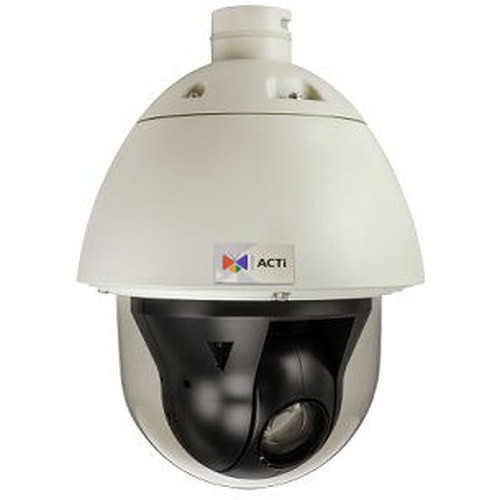
The ACTi B916 and ACTi B934 are both 2MP speed dome PTZ cameras from the same manufacturer, sharing identical resolution class, sensor size, zoom architecture, and ONVIF compliance. The B916 is purpose-built for outdoor deployment with a hardened enclosure, while the B934 targets indoor environments with a longer-reach zoom. Installers evaluating a PTZ for a single site—whether a perimeter, parking structure, or interior atrium—will likely cross-shop these two models on environmental rating, zoom range, power requirements, and operating temperature.
In This Guide
How do the imaging specs compare?
Both cameras share a 1/2.8" sensor, 2MP resolution, 60 fps capability, 145 dB WDR, and identical minimum illumination of 0.002 lux color / 0.001 lux B/W (IR on) at F1.6. The primary optical difference is zoom range: the B916 offers a 4.7–94 mm lens at 20x optical zoom plus 16x digital zoom, while the B934 extends that to a 4.5–135 mm lens at 30x optical zoom plus 16x digital zoom. For long-range identification tasks—license plate capture at distance or corridor-length coverage—the B934's 30x optical zoom provides a measurable advantage without relying on digital interpolation.
The B934 spec sheet also lists a 30 fps ceiling at 4K, indicating the sensor pipeline supports higher-resolution output modes not called out in the B916 specs. The B916 spec does not list a 4K mode. Both cameras support H.264 (Baseline/Main/High) and MJPEG compression. IR illumination wavelength (700–1100 nm) is explicitly noted for the B916; the B934 spec confirms IR capability but does not list a wavelength range. Both units include day/night functionality.
What about installation and environment?
The B916 is rated IP67 and IK10, making it suitable for full dust ingress protection, temporary submersion, and high-impact vandal resistance; it also carries NEMA 4X certification. The B934 carries an IK09 impact rating and no IP rating is listed in the provided specs, confirming its indoor-only designation. For any outdoor, perimeter, or exposed mounting location the B916 is the only viable choice between these two.
Operating temperature range reflects the same divide: the B916 is rated −40°C to 60°C on PoE and −52°C to 60°C on AC 24V, covering extreme cold climates. The B934 is rated −20°C to +50°C, appropriate for climate-controlled interiors. Power input also differs: the B916 requires High PoE 45W (802.3at) or AC 24V, while the B934 runs on DC 12V or High PoE (802.3at). Weight is substantially different—2,605 g for the B916 versus 1,574 g for the B934—a factor when specifying pendant or pole mounts. The B934 adds a Ceiling mount option not listed for the B916; the B916 lists Wall, Pole, Pendant, Corner, and Rack.
Which fits your VMS and analytics better?
Both cameras are ONVIF-compliant across Profile S, G, T, and Q, with Profile M pending via future firmware on both units. The B916 additionally lists VISCA, Pelco-D, Pelco-P, and ACTi URL protocol compatibility, giving it a broader legacy VMS integration footprint. The B934 spec does not explicitly list those legacy PTZ protocols. Both cameras support the same edge analytics set: VMD (video motion detection) and People Counting.
Audio capability is equivalent on both: two-way audio with microphone input, line input, and line output are specified for the B916; mic-in, line-in, and line-out are listed for the B934. On-board storage specifications are not provided in the supplied specs for either model. The B916 carries a stated 3-year warranty (1 year in continuous motion); no warranty term is listed in the B934 specs.
Which should you choose: the B916 or the B934?
Our take: The B916 is the stronger choice when the deployment site is outdoors, in extreme temperatures, or where vandal resistance is required. Its IP67/IK10/NEMA 4X enclosure and −40°C to 60°C operating range (PoE) give it a definitive environmental edge the B934 cannot match. Conversely, the B934 is the better fit for indoor, climate-controlled spaces where long-range zoom is the priority: its 30x optical zoom (4.5–135 mm) outreaches the B916's 20x (4.7–94 mm) by a meaningful margin for large interior atria, airports, or long corridors. The B916 also supports legacy PTZ protocols (VISCA, Pelco-D, Pelco-P) that the B934 spec does not list, advantaging it in older VMS environments. Choose the B916 for outdoor or mixed-use sites with harsh conditions and legacy control requirements; choose the B934 for indoor sites demanding maximum optical reach in a lighter, ceiling-friendly form factor.
Side-by-Side Comparison
Spec-for-spec, from manufacturer data.
| Specification | ACTi B916 | ACTi B934 |
|---|---|---|
| Resolution | 2 MP | 2 MP |
| Image Sensor | 1/2.8" | 1/2.8" |
| Lens / Focal Length | 4.7–94 mm (20x optical zoom) | 4.5–135 mm (30x optical zoom) |
| Digital Zoom | 16x | 16x |
| Min Illumination (Color) | 0.002 lux @ F1.6 | 0.002 lux @ F1.6 |
| Min Illumination (B/W, IR on) | 0.001 lux | 0.001 lux |
| WDR | 145 dB | 145 dB |
| Max Frame Rate | 60 fps @ 2MP | 60 fps @ 1080p; 30 fps @ 4K |
| Video Compression | H.264 (Baseline/Main/High); MJPEG | H.264 (Baseline/Main/High); MJPEG |
| IP Rating | IP67 | — |
| IK / Impact Rating | IK10 | IK09 |
| Operating Temperature | −40°C to 60°C (PoE); −52°C to 60°C (AC 24V) | −20°C to +50°C |
| Power Input | AC 24V or High PoE 45W (802.3at) | DC 12V or High PoE (802.3at) |
| Application Environment | Outdoor | Indoor |
| PTZ Pan Range | 360° endless | 360° endless |
| PTZ Tilt Range | −20° to 200° | 0° to 180° |
| Preset Speed | Up to 720°/sec; 256 presets | Up to 720°/sec; 256 presets |
| ONVIF Profiles | S, G, T, Q, M (M pending firmware) | S, G, T, Q, M (M pending firmware) |
| Legacy PTZ Protocols | VISCA; Pelco-D; Pelco-P; ACTi URL | — |
| Audio | Two-way; Mic-in; Line-in; Line-out | Two-way; Mic-in; Line-in; Line-out |
| Edge Analytics | VMD; People Counting | VMD; People Counting |
| Mount Options | Wall; Pole; Pendant; Corner; Rack | Wall; Ceiling; Pole; Pendant; Corner; Rack |
| Weight | 2,605 g (5.74 lb) | 1,574 g (3.47 lb) |
| Certifications | CE Class B; FCC Class B; UL 62368-1; NEMA 4X; EAC; CB | — |
| Warranty | 3 years (1 year continuous motion) | — |
Frequently Asked Questions
Which should you choose: the B916 or the B934?
The B916 is the stronger choice when the deployment site is outdoors, in extreme temperatures, or where vandal resistance is required. Its IP67/IK10/NEMA 4X enclosure and −40°C to 60°C operating range (PoE) give it a definitive environmental edge the B934 cannot match. Conversely, the B934 is the better fit for indoor, climate-controlled spaces where long-range zoom is the priority: its 30x optical zoom (4.5–135 mm) outreaches the B916's 20x (4.7–94 mm) by a meaningful margin for large interior atria, airports, or long corridors. The B916 also supports legacy PTZ protocols (VISCA, Pelco-D, Pelco-P) that the B934 spec does not list, advantaging it in older VMS environments. Choose the B916 for outdoor or mixed-use sites with harsh conditions and legacy control requirements; choose the B934 for indoor sites demanding maximum optical reach in a lighter, ceiling-friendly form factor.
Is the B916 or B934 better for low-light performance?
Based on the provided specs, both cameras are equal in low-light performance: each achieves 0.002 lux (color, F1.6) and 0.001 lux (B/W, IR on). Neither has a measured advantage on minimum illumination.
Can the B934 be used outdoors?
No IP rating is listed for the B934 in the provided specifications, and it is designated as an indoor camera with an operating range of −20°C to +50°C. The B916, rated IP67/IK10/NEMA 4X with a −40°C to 60°C PoE range, is the appropriate choice for outdoor installations.
Which camera has better zoom for identifying subjects at long range?
The B934 offers 30x optical zoom (4.5–135 mm) versus the B916's 20x optical zoom (4.7–94 mm). For long-range optical identification the B934 provides greater reach without digital zoom degradation, provided the environment is indoors or within its rated conditions.
Get a Second Opinion on Your Camera Choice
Share your site layout, coverage goals, and budget. Our team will validate the camera selection, flag anything we would change, and recommend products that match the use case.