
ACTi B76A vs i-PRO X22700-V2L: Specification Comparison
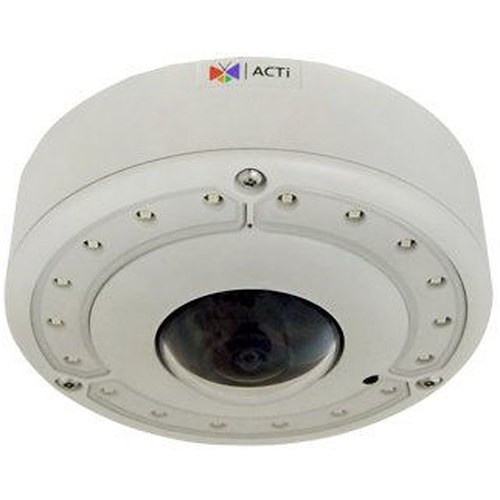
Both the ACTi B76A and i-PRO WV-X22700-V2L are 12-megapixel fixed IP cameras aimed at the professional surveillance market, but they solve coverage differently: the B76A is an outdoor-rated hemispheric dome delivering a single 360°×180° panoramic view, while the X22700-V2L is an indoor directional dome with a motorized varifocal lens and deep AI analytics. Buyers choosing between them are typically trading panoramic situational awareness against targeted, zoom-capable AI detection — both on a PoE+ feed at the same native resolution.

In This Guide
How do the imaging specs compare?
Both cameras share a 12MP sensor, but the underlying optics diverge sharply. The ACTi B76A uses a 1/1.7-inch sensor with a fixed 1.65mm fisheye lens to produce a full 360°×180° hemispheric image at up to 30 fps (2048×2048) or 18 fps at 4000×3000. Its WDR is rated at 130 dB and minimum illumination is 0.003 lux in color (0 lux B/W with IR on), with an 850nm IR LED covering 20 meters. The i-PRO X22700-V2L uses an approximately 1/1.8-inch CMOS sensor with a motorized varifocal 4.3–8.6mm lens (2.0× optical zoom, extendable to 12× digital), producing 30 fps at full 4K (3840×2160). Its Super Dynamic WDR reaches a maximum of 132 dB at the highest setting, and minimum illumination is 0.03 lux B/W with IR — a full decade worse than the B76A in absolute lux terms.
The B76A's 20-meter IR range is calibrated for wide-area fisheye coverage in a compact scene, while the X22700-V2L extends IR illumination to 70 meters — more than three times further — which is relevant for long-corridor or perimeter detection within its directional field of view. The X22700-V2L also adds optical image stabilization via a gyro sensor and an Ambarella CV52 SoC, enabling its AI pipeline. The B76A does not list an image stabilizer or named SoC in its specifications.
What about installation and environment?
The ACTi B76A is rated IP68 (continuous submersion), IK10 (impact), and NEMA 4X (corrosion/washdown) and is certified for outdoor use across -40°C to +50°C — a -40°F cold-start rating that covers arctic deployments. It accepts PoE Class 3 (IEEE 802.3af) or DC 12V and weighs approximately 936 g. Approved mount types per spec include wall, pole, pendant, corner, and rack. Certifications include CE Class B, FCC Class B, EAC, CB, and UL Listed (UL 60950-1).
The i-PRO X22700-V2L carries IP67 (temporary immersion) and IK10 ratings but is spec'd as an indoor camera, with an operating range of -10°C to +50°C (lower bound 0°C when powered per spec). It draws up to 14.2W from DC 12V or 14.0W over PoE+ (802.3at, PoE Class 4) and weighs approximately 820 g. Its safety certifications include UL (UL62368-1), c-UL, CE, and IEC62368-1; EMC certifications list FCC Part 15 Class A and EN55032 Class A — a commercial-grade Class A rating versus the B76A's stricter Class B residential/light-commercial designation. Mount types listed in spec are pole, corner, and rack; the datasheet dimensions are ø129.5 mm × 102.5 mm.
Which fits your VMS and analytics better?
Both cameras support ONVIF, but the profiles differ slightly. The B76A supports ONVIF Profile S, G, T, Q, and M (M via future firmware upgrade per spec). The X22700-V2L supports ONVIF Profile G, S, T, and M. Video compression on the B76A is H.264 (Baseline/Main/High) and MJPEG — H.265 is not listed in its specifications. The X22700-V2L adds H.265, which reduces bandwidth and storage costs on compatible VMS platforms. The X22700-V2L also supports a broader protocol suite including SNMPv3, MQTT, SFTP, SRTP, LLDP, and IEEE 802.1X, and carries FIPS 140-2 Level 3 and Secure Boot certifications — meaningful for government and high-security deployments. The B76A's network spec lists only a single RJ-45 port with no additional protocol detail in the provided specifications.
On analytics, the X22700-V2L provides AI Video Motion, Face, People, and Vehicle Detection, plus AI Sound Classification (gunshot, yell, vehicle horn, glass break), Scene Change Detection, and up to 8 privacy zones — all processed on the Ambarella CV52 SoC. The B76A's analytics are limited per spec to VMD and People Counting. For audio, the B76A lists audio input, built-in microphone, mic-in, line-in, and line-out; the X22700-V2L offers a 3.5mm stereo input and output with G.726, G.711, and AAC-LC compression, plus audio detection alarming. On-board storage: the X22700-V2L supports microSD/SDHC/SDXC up to 512 GB; the B76A specification does not list edge storage support. The i-PRO carries a stated 5-year warranty; no warranty term is listed in the B76A's provided specifications.
Which should you choose: the B76A or the X22700-V2L?
Our take: The B76A is the stronger choice when the priority is outdoor panoramic coverage in harsh environments: its 360°×180° hemispheric view, IP68/NEMA 4X rating, -40°C cold-start, and 0.003 lux color sensitivity each exceed the X22700-V2L on the environmental and low-light axes. Conversely, the X22700-V2L is the stronger choice for indoor AI-driven detection: it delivers 70-meter IR reach versus the B76A's 20 meters, 132 dB Super Dynamic WDR versus 130 dB, H.265 compression (absent on the B76A), and a substantially deeper AI analytics stack — Face, Vehicle, People, and AI Sound Classification on an Ambarella CV52 SoC — plus FIPS 140-2 Level 3 and on-board microSD storage up to 512 GB. The two cameras serve different deployment roles: specify the B76A for outdoor wide-area or washdown environments where a single fisheye replaces multiple cameras, and the X22700-V2L for indoor installations requiring AI forensics, long-range IR, or zero-trust security compliance.
Side-by-Side Comparison
Spec-for-spec, from manufacturer data.
| Specification | ACTi B76A | i-PRO X22700-V2L |
|---|---|---|
| Resolution | 12MP | 12MP |
| Image Sensor | 1/1.7-inch | Approx. 1/1.8-inch CMOS |
| Lens / Focal Length | 1.65mm fixed fisheye | 4.3–8.6mm motorized varifocal (2.0× optical) |
| Field of View | 360°×180° hemispheric | 52°–101° H / 29°–55° V (WIDE–TELE) |
| Min. Illumination | 0.003 lux color; 0 lux B/W (IR on) | 0.03 lux B/W (IR on) |
| IR Range | 20m (850nm LED) | 70m |
| WDR | 130 dB | 132 dB (Super Dynamic, Level 31) |
| Max Frame Rate | 30 fps @ 2048×2048; 18 fps @ 4000×3000 | 30 fps @ 3840×2160 (4K) |
| Video Compression | H.264 (Baseline/Main/High), MJPEG | H.265, H.264, MJPEG |
| IP Rating | IP68 | IP67 |
| IK / Impact Rating | IK10 | IK10 |
| Operating Temperature | -40°C to +50°C | -10°C to +50°C (0°C powered) |
| Application Environment | Outdoor | Indoor |
| Power Input / PoE Class | PoE Class 3 (802.3af) or DC 12V | PoE+ (802.3at) Class 4 or DC 12V |
| Edge Storage | — | microSD/SDHC/SDXC up to 512GB |
| Audio | Built-in mic; mic-in; line-in; line-out | 3.5mm stereo in/out; G.726, G.711, AAC-LC |
| Analytics | VMD; People Counting | AI People, Vehicle, Face Detection; VMD; SCD; AI Sound Classification |
| ONVIF Profiles | S, G, T, Q, M (M via firmware) | G, S, T, M |
| Weight | 936g (2.06 lb) | Approx. 820g (1.9 lb) |
| Certifications / Security | CE Class B; FCC Class B; UL (UL 60950-1); NEMA 4X; EAC; CB | UL (UL62368-1); CE; FCC Part 15 Class A; FIPS 140-2 Level 3; Secure Boot |
| Warranty | — | 5-Year |
Frequently Asked Questions
Which should you choose: the B76A or the X22700-V2L?
The B76A is the stronger choice when the priority is outdoor panoramic coverage in harsh environments: its 360°×180° hemispheric view, IP68/NEMA 4X rating, -40°C cold-start, and 0.003 lux color sensitivity each exceed the X22700-V2L on the environmental and low-light axes. Conversely, the X22700-V2L is the stronger choice for indoor AI-driven detection: it delivers 70-meter IR reach versus the B76A's 20 meters, 132 dB Super Dynamic WDR versus 130 dB, H.265 compression (absent on the B76A), and a substantially deeper AI analytics stack — Face, Vehicle, People, and AI Sound Classification on an Ambarella CV52 SoC — plus FIPS 140-2 Level 3 and on-board microSD storage up to 512 GB. The two cameras serve different deployment roles: specify the B76A for outdoor wide-area or washdown environments where a single fisheye replaces multiple cameras, and the X22700-V2L for indoor installations requiring AI forensics, long-range IR, or zero-trust security compliance.
Is the B76A or X22700-V2L better for low-light performance?
By minimum illumination spec, the ACTi B76A reaches 0.003 lux in color (0 lux B/W with IR on), compared to 0.03 lux B/W with IR on the i-PRO X22700-V2L — a ten-to-one advantage in absolute lux for the B76A. However, the X22700-V2L's 70-meter IR range is more than three times the B76A's 20-meter range, meaning it illuminates subjects further away within its directional field of view. For close-range near-dark scenes the B76A has the lower lux floor; for illuminating distant subjects in a corridor or open indoor space the X22700-V2L's IR reach is the relevant figure.
Can either camera be used outdoors?
The ACTi B76A is explicitly rated and certified for outdoor use, with IP68 (continuous submersion), NEMA 4X (washdown/corrosion), and an operating temperature range down to -40°C. The i-PRO X22700-V2L is spec'd as an indoor camera with IP67 and a lower operating limit of -10°C (0°C when powered per spec); i-PRO does not list it for outdoor or washdown environments in the provided specifications. For any outdoor or harsh-environment installation, the B76A is the appropriate choice between these two models.
Which camera has better AI analytics — the B76A or the X22700-V2L?
The i-PRO X22700-V2L has substantially more capable AI analytics per specification: it provides AI Video Motion Detection, Face Detection, People Detection, Vehicle Detection, Scene Change Detection, Audio Detection, and AI Sound Classification across four event types (gunshot, yell, vehicle horn, glass break), processed on an Ambarella CV52 SoC. The ACTi B76A lists VMD (Video Motion Detection) and People Counting as its analytics capabilities. No SoC or additional AI functions are listed in the B76A's provided specifications. If edge AI analytics are a project requirement, the X22700-V2L is the clear choice between these two cameras.
Get a Second Opinion on Your Camera Choice
Share your site layout, coverage goals, and budget. Our team will validate the camera selection, flag anything we would change, and recommend products that match the use case.