
ACTi A811 vs ACTi Z72: Specification Comparison
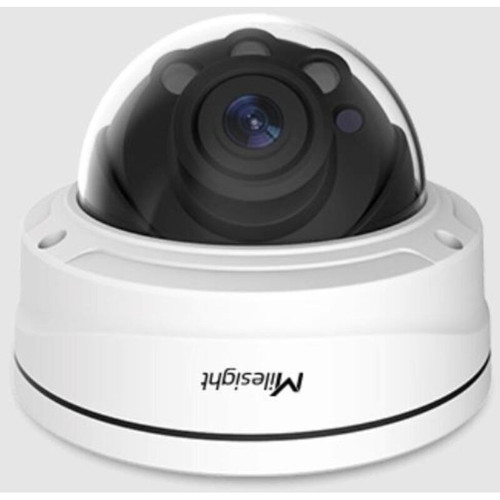
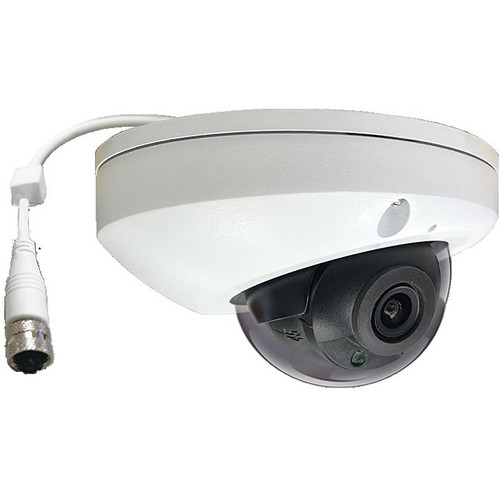
Both the ACTi A811 and ACTi Z72 are 4MP H.265-capable dome cameras designed for surveillance deployment, placing them in the same resolution class and form-factor category. The comparison spans imaging performance, environmental durability, power requirements, and integration capabilities. The A811 is a motorized-zoom outdoor dome with an extended feature set; the Z72 is a fixed-lens dome with a simpler profile. Buyers evaluating either model are typically balancing deployment complexity against feature depth within the same sensor tier.
In This Guide
How do the imaging specs compare?
Both cameras output 4MP resolution. The A811 uses a 1/2.7-inch sensor with a motorized 2.7–13.5mm lens delivering 5× optical zoom, achieving up to 30 fps at 2688×1520. Its IR system uses 850nm LEDs with a specified range of 85m at 1.0 lux, a minimum illumination of 0.01 lux color and 0.002 lux B/W with AGC on, and 0 lux with IR active. WDR is rated at 150dB (Extreme WDR). The Z72 uses a fixed 2.8mm f/1.6 lens with Adaptive IR and Day/Night switching; no sensor size, IR range in meters, minimum illumination value, or numeric WDR rating is provided in the supplied specifications.
The A811's motorized zoom allows post-install field-of-view adjustment, a meaningful operational advantage in perimeter and license-plate capture scenarios. The Z72's f/1.6 aperture is a faster lens by design, which may benefit low-light capture in fixed-angle applications, but no lux figure is available to quantify that benefit from the provided specs. Compression on the A811 includes H.265, H.264, and MJPEG; the Z72 supports H.265 and H.264 only, with no MJPEG option specified.
What about installation and environment?
The A811 carries an IP68 ingress rating (full submersion protection) alongside NEMA 4X and IK10 impact resistance, and is specified for an operating temperature range of −30°C to 60°C (−22°F to 140°F). It is powered by PoE+ (802.3af Class 3 per spec, with 802.3at also noted) or DC 12V. Mount options include wall, pole, pendant, corner, and rack configurations, connected via a 2m pigtail cable with RJ-45 connector. Weight is 1,060g (2.34 lb).
The Z72 carries an IP67 ingress rating (temporary immersion protection) and IK10 impact resistance. Power is PoE 802.3af only. Mounting options are listed as ceiling and wall. No operating temperature range, cable length, connector type, or weight is specified in the provided data. For installations subject to wash-down, flooding risk, or extreme ambient temperatures, the A811's IP68 rating and documented temperature range provide verifiable advantages; the Z72's environmental envelope is not fully defined by the supplied specs.
Which fits your VMS and analytics better?
The A811 declares ONVIF compliance at Profile S, Profile G, Profile T, and Profile M, enabling broad VMS compatibility and event-based recording support. Its onboard analytics include tampering detection, face detection, object line-crossing detection, people counting, and smoke detection, reducing dependence on server-side video analytics licenses. Audio capability is full two-way with mic-in, line-in, and line-out. No onboard storage option is specified in the A811's provided specs.
The Z72 specifies a built-in microphone for audio but does not list two-way audio, line-in, or line-out. No ONVIF profile declarations or edge analytics capabilities are provided in the supplied specifications. The Z72 does list MicroSD onboard storage, which the A811's provided specs do not include, making the Z72 the only model here with a documented local recording option. Buyers requiring verified VMS interoperability or edge analytics should note that these are not confirmed for the Z72 from the provided spec set.
Which should you choose: the A811 or the Z72?
Our take: The A811 is the stronger choice when deployment demands verified flexibility across imaging, environment, and integration. Concretely: (1) its 5× motorized zoom (2.7–13.5mm vs the Z72's fixed 2.8mm) allows post-install field-of-view optimization without physical lens changes; (2) its IP68 plus NEMA 4X rating exceeds the Z72's IP67, and its −30°C to 60°C operating range is documented where the Z72's is not; (3) it provides four confirmed ONVIF profiles, two-way audio, and five onboard analytics functions versus none of these being confirmed in the Z72's supplied specs. The Z72's advantages—simpler PoE 802.3af power budget, faster f/1.6 fixed lens, and MicroSD local storage—suit cost-constrained indoor or sheltered deployments where fixed framing and local recording matter more than zoom or analytics depth. Where those Z72 specs are sufficient and budget or switch capacity is limited, it remains a viable fixed-scene option.
Side-by-Side Comparison
Spec-for-spec, from manufacturer data.
| Specification | ACTi A811 | ACTi Z72 |
|---|---|---|
| Resolution | 4MP | 4MP |
| Lens / Focal Length | 2.7–13.5mm motorized zoom (5× optical) | 2.8mm fixed f/1.6 |
| Image Sensor Size | 1/2.7 inch | — |
| Min Illumination | 0.01 lux color; 0.002 lux B/W (AGC on); 0 lux (IR on) | — |
| IR System | 850nm LED; 85m range @ 1.0 lux | Adaptive IR; Day/Night |
| WDR | Extreme WDR (150dB) | Superior WDR (no dB value specified) |
| Max Frame Rate | 30 fps @ 2688×1520 | — |
| Video Compression | H.265; H.264; MJPEG | H.265; H.264 |
| IP Rating | IP68 / NEMA 4X | IP67 |
| IK / Impact Rating | IK10 | IK10 |
| Operating Temperature | −30°C to 60°C (−22°F to 140°F) | — |
| Power Input / PoE Class | PoE+ 802.3at Class 3; DC 12V | PoE 802.3af |
| ONVIF Profiles | Profile S; G; T; M | — |
| Edge Analytics | Tampering; Face Detection; Line Crossing; People Counting; Smoke Detection | — |
| Audio | Two-way; Mic-in; Line-in; Line-out | Built-in mic |
| Edge Storage | — | MicroSD |
| Mount Options | Wall; Pole; Pendant; Corner; Rack | Ceiling; Wall |
| Weight | 1,060g (2.34 lb) | — |
Frequently Asked Questions
Which should you choose: the A811 or the Z72?
The A811 is the stronger choice when deployment demands verified flexibility across imaging, environment, and integration. Concretely: (1) its 5× motorized zoom (2.7–13.5mm vs the Z72's fixed 2.8mm) allows post-install field-of-view optimization without physical lens changes; (2) its IP68 plus NEMA 4X rating exceeds the Z72's IP67, and its −30°C to 60°C operating range is documented where the Z72's is not; (3) it provides four confirmed ONVIF profiles, two-way audio, and five onboard analytics functions versus none of these being confirmed in the Z72's supplied specs. The Z72's advantages—simpler PoE 802.3af power budget, faster f/1.6 fixed lens, and MicroSD local storage—suit cost-constrained indoor or sheltered deployments where fixed framing and local recording matter more than zoom or analytics depth. Where those Z72 specs are sufficient and budget or switch capacity is limited, it remains a viable fixed-scene option.
Is the A811 or Z72 better for low-light performance?
Based on the provided specifications, the A811 is the only model with quantified low-light figures: 0.01 lux color and 0.002 lux B/W with AGC on, and 0 lux with IR active, at an 85m IR range using 850nm LEDs. The Z72 lists Adaptive IR and Day/Night switching but provides no minimum illumination value or IR range in meters, so a direct numerical comparison cannot be made from the available specs.
Can the Z72 record locally without an NVR?
Yes, based on the provided specifications the Z72 includes MicroSD onboard storage, which supports local recording without an NVR. The A811's provided specifications do not list an onboard storage option, so local recording is not documented for that model.
Does either camera work with any VMS via ONVIF?
The A811 explicitly declares ONVIF compliance at Profile S, Profile G, Profile T, and Profile M, covering live streaming, edge storage, advanced video, and metadata. No ONVIF profile declarations are present in the Z72's provided specifications, so ONVIF compatibility for the Z72 cannot be confirmed from the available data.
Get a Second Opinion on Your Camera Choice
Share your site layout, coverage goals, and budget. Our team will validate the camera selection, flag anything we would change, and recommend products that match the use case.