
ACTi A23 vs ACTi B26: Specification Comparison
Both the ACTi A23 and ACTi B26 are 3MP box cameras from the same manufacturer, sharing the same resolution class and fixed (non-PTZ) form factor at a basic level. However, the B26 is a motorized zoom box camera with 36x optical zoom, PTZ control protocols, and outdoor-rated IP66 enclosure, while the A23 is a compact indoor vari-focal box camera. A buyer evaluating these would be choosing between a short-range, cost-efficient indoor box and a long-range, zoom-capable outdoor unit — a legitimate cross-shop decision within the 3MP box camera category.
In This Guide
How do the imaging specs compare?
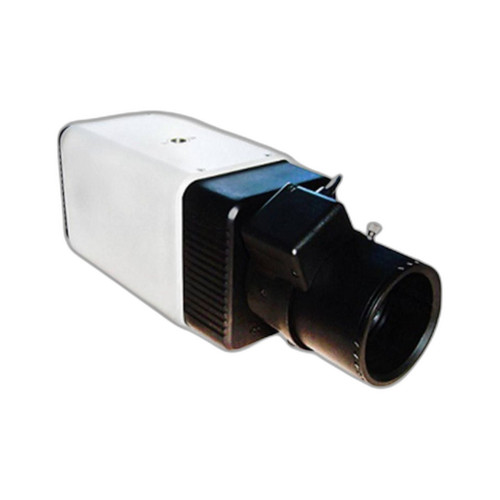
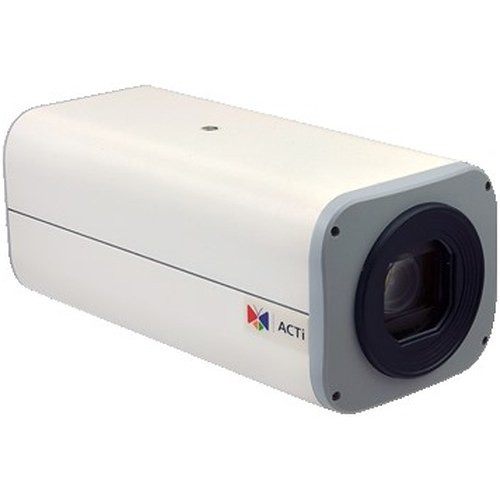
Both cameras deliver 3MP resolution at up to 30 fps, but their lens systems serve fundamentally different coverage scenarios. The A23 uses a fixed vari-focal lens spanning 2.8–12 mm (f1.4–2.8), suited for shorter-range scene framing during installation. The B26 features a 36x optical zoom lens covering 4.6–165.6 mm, enabling forensic-detail capture at ranges exceeding 100 meters. The B26 also specifies a 1/2.8" sensor, a maximum resolution of 2048×1536, and a minimum illumination of 0.003 lux (color) / 0.002 lux (B/W) at F1.55; the A23 does not specify sensor size or minimum illumination in the provided data.
On WDR, the B26 explicitly rates its Extreme WDR at 145 dB, while the A23 lists Extreme WDR without a decibel figure. The B26 includes an IR cut filter with sensitivity in the 700–1100 nm band for day/night operation. The A23 specifies Day/Night capability with a built-in microphone but does not list IR illumination or an IR cut filter. The B26 supports H.265 Adaptive Stream, H.264 (Baseline/Main/High), and MJPEG; the A23 supports H.265 and H.264 without specifying profiles or MJPEG.
What about installation and environment?
The B26 carries an IP66 weatherproof rating, an operating temperature range of -20°C to 50°C (-4°F to 122°F), and weighs 811 g (1.788 lb). It accepts DC 12V or PoE Class 3 (IEEE 802.3af per the spec, though the product is also listed as PoE+ 802.3at Class 3 — buyers should confirm with ACTi). Mounting options are pole, corner, and rack. The A23 carries no IP or IK rating in the provided specifications, indicating it is not documented for outdoor or wet-location use. It draws up to 13W via 802.3af PoE and mounts to ceiling, wall, or corner surfaces. No operating temperature range is listed for the A23.
For installations requiring outdoor deployment, environmental sealing, or extended temperature tolerance, the B26 is the only model with documented ratings. The A23's ceiling/wall/corner mount options and single Cat5e/Cat6 PoE run make it straightforward for controlled indoor environments where zoom range is not a requirement.
Which fits your VMS and analytics better?
The B26 offers broader VMS compatibility, supporting ONVIF Profiles S, G, T, and M, as well as named integrations with Milestone and Axis Camera Station. It includes onboard edge analytics: Video Motion Detection, People Counting, and Smoke Detection. PTZ control is available via Visca, Pelco-D, Pelco-P, and ACTi URL commands for the zoom and positional functions. The A23 is ONVIF-compliant but does not specify which ONVIF profiles are supported, and no edge analytics are listed in the provided specifications.
On audio, the B26 provides two-way audio with a line-in and line-out interface, while the A23 has a built-in microphone only — no audio output or two-way capability is specified. Both cameras list MicroSDHC/MicroSDXC local storage for the A23; the B26's onboard storage capability is not specified in the provided data. The B26 also carries CE Class B, FCC Class B, and Taiwan IoT Cybersecurity Certification (TAICS Level 1; TCA Level 2) approvals, with a stated 3-year warranty; neither of these is documented for the A23 in the provided specifications.
Which should you choose: the A23 or the B26?
Our take: The B26 is the stronger choice when the deployment requires long-range identification, outdoor installation, or rich VMS and analytics integration. Its 36x optical zoom (4.6–165.6 mm vs. the A23's 2.8–12 mm) enables forensic 3MP detail at distances the A23 cannot reach. The IP66 rating and -20°C to 50°C operating range qualify it for exterior or harsh-environment use where the A23 has no documented rating. The B26's 145 dB rated Extreme WDR, ONVIF Profiles S/G/T/M, People Counting, and Smoke Detection analytics extend its value in complex or regulated environments. The A23 is the appropriate selection for budget-conscious, short-range, controlled indoor scenes where a single PoE 802.3af drop, simple ceiling or wall mounting, and a manually set vari-focal lens cover the full requirement — and where the additional cost and complexity of the B26's zoom and outdoor capabilities are unnecessary.
Side-by-Side Comparison
Spec-for-spec, from manufacturer data.
| Specification | ACTi A23 | ACTi B26 |
|---|---|---|
| Resolution | 3 MP | 3 MP |
| Max Frame Rate | 30 fps @ 1080p | 30 fps @ 2048×1536; 30 fps @ 1920×1080 |
| Image Sensor Size | — | 1/2.8" |
| Lens / Focal Length | Vari-focal 2.8–12 mm (f1.4–2.8) | 4.6–165.6 mm (36x optical zoom) |
| Min Illumination | — | 0.003 lux (color) / 0.002 lux (B/W) @ F1.55 |
| IR / Night Vision | Day/Night (no IR illuminator listed) | IR; Day/Night; IR cut filter (700–1100 nm) |
| WDR | Extreme WDR (no dB rating listed) | Extreme WDR (145 dB) |
| Video Compression | H.265; H.264 | H.265 Adaptive Stream; H.264 (Baseline/Main/High); MJPEG |
| IP Rating | — | IP66 |
| Operating Temperature | — | -20°C to 50°C (-4°F to 122°F) |
| Power Input / PoE Class | PoE 802.3af (13W max) | DC 12V; PoE+ 802.3at Class 3 |
| Audio | Built-in microphone (input only) | Two-way (line-in, line-out) |
| Edge Analytics | — | VMD; People Counting; Smoke Detection |
| ONVIF Profiles | ONVIF (profiles not specified) | Profile S, G, T, M |
| VMS Compatibility | ONVIF | ONVIF; Milestone; Axis Camera Station |
| Mount Type | Ceiling; Wall; Corner | Pole; Corner; Rack |
| Weight | — | 811 g (1.788 lb) |
| Warranty | — | 3 Year(s) |
| Certifications | — | CE Class B; FCC Class B; TAICS Level 1; TCA Level 2 |
Frequently Asked Questions
Which should you choose: the A23 or the B26?
The B26 is the stronger choice when the deployment requires long-range identification, outdoor installation, or rich VMS and analytics integration. Its 36x optical zoom (4.6–165.6 mm vs. the A23's 2.8–12 mm) enables forensic 3MP detail at distances the A23 cannot reach. The IP66 rating and -20°C to 50°C operating range qualify it for exterior or harsh-environment use where the A23 has no documented rating. The B26's 145 dB rated Extreme WDR, ONVIF Profiles S/G/T/M, People Counting, and Smoke Detection analytics extend its value in complex or regulated environments. The A23 is the appropriate selection for budget-conscious, short-range, controlled indoor scenes where a single PoE 802.3af drop, simple ceiling or wall mounting, and a manually set vari-focal lens cover the full requirement — and where the additional cost and complexity of the B26's zoom and outdoor capabilities are unnecessary.
Is the A23 or B26 better for low-light performance?
Based on the provided specifications, only the B26 documents a minimum illumination figure: 0.003 lux (color) and 0.002 lux (B/W) at F1.55, plus an IR cut filter with 700–1100 nm sensitivity. The A23 lists Day/Night capability but provides no minimum illumination value or IR illumination specification, so a direct low-light comparison cannot be made from the available data.
Can either camera be installed outdoors?
Only the B26 carries a documented outdoor rating — IP66 — along with an operating temperature range of -20°C to 50°C. The A23 has no IP rating or operating temperature range listed in the provided specifications, so outdoor or wet-location use cannot be confirmed for that model.
Which camera works with more VMS platforms?
The B26 specifies ONVIF Profiles S, G, T, and M, plus named compatibility with Milestone and Axis Camera Station. The A23 is listed as ONVIF-compliant but does not specify which profiles are supported, and no named third-party VMS integrations are listed. Buyers requiring confirmed profile-level ONVIF compliance or specific VMS certification should verify directly with ACTi for the A23.
Get a Second Opinion on Your Camera Choice
Share your site layout, coverage goals, and budget. Our team will validate the camera selection, flag anything we would change, and recommend products that match the use case.