
ACTi A23 vs Geovision BX3400V-401U: Specification Comparison
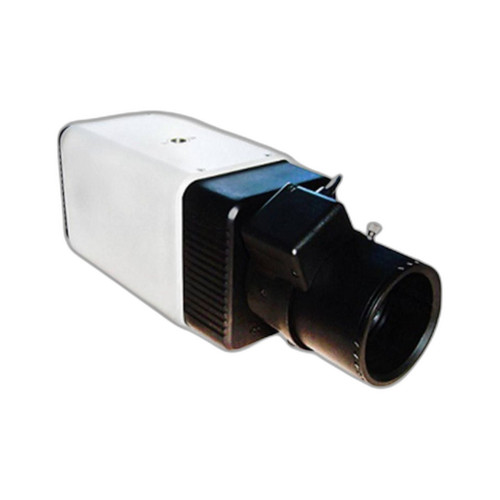
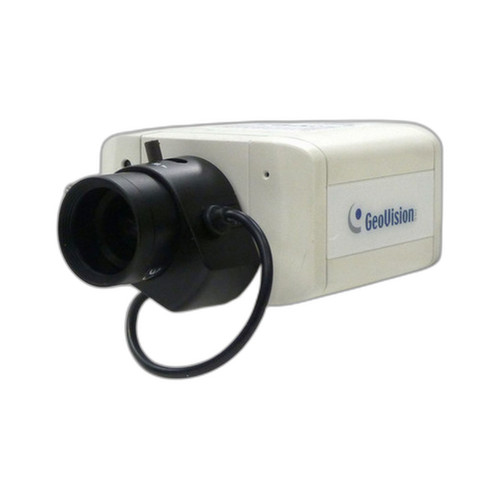
Both the ACTi A23 and Geovision BX3400V-401U are 3MP indoor/outdoor box-form IP cameras with varifocal lenses, PoE power, and ONVIF compatibility — a configuration commonly cross-shopped by integrators equipping multi-camera analog-replacement or greenfield IP deployments. This comparison evaluates how the two models stack up across imaging capability, physical installation requirements, and VMS/analytics integration, drawing exclusively from the published specifications provided for each unit.
In This Guide
How do the imaging specs compare?
Both cameras deliver 3MP resolution, so neither holds an advantage on pixel count alone. The ACTi A23 specifies a maximum frame rate of 30 fps at 1080p and supports dual-codec output in H.265 and H.264, which gives it a meaningful bandwidth and storage efficiency edge — particularly relevant on constrained networks or high-channel NVR deployments. The Geovision BX3400V-401U lists only H.264 compression; no H.265 support is specified, and no maximum frame rate figure is provided in the supplied specs.
On dynamic range, the ACTi A23 is rated 'Extreme WDR,' while the BX3400V-401U lists 'WDR' without a qualifying tier or decibel value — no dB figure is provided for either unit. The A23 specifies a Day/Night IR low-light mode; no low-light or IR specification is provided for the BX3400V-401U. Lens coverage differs: the A23 offers a 2.8–12 mm varifocal range (f1.4–2.8 aperture stated), giving wider zoom reach, whereas the BX3400V-401U covers 3–10.5 mm with no aperture figure specified.
What about installation and environment?
Both cameras share the same box form factor and support ceiling and wall mounting; the ACTi A23 additionally lists corner mounting as a supported option. Both are PoE-powered over standard Cat5e/Cat6 cabling. The A23 specifies the PoE standard as 802.3af at 13W maximum draw, which allows installers to plan switch port budgets precisely. The BX3400V-401U lists PoE power but does not specify an IEEE PoE standard or wattage draw in the provided specs.
Neither product's provided specifications include an IP ingress-protection rating, IK impact rating, operating temperature range, or dimensional/weight data. Installers planning outdoor or harsh-environment deployments should consult the full datasheets for both models before specifying, as none of those environmental parameters can be compared from the data at hand.
Which fits your VMS and analytics better?
Both cameras declare ONVIF compatibility, supporting integration with third-party VMS platforms that conform to the ONVIF standard. The ACTi A23 additionally specifies built-in microphone audio capture, which is relevant for sites requiring audio evidence or two-way communication support at the VMS layer. No audio capability is listed for the Geovision BX3400V-401U.
For edge storage, the ACTi A23 supports MicroSDHC and MicroSDXC cards, enabling local recording failover when network connectivity is interrupted. No edge storage capability is specified for the BX3400V-401U. Neither model lists onboard video analytics in the provided specifications. The BX3400V-401U's connectivity is listed as Ethernet/IPCAM with no further protocol detail beyond ONVIF compatibility; the A23 makes no mention of onboard analytics either.
Which should you choose: the A23 or the BX3400V-401U?
Our take: The A23 is the stronger choice when codec efficiency, wider varifocal range, audio capture, or edge storage failover are project requirements. Concretely: the A23 supports H.265 in addition to H.264 — a compression tier the BX3400V-401U does not specify — which directly reduces storage and bandwidth costs on multi-channel systems. Its varifocal range of 2.8–12 mm outspans the BX3400V-401U's 3–10.5 mm, offering more flexibility for wide-area framing without a lens change. The A23 also specifies a built-in microphone and MicroSD edge storage, neither of which appears in the BX3400V-401U's published specs. The BX3400V-401U's WDR tier and PoE class are unspecified, making direct comparison on those points impossible. Choose the A23 for bandwidth-sensitive, audio-required, or NVR-failover deployments; revisit the BX3400V-401U only after confirming its full datasheet addresses the spec gaps noted here.
Side-by-Side Comparison
Spec-for-spec, from manufacturer data.
| Specification | ACTi A23 | Geovision BX3400V-401U |
|---|---|---|
| Resolution | 3 MP | 3 MP |
| Form Factor | Box | Box |
| Lens / Focal Length | Varifocal 2.8–12 mm (f1.4–2.8) | Varifocal 3–10.5 mm (aperture not specified) |
| WDR | Extreme WDR | WDR (tier not specified) |
| Low-Light / IR Mode | Day/Night IR | — |
| Max Frame Rate | 30 fps @ 1080p | — |
| Video Compression | H.265; H.264 | H.264 |
| Power Input / PoE Standard | PoE 802.3af | PoE (standard not specified) |
| Max Power Draw | 13W | — |
| Mount Types | Ceiling; Wall; Corner | Ceiling; Wall |
| ONVIF | Yes | Yes (ONVIF-compatible) |
| Audio | Built-in microphone | — |
| Edge Storage | MicroSDHC; MicroSDXC | — |
Frequently Asked Questions
Which should you choose: the A23 or the BX3400V-401U?
The A23 is the stronger choice when codec efficiency, wider varifocal range, audio capture, or edge storage failover are project requirements. Concretely: the A23 supports H.265 in addition to H.264 — a compression tier the BX3400V-401U does not specify — which directly reduces storage and bandwidth costs on multi-channel systems. Its varifocal range of 2.8–12 mm outspans the BX3400V-401U's 3–10.5 mm, offering more flexibility for wide-area framing without a lens change. The A23 also specifies a built-in microphone and MicroSD edge storage, neither of which appears in the BX3400V-401U's published specs. The BX3400V-401U's WDR tier and PoE class are unspecified, making direct comparison on those points impossible. Choose the A23 for bandwidth-sensitive, audio-required, or NVR-failover deployments; revisit the BX3400V-401U only after confirming its full datasheet addresses the spec gaps noted here.
Is the A23 or BX3400V-401U better for low-light performance?
Based on the provided specifications, only the ACTi A23 lists a low-light mode — it specifies Day/Night IR operation. The Geovision BX3400V-401U does not include any low-light, IR range, or minimum illumination figure in its published specs, so a direct comparison cannot be made. Verify the BX3400V-401U's full datasheet for illumination ratings before specifying it for low-light environments.
Will either camera work with my existing ONVIF-based VMS?
Both cameras declare ONVIF compatibility, so either should integrate with ONVIF-conformant VMS platforms. The ACTi A23 labels its VMS compatibility as 'ONVIF'; the BX3400V-401U is described as compatible with 'ONVIF-compatible systems.' As ONVIF profile conformance levels vary by implementation, confirm specific profile support (Profile S, T, G, etc.) with each manufacturer before finalizing the VMS integration plan.
Does either camera support local recording if the network goes down?
Yes — the ACTi A23 specifies MicroSDHC and MicroSDXC card slots for on-board edge storage, enabling local recording failover during network outages. No edge storage capability is listed in the Geovision BX3400V-401U's provided specifications. If local failover recording is a project requirement, the A23 has a clear specified advantage on this point.
Get a Second Opinion on Your Camera Choice
Share your site layout, coverage goals, and budget. Our team will validate the camera selection, flag anything we would change, and recommend products that match the use case.