
Geovision BX3400V-401U vs Geovision BX3400V-501U: Specification Comparison
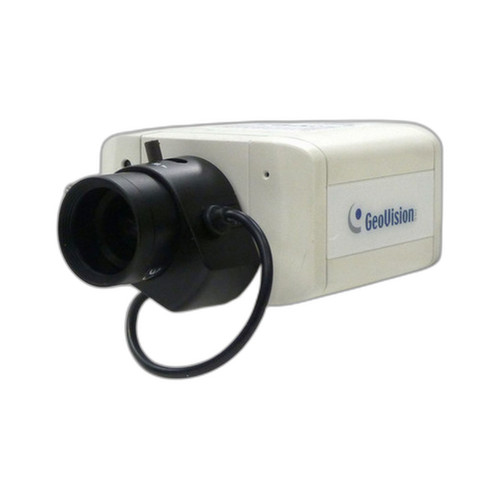
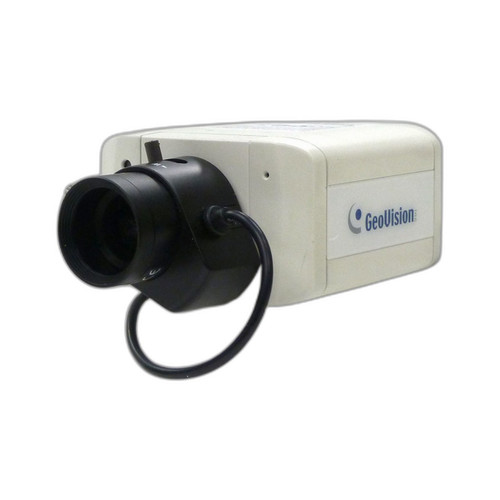
Both the Geovision BX3400V-401U and BX3400V-501U are H.264 box-type IP cameras positioned in the 3 MP resolution class, making them direct cross-shop candidates for installers specifying fixed indoor or transitional enclosure cameras. The primary differentiator visible in the provided specifications is the varifocal lens range: the 401U covers 3–10.5mm while the 501U covers 2.8–6mm. This comparison evaluates imaging, installation, and integration characteristics strictly as documented in the supplied specifications.
In This Guide
How do the imaging specs compare?
Both models share the same resolution class (3 MP) and the same H.264 compression codec, so storage and bandwidth budgets will be equivalent at matching quality settings. Both also carry WDR, indicating each can handle mixed-lighting scenes such as entry vestibules or counter areas where background light and subject shadow coexist. No sensor size, minimum illumination figure, or IR range is provided in the supplied specifications for either model, so no comparison on low-light sensitivity or night-vision reach can be made from the available data.
The lens is where the two models diverge in the imaging section. The BX3400V-401U ships with a varifocal 3–10.5mm lens, giving a 3.5× zoom ratio that supports both wider corridor overviews and tighter license-plate or facial-recognition framing without optic swaps. The BX3400V-501U carries a varifocal 2.8–6mm lens, a narrower 2.1× zoom ratio weighted toward wider-angle coverage. Neither model lists a maximum aperture or f-number in the provided data, so comparative depth-of-field or low-light lens-speed assessment is not possible.
What about installation and environment?
Both cameras share the same box form factor and support ceiling and wall mounting orientations. Neither model has an IP ingress-protection rating, IK impact rating, or operating temperature range listed in the provided specifications, so suitability for outdoor, wet, or extreme-temperature environments cannot be confirmed from the available data.
Power input is a meaningful delta: the BX3400V-401U lists PoE as its power source, while the BX3400V-501U lists both PoE (under Connectivity) and 12V DC (under Power). This dual-input capability on the 501U offers an installation fallback where a PoE switch port is unavailable, though no PoE class (802.3af vs 802.3at) is specified for either unit. No dimensions, weight, or conduit/back-box specifications are provided for either model.
Which fits your VMS and analytics better?
Both models declare ONVIF compliance—the 401U notes 'ONVIF-compatible systems' and the 501U lists 'ONVIF'—enabling integration with any ONVIF Profile S or Profile T NVR or VMS without proprietary drivers. Connectivity for the 401U is listed as Ethernet; the 501U lists PoE under Connectivity, which is also an Ethernet-based delivery method, so both operate on standard Cat5e/Cat6 cabling infrastructure.
No edge analytics, audio input/output, alarm I/O, or onboard SD card storage specifications are provided for either model. Buyers requiring these features should consult Geovision datasheets directly, as a comparison on those dimensions cannot be made from the supplied data.
Which should you choose: the BX3400V-401U or the BX3400V-501U?
Our take: The BX3400V-401U is the stronger choice when longer working distances or tighter scene framing are required, because its 3–10.5mm varifocal lens (3.5× zoom ratio) gives installers significantly more reach than the 501U's 2.8–6mm lens (2.1× zoom ratio). Conversely, the BX3400V-501U is preferable where a wider default field of view is needed in confined spaces, and its dual 12V DC / PoE power input provides an installation fallback the 401U does not list. Both units deliver identical resolution (3 MP), the same H.264 compression, and comparable WDR and ONVIF integration capability. Because neither IP rating, operating temperature, minimum illumination, nor IR range is present in the supplied specifications, buyers with outdoor deployment, extreme-environment, or low-light requirements must verify those parameters against Geovision's published datasheets before making a final selection.
Side-by-Side Comparison
Spec-for-spec, from manufacturer data.
| Specification | Geovision BX3400V-401U | Geovision BX3400V-501U |
|---|---|---|
| Resolution | 3 MP | 3 MP |
| Form Factor | Box | Box |
| Video Compression | H.264 | H.264 |
| Lens Type | Varifocal | Varifocal |
| Lens Focal Length | 3–10.5mm | 2.8–6mm |
| Lens Zoom Ratio | 3.5× | 2.1× |
| WDR | Yes | Yes |
| Power Input | PoE | PoE / 12V DC |
| Connectivity | Ethernet | PoE (Ethernet) |
| Mount Type | Ceiling; Wall | Wall; Ceiling |
| VMS Compatibility | ONVIF-compatible systems | ONVIF |
Frequently Asked Questions
Which should you choose: the BX3400V-401U or the BX3400V-501U?
The BX3400V-401U is the stronger choice when longer working distances or tighter scene framing are required, because its 3–10.5mm varifocal lens (3.5× zoom ratio) gives installers significantly more reach than the 501U's 2.8–6mm lens (2.1× zoom ratio). Conversely, the BX3400V-501U is preferable where a wider default field of view is needed in confined spaces, and its dual 12V DC / PoE power input provides an installation fallback the 401U does not list. Both units deliver identical resolution (3 MP), the same H.264 compression, and comparable WDR and ONVIF integration capability. Because neither IP rating, operating temperature, minimum illumination, nor IR range is present in the supplied specifications, buyers with outdoor deployment, extreme-environment, or low-light requirements must verify those parameters against Geovision's published datasheets before making a final selection.
Is the BX3400V-401U or BX3400V-501U better for low light?
The provided specifications do not include minimum illumination figures, sensor size, aperture, or IR range for either model. A low-light comparison cannot be made from the available data; consult Geovision's published datasheets for those parameters.
Can I power the BX3400V-501U from a standard wall adapter instead of a PoE switch?
Yes, based on the supplied specifications. The BX3400V-501U lists both PoE (Connectivity) and 12V DC (Power), indicating dual-input support. The BX3400V-401U lists only PoE as its power source in the provided data.
Which camera gives me more framing flexibility on a wide-area scene?
The BX3400V-401U's 3–10.5mm varifocal lens offers a 3.5× zoom ratio versus the BX3400V-501U's 2.8–6mm lens at 2.1×. For scenes requiring a tighter crop or longer standoff distance, the 401U provides more adjustment range. For inherently wide-angle coverage in close quarters, the 501U's shorter minimum focal length (2.8mm vs 3mm) provides a marginally wider maximum field of view.
Get a Second Opinion on Your Camera Choice
Share your site layout, coverage goals, and budget. Our team will validate the camera selection, flag anything we would change, and recommend products that match the use case.