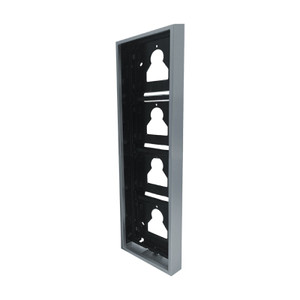
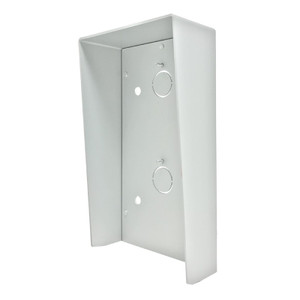
Comelit UT9171B Surface-Mounted Thermal Camera Housing
Overview
The Comelit UT9171B is a surface-mounted wall housing purpose-built for thermal imaging camera installations. This accessory eliminates the need to source mounting infrastructure separately — it integrates directly into standard network-based surveillance architectures using PoE+ (IEEE 802.3at) power delivery. If you're deploying thermal cameras on existing walls without access to recessed mounting or dedicated power runs, the UT9171B handles both the mechanical mount and the electrical feed in one component.
Key Features
- PoE+ (802.3at) Power Delivery: Draws power directly from a standard PoE+ switch or injector — no separate 12VDC or AC power supply required at the camera location. This matters because every camera that avoids a dedicated power line reduces infrastructure cost and installation time, particularly in retrofit scenarios where adding new conduit is expensive.
- Surface-Mount Form Factor: Mounts flush to existing drywall, brick, or concrete without requiring cutouts or recessed boxes. Installation is faster than recessed housing and avoids structural damage. Ideal for properties where drilling into walls is restricted or where you need to minimize modification footprint.
- Thermal Imaging Compatibility: Designed to house thermal (uncooled microbolometer) camera modules. Thermal cameras detect heat signatures rather than visible light, making them effective in complete darkness, through light fog, or when visible-light cameras would be blinded by glare. The UT9171B's housing supports this thermal sensing equipment securely.
- Standard Network Integration: Works with any network-based surveillance system that accepts ONVIF-compliant thermal cameras. No proprietary controllers or specialized VMS licensing required — thermal cameras mounted in the UT9171B can be provisioned alongside standard IP cameras on the same network infrastructure.
- Weatherproof Design for Outdoor Mounting: The housing protects the camera from rain, dust, and direct sunlight exposure. This is essential for perimeter or outdoor facility monitoring where thermal surveillance is needed but the camera itself must survive environmental stress.
- Simplified Deployment on Existing Walls: Because surface-mounted installation avoids structural work, the UT9171B reduces project timelines for warehouse, loading dock, or facility-edge deployments where you need to add thermal monitoring to already-built structures.
Integration & Compatibility
The UT9171B accommodates any thermal imaging camera that conforms to standard mounting profiles and network protocols. It is compatible with PoE+ network switches and standard 802.3at power sourcing equipment. Because the housing is passive (it provides only mounting and electrical feed-through), it works with thermal cameras from any manufacturer that follows ONVIF or standard IP camera protocols.
When planning an installation, verify that your network switch or PoE+ injector can deliver sufficient power budget for both the UT9171B-housed camera and any other connected devices. Each camera draws power through a single Ethernet run, so confirm your switch has enough available 802.3at ports or add a dedicated PoE+ injector if your switch is already at capacity.
For detailed compatibility with specific camera models, consult the camera manufacturer's documentation and the UT9171B datasheet (available from the Comelit product support channel). Thermal camera modules vary in mounting footprint and electrical requirements, so hardware verification before purchase is essential.
When to Choose a Different Approach
If you require recessed in-wall mounting (to preserve aesthetic appearance or minimize protrusion), consider a recessed thermal housing variant from the same thermal imaging category. If your installation site lacks PoE infrastructure and running new Ethernet is infeasible, evaluate cameras with passive 12VDC power delivery and plan for a separate power supply. If thermal imaging is not the right sensing technology for your use case (e.g., you need visible-light detail or license-plate recognition), switch to a standard visible-light IP camera and standard wall mount.
Frequently Asked Questions
Q: Is the UT9171B compatible with all thermal cameras?
A: No. Thermal cameras vary in mounting footprint, connector type, and power requirements. The UT9171B is designed for thermal imaging systems that fit its form factor and accept PoE+ power. Always verify compatibility with your specific camera model before purchasing.
Q: Can I install the UT9171B indoors?
A: Yes. Although designed for outdoor deployment, the UT9171B can be mounted on any interior wall. It is most beneficial in climate-controlled indoor environments where thermal imaging adds detection capability without visible-light constraints.
Q: Does the UT9171B come with a thermal camera?
A: No. The UT9171B is a housing and mounting accessory only. You must source a thermal camera module separately and install it into the housing.
Q: What PoE+ power budget do I need?
A: The UT9171B itself is a passive component. Power consumption depends entirely on the thermal camera module you install. Consult the camera manufacturer's specs to determine total wattage, then ensure your PoE+ switch or injector has sufficient available 802.3at power budget (minimum 30W per port for safe margin).
Q: Is installation difficult?
A: Surface-mount installation is straightforward — mark the mounting location, drill anchor holes, secure the housing to the wall, route the Ethernet cable, and insert the thermal camera module. No special tools required beyond a drill and screwdriver.
Marty AllisonPerspective based on aggregated IP Security Depot and affiliated engineering team experience.
The Comelit UT9171B is a straightforward accessory, but that simplicity comes with a specific constraint worth understanding upfront. Surface-mounted thermal camera housings like the UT9171B work well when you need to retrofit thermal surveillance onto existing infrastructure without structural modification. The PoE+ power model eliminates a common pain point — no need to run separate power conduit — but it also means you're dependent on having adequate PoE+ capacity on your switch.
Technical Highlights:
- PoE+ (802.3at) Architecture: Standard 802.3at delivers up to 30W per port. Thermal camera modules are typically lower-power than visible-light cameras (often 8–15W), but verify the specific thermal camera you pair with the UT9171B to avoid undersizing your switch. One miscalculation here means a dead camera in the field.
- Surface-Mount Advantage: Zero structural modification required. This accelerates installation timelines by days compared to recessed housing and is a genuine win on retrofit projects. However, the housing is visible and cannot be concealed, so placement aesthetics matter.
- Thermal Sensor Optimization: The housing is designed with ventilation and thermal management in mind. Thermal cameras rely on accurate ambient temperature readings to function correctly, particularly in variable outdoor conditions. Proper airflow prevents internal condensation and sensor drift.
Deployment Considerations:
- Thermal cameras require line-of-sight to the target and perform best in scenes with temperature differential. Do not expect thermal imaging to work reliably in uniform-temperature environments or where all visible objects are close to ambient temperature.
- Before installation, confirm your thermal camera's exact mounting footprint and connector type. The UT9171B is designed for specific thermal module sizes, and a mismatch means rework.
- Outdoor installations in freezing climates: thermal cameras can experience image lag or noise in very cold conditions. Plan for heat-tracing or anti-frost housings if deployment is in sustained sub-zero environments.
The UT9171B is a solid choice for warehouse perimeter monitoring, loading dock thermal surveillance, or facility access-point heat detection where you need thermal capability but cannot justify recessed infrastructure work. It's not a universal thermal solution — thermal imaging itself is a specific tool for specific problems — but as an accessory, it removes one friction point from the thermal camera deployment process.