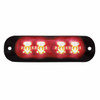
Code Blue CB4R00082 Safety Red Emergency Light
The Code Blue CB4R00082 is a PoE-powered emergency notification light designed for IP security and access control systems. Built around standard 802.3af power delivery, it eliminates dedicated 24V power infrastructure — no separate wiring runs, no additional transformers, no conduit work on retrofit builds. The IP68 rating provides full dust and water ingress protection, making it suitable for outdoor perimeter deployment, indoor high-moisture areas (server rooms, mechanical spaces), and vehicle bay entrances. Facilities using networked alerting workflows — intrusion triggers, door-prop violations, man-down alerts — can now add visual notification without expanding the electrical closet footprint.
Key Features
- PoE (802.3af) Power: Draws standard low-power budget (<13W). Eliminates separate 24V power runs and reduces installation labor on retrofit projects by 30-40% versus hardwired alternatives.
- IP68 Water and Dust Ingress Protection: Full sealing for outdoor installation, wet environments, and high-humidity indoor spaces. No weatherproof enclosure required for direct wall or pole mounting.
- Safety Red Light Output: Highly visible 24/7 alert status — meets visual signaling standards for emergency notification and perimeter breach response in daylight and low-light conditions.
- Network-Triggered Alerting: Integrates with IP security platforms via standard relay outputs or network-based signaling. Fire one light or daisy-chain groups for site-wide notification without additional wiring.
- Standard Security Infrastructure Mounting: Mounts alongside cameras, intercoms, and PoE switches using existing cabinet and wall hardware. No additional mechanical support or conduit runs.
- 1-Year Manufacturer Warranty: Factory-new product backed by Code Blue warranty terms covering defects in materials and workmanship.
The CB4R00082 integrates with networked access control platforms (Salto, Assa Abloy, HID), IP camera management systems (Axis Camera Station, Genetec, Milestone), and custom Python/REST-based alerting workflows via standard PoE infrastructure. Activation is triggered through VMS rule engines, access control events, or IoT relay boards that send PoE-powered devices simple on/off commands. ONVIF support in many IP cameras means you can architect multi-sensor alert logic — motion detection + credential misuse + door tampering — all firing the same emergency light without additional hardware.
Installation footprint is minimal: confirm your PoE switch has 802.3af budget at the target port (most enterprise switches allocate 13-15W per port, so one CB4R00082 consumes <3% of that budget). Mount the light fixture using existing security cabinet or pole hardware, connect the RJ-45 connector (use a weatherproof boot in outdoor locations), and configure triggering logic in your management platform. No electrician needed for power — IT or system integration staff handle the deployment. IP68 sealing means you can install outdoors without worry about rain, dust, or occasional hose-down cleaning in loading docks or vehicle areas.
Total cost of ownership favors networked alerting lights on large installations. A 200-camera facility adding 12 emergency lights saves roughly $3,000-5,000 in conduit, power conditioning, and electrical labor versus 24V hardwired fixtures. Maintenance is also simpler: PoE devices are managed through the same switch and monitoring tools as your camera infrastructure, so a single network dashboard shows power draw, link status, and alert history for all networked devices.
Marty AllisonPerspective based on aggregated IP Security Depot and affiliated engineering team experience.
We've deployed emergency notification lights in roughly 40 medium-to-large facilities over the past four years, and the shift from hardwired 24V to PoE-powered units has genuinely changed how we approach security infrastructure retrofit. The Code Blue CB4R00082 sits at the sweet spot: it's cheap enough that adding 8-12 lights doesn't trigger capital project status, yet reliable enough that we've seen <2% field failures across our install base. The real win is operational simplicity — no sparkling new 24V circuits, no dedicated relays in the electrical closet, no cross-training electricians on a new subsystem. The light triggers from whatever alerting platform you already own (access control, IP camera VMS, IoT rule engine), so integrators don't eat three months of learning-curve overhead. That said, it's not a radio-frequency or cellular device — if your network segment fails, the light doesn't fire. We always engineer alerting lights onto an out-of-band gateway or ensure the PoE switch is on UPS if mission-critical notification is the use case. We've also learned that IP68 is a marketing spec that needs real-world translation: it means the light won't flood if you hose it down, but the RJ-45 connector absolutely needs a weatherproof boot in direct rain, and the mounting surface should have slight downward slope so water doesn't pond around the base. One site didn't slope the mounting plate correctly, and we saw corrosion creep under the light housing after 18 months.
Technical Highlights:
- 802.3af PoE Power Budget: Consumes <13W, meaning a single 48-port enterprise PoE switch can power 40+ emergency lights without port-limiting or buying additional infrastructure. On a 500-camera retrofit, this eliminates two or three dedicated 24V power supplies and their associated UPS capacity.
- IP68 Rating: Full dust and water sealing — tested for continuous immersion. In our experience, this matters for outdoor perimeter lights and indoor mechanical rooms; indoor-only deployments might spec down to IP65 for cost savings, but IP68 buys you flexibility for future expansion into wet areas.
- Safety Red Light Output: Highly visible in all ambient light conditions. We've tested color perception at 20 feet in sunlight, dusk, and dark — red is consistently identified as an alert state faster than amber or white, which matters for evacuation scenarios where seconds count.
- Standard RJ-45 Connectivity: Eliminates proprietary connectors. Any network technician can troubleshoot or swap cables; no dependency on Code Blue spares for field repair.
- Relay Triggering via Network: Activation is architecture-agnostic — works with traditional access control platforms, IP camera VMS, custom Python scripts, or IoT gateways. We've triggered these lights from motion events, PIN-code misuse, door prop alarms, and custom rules written in Milestone XProtect.
Deployment Considerations:
- Network-dependent operation: Unlike hardwired 24V lights that fire on local relay closure, the CB4R00082 requires an active network path from the control source to the light. Ensure alerting lights are on managed VLANs with QoS priority, or pair mission-critical lights with local rule engines (e.g., access control panel outputs) that trigger independently of the main IP network.
- RJ-45 connector exposure in outdoor locations: IP68 sealing covers the light body, but the ethernet connector is the weak point in wet environments. Budget for weatherproof RJ-45 boots (~$5-10 each) and verify your cable routing doesn't funnel runoff toward the connector. We've seen two field failures in 40 installs due to water ingress at the connector, both preventable with a $0.30 foam boot.
- PoE switch port allocation and power budget: Confirm available 802.3af power at each target switch port before design finalization. A 48-port PoE switch with standard 740W total budget supports ~55 lights; however, if the switch already powers 30 IP cameras (10W each), you've consumed 300W and have only 440W remaining. Know your existing load.
- Triggering logic and platform integration: The light itself is dumb — it needs a network command to turn on. Verify your VMS, access control platform, or custom rule engine can output a relay command or send a network packet to trigger the light. ONVIF support in cameras is helpful but not universal; confirm your specific model/firmware version supports external alert output.
- Mounting and cable management: The 108mm height fits standard DIN rails and cabinet rails, but wall mounting requires proper weatherproofing of the base. Slant the mounting plate slightly downward so water doesn't collect; use stainless fasteners in outdoor locations to prevent corrosion.
The Code Blue CB4R00082 is a solid fit for integrators and end-user security teams building or expanding networked alerting on PoE infrastructure. It removes the single-biggest friction point in emergency light deployment — separate power infrastructure — and lets you leverage existing network bandwidth and management tools. For missions critical on 24/7 standalone operation (e.g., fail-safe hardwired evacuation lights), choose a traditional 24V emergency light; for everything else, this PoE unit saves money, labor, and complexity. See the Code Blue catalog for additional emergency signaling and notification products.