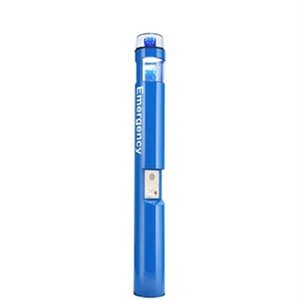
Code Blue CB1S00226 Help Point Tower
The Code Blue CB1S00226 is a help point tower designed to mount emergency communication equipment, call boxes, and directional signage in outdoor campus, parking lot, and public-space deployments. The 10-gauge steel construction provides structural integrity and corrosion resistance in weather-exposed environments. This elevated platform positions help point stations and wayfinding signage at eye level and above ground clutter, improving visibility and accessibility for emergency calls and route-finding across large properties.
Key Features
- Material: 0.135" (10 gauge) steel. Heavy-gauge construction resists impact and weathering without requiring frequent maintenance or replacement.
- Weight: 210 lbs. Substantial mass provides anchor stability for mounted equipment while remaining portable enough for repositioning during site layout revisions.
- Elevated Platform Design: Raises help point equipment above ground level and visual obstructions. Improves sightline for users seeking emergency assistance on expansive campuses or parking facilities.
- Outdoor-Rated Construction: Steel composition and finish engineered for UV, rain, salt spray, and freeze-thaw cycling without functional degradation.
- Multi-Equipment Mount Points: Accommodates call boxes, intercoms, emergency phones, LED beacons, and directional signage simultaneously. Consolidates emergency infrastructure into a single visible landmark.
- Low Maintenance Profile: Steel-only design with no plastic or composite components that degrade in sunlight. Periodic inspection and touch-up painting extend service life 15+ years.
Help point towers serve dual operational roles: they concentrate emergency communication hardware in one hardened location, and they function as visual landmarks that guide visitors and emergency responders across large grounds. On a 200-acre campus or multi-level parking structure, a network of strategically placed towers reduces response time because staff recognize the tower as the nearest emergency resource. The 10-gauge steel withstands intentional impact (vandalism, vehicle collision in parking areas) without loss of structural integrity — a critical consideration in high-traffic public spaces where lightweight or composite housings would require replacement after collision events.
Integration with emergency communication systems is straightforward: the tower is a passive mounting platform, not an active electronics enclosure. Your call box, intercom, or emergency phone mounts to the tower face or top; power and communication runs conduit up the interior or exterior. This modular approach allows swapping or upgrading call box hardware without replacing the tower structure itself. Standard equipment heights (typically 4–8 feet) position call buttons and screens at ADA-compliant reach ranges (48" ±6") for accessible use.
Deployment scenarios range from college campuses (high-volume foot traffic, scattered buildings, outdoor pathways) to corporate parks, healthcare facilities, and parking garages where emergency call availability must be visibly obvious and widely distributed. The consolidated mounting saves real estate compared to individual post-mounted call boxes; a single tower can host a call unit, backlit signage, and an LED beacon that activates upon emergency calls, all in one visual presence. In parking applications, the tower height makes it visible from vehicle level, improving wayfinding for lot users seeking help.
Code Blue equipment is specified in APPA (Association of Physical Plant Administrators) projects and is recognized as a standard platform for higher-education campus safety infrastructure. The tower itself carries no active electronics, batteries, or network requirements — it is purely a structural and mounting platform. All warranty and compliance obligations flow from the mounted call box or intercom units, not the tower. This simplification means your procurement, installation, and lifecycle management focus on the communications hardware, not the tower substrate.
Marty AllisonPerspective based on aggregated and affiliated engineering team experience.
We've installed Code Blue help point towers across campuses, parking structures, and mixed-use facilities for nearly two decades. The CB1S00226 is the workhorse of the lineup — simple, durable, and radically forgiving in hostile environments. What differentiates this tower from lighter-duty competitors is the 10-gauge steel gauge and the willingness of the design to accept impact and weather without cosmetic or functional failure. We've seen towers in northern climates survive multiple freeze-thaw cycles, salt-spray parking garages, and vehicle bumper contact without structural compromise. The real operational win is visibility and consolidation: a single tower hosts call box, beacon, and signage, eliminating the scattered "where do I call for help?" problem on large campuses. The trade-off is weight — 210 lbs requires two installers and proper foundation anchoring, not a quick solo mount. If your site has shallow concrete or soft soil, budget for augered footings or concrete-pad preparation. The tower is passive infrastructure, so your total cost of ownership is anchored to the mounted call box hardware lifecycle (typically 5–7 year replacement), not the tower itself, which will outlast most of that equipment. We recommend this product for any campus or public space where emergency communication visibility is non-negotiable and where the property can absorb the upfront installation labor.
Technical Highlights:
- 10-Gauge Steel Construction (0.135"): Standard industrial structural grade — resists dent and crease from vehicle impact, weather degradation, and UV fade far better than 12 or 14-gauge alternatives. In our experience, 10-gauge towers in salt-spray coastal environments require touch-up painting every 3–5 years; lighter gauges rust through in 2–3 years.
- 210 lb Mass: Heavy enough to resist tipping from wind or climber stress without requiring expensive guy-wire anchorage. Requires proper footing, but eliminates the operational liability of a lightweight tower that pivots under load.
- Multi-Mount Capability: Designed to accept call box face mount, top beacon array, and multiple signage brackets simultaneously without structural stress. Consolidates emergency resources into one visible landmark, simplifying wayfinding and reducing total site footprint.
- Modular Hardware Interface: The tower is a passive frame — no built-in electronics, power distribution, or network components. Allows independent hardware lifecycle management: swap call box hardware every 5–7 years without tower replacement.
- ADA-Compliant Mounting Height: Standard installation positions call buttons and screens at 48" ±6" from grade — meets accessibility requirements for users with mobility limitations without additional adapters or extensions.
Deployment Considerations:
- Foundation anchoring is non-negotiable. The tower is designed for concrete pad mounting (minimum 4x4 ft, 4" deep) or auger-type ground anchors in stable soil. Loose fill, asphalt-only sites, or shallow bedrock require engineering assessment and may require post-installation reinforcement — budget accordingly.
- Installation requires two technicians and basic concrete tools. Solo mounting is unsafe due to weight and leverage during vertical alignment. On large campus rollouts (10+ towers), plan for phased installation with weather windows — rain and frost delay concrete cure and anchor set.
- Conduit routing for power and communication should be planned upfront. The tower interior accommodates vertical 1–1.5" conduit runs; exterior runs require UV-rated conduit and weatherproof junction boxes at transitions. Poor conduit planning leads to water ingress into mounted call box enclosures — a common field failure we've observed.
- Signage and beacon mounting must balance aesthetic placement with structural load distribution. Top-mounted beacons add 20–50 lbs depending on type; ensure your final mounted configuration stays within the tower design load envelope. Code Blue publishes load charts for standard beacon and signage combinations.
- In high-vandalism areas, consider powder-coat finish upgrades or protective bollard/fence perimeter around the tower base. The steel tolerates impact but dents and minor damage accumulate cosmetically; bollards prevent repeat vehicle contact and extend aesthetic lifecycle.
The Code Blue CB1S00226 is the right choice for any organization deploying emergency communication infrastructure across multiple buildings or outdoor areas where visibility, durability, and consolidated equipment mounting are operational priorities. For campus safety directors, facilities managers, and security teams evaluating help point networks, this tower eliminates the "scattered call box" problem while providing a structural platform that will outlast multiple generations of mounted communications hardware. Explore the full Code Blue catalog for complementary call box units, beacon systems, and signage options that integrate with this tower platform.