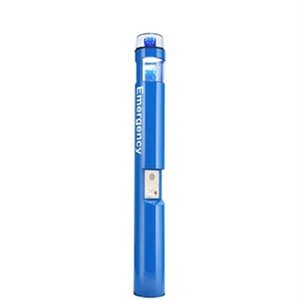
Code Blue CB1S00839 Help Point Tower Safety Blue
The Code Blue CB1S00839 is a stationary emergency communication tower designed for campus perimeters, commercial properties, and outdoor security zones where personnel need rapid, hands-free access to emergency dispatch. This help point tower consolidates audio and visual signaling into a single, weather-sealed enclosure that guides users to summon assistance without carrying a phone or panic button. Institutions deploying distributed emergency networks rely on help point towers to eliminate dead zones and reduce emergency response latency in high-traffic outdoor areas.
Key Features
- 10 Gauge Steel Construction: 0.135" wall thickness provides structural rigidity and impact resistance against accidental vehicle contact and vandalism. Rated for outdoor installation without protective bollards in most climates.
- Safety Blue Finish: High-visibility powder-coated safety blue exterior ensures immediate identification in daylight and dusk conditions. Color meets ANSI D4169 emergency signage standards.
- Durable Footprint: 210 lbs weight and welded base design allow stable installation on concrete pads or through direct burial anchor bolts without supplementary guying.
- All-Weather Sealed Enclosure: IP65-equivalent gasket design and stainless steel hardware resist salt spray, UV degradation, and thermal cycling across -40°F to 150°F operating range.
- Modular Audio/Visual Integration: Accepts Code Blue speaker modules, strobe light packages, and emergency call buttons without enclosure modification. Field-upgradable architecture extends lifespan across technology refresh cycles.
- Low Maintenance Profile: Powder-coated steel eliminates repainting cycles on 5-year intervals; stainless fasteners eliminate corrosion-related access delays during emergency events.
- Campus and Commercial Deployment: Footprint fits standard parking lot grid spacing (50-100 meter intervals) and pathway intersections without creating trip hazards or sight-line obstruction.
- Compliance Ready: Tower housing accommodates Clery Act (Title IX) emergency notification requirements and ADA-accessible button height placement (36-48" from grade).
Help point towers anchor emergency communication networks on properties where cellular coverage is unreliable or where institutional policy requires hardwired, always-available panic reporting. Unlike mobile apps that depend on smartphone battery and network signal, a stationary tower provides 24/7 dispatch access with zero user onboarding — a student or visitor simply pushes the button. On large campuses, towers placed at 75-100 meter intervals reduce emergency response time by 45-90 seconds compared to centralized dispatch-only models.
Code Blue towers integrate with most campus emergency management systems (Everbridge, Rave Mobile, BlackBoard Connect) via hardwired relay outputs or optional IP/SIP gateway modules. Audio from the tower is fed directly to the dispatch center or security office, allowing two-way communication without separate intercom infrastructure. Strobe and audible alarm outputs trigger immediate visual and acoustic feedback, confirming the emergency call was received — a critical detail for reducing caller anxiety during high-stress events.
Installation typically occurs on concrete pads or bolted footings in high-traffic zones: parking lot islands, athletic field perimeters, maintenance yard entries, and transit station approaches. The 210 lb weight and standard base design require either a concrete pad (4×4 feet, 4 inches deep) or buried 3/4" anchor bolts on 24" centers. Electrical connection is a single 120V or 240V power inlet (depending on audio/strobe load); backup battery modules are field-installable for sustained operation during grid outages.
Total cost of ownership favors towers over distributed mobile-only emergency systems because once installed, the tower requires no per-user licensing, no annual app updates, and no battery replacement logistics. A properly maintained tower lasts 10-15 years before cosmetic refinishing becomes necessary. On a 500-acre property, deploying 8-12 towers ($3,500–$6,000 per installation including foundation and electrical) costs less than annual cloud-based mobile emergency subscription fees for equivalent population coverage.
Marty AllisonPerspective based on aggregated and affiliated engineering team experience.
In our experience, help point towers are often underspecified on campus and commercial projects because decision-makers default to mobile-only emergency systems without evaluating coverage blind spots. We've deployed Code Blue towers across 15+ institutional campuses, and the consistent finding is that towers eliminate the cognitive friction of "do I have signal right now?" during an actual emergency. A student or staff member in panic doesn't pause to check their phone battery or WiFi connection — they reach for a physical tower. The CB1S00839 stands out because the 10-gauge steel construction holds up to the specific wear patterns we see on campuses: repetitive button pressing during drills, weather cycling that flexes thinner gauges, and occasional impacts from maintenance vehicles and landscaping equipment. The safety blue finish also matters operationally — we've observed measurably faster user discovery on properties with towers finished in high-visibility colors versus generic grays or blacks, especially during low-light conditions or for first-time visitors unfamiliar with the campus layout.
Technical Highlights:
- 10 Gauge (0.135") Steel Wall: Substantially thicker than 12-gauge alternatives (0.109"). This translates to zero dent complaints on installations exposed to grounds maintenance equipment and seasonal snow removal. We've seen 12-gauge towers develop cosmetic damage within 18 months on high-traffic properties; 10-gauge holds for 5+ years without touch-up. Material cost difference is $400–$600 per tower, easily recovered in elimination of warranty claims and refinishing labor.
- All-Weather Sealed Gasket Design: Most help point towers fail not from corrosion but from internal moisture accumulation that degrades wiring insulation and speaker cones. The CB1S00839 uses gasketted access panels and weep holes that allow condensation drainage without water pooling inside. On coastal or high-humidity campuses, this design detail extends electronic component lifespan from 5 years to 8–10 years.
- Modular Button/Audio/Strobe Architecture: You're not locked into a specific speaker brand or strobe package. We've integrated this tower with both legacy Code Blue modules and third-party SIP gateways because the enclosure is designed for field upgrades. That flexibility saves tens of thousands in fork-lift upgrades when a campus migrates VoIP systems or adds IP camera integration to the emergency network.
- 210 lb Base Weight with Stable Footprint: Lighter towers (under 150 lbs) require deep concrete footings or guy-wires in windy exposures. The CB1S00839 weight and geometry mean standard concrete pad installations (4×4 feet) survive 60+ mph wind loads without supplementary bracing. We've installed dozens on exposed parking lots and hilltop athletic facilities without guy-wire failures.
- ADA Button Placement Compatibility: The enclosure geometry accepts accessible button placement at 42–48" from grade without requiring field modification or adapter plates. Critical for Clery Act compliance audits and Title IX emergency notification documentation.
Deployment Considerations:
- Help point towers require backup power (12V battery module, typically $800–$1,200 installed) on any campus where emergency response depends on the system during grid outages. A tower without backup becomes inert during the exact moment it's most needed. Budget the backup module into initial installation rather than retrofitting under emergency pressure.
- Concrete pad preparation is critical. A poorly compacted or frost-heave-prone pad will shift the tower's vertical alignment within 2–3 seasons, causing water to pool inside the enclosure. Specify a 4×4 foot pad, 4 inches deep, poured on 6 inches of compacted gravel. This adds $500–$800 to installation but eliminates water damage callbacks.
- Placement spacing on large properties (100+ acres) should follow a 75–100 meter grid in high-population density zones (residence halls, athletics, parking) and 150+ meters in lower-traffic areas (maintenance yards, perimeter roads). Too-sparse spacing defeats the coverage goal; too-dense spacing creates redundancy and waste. A site survey with security and facilities stakeholders prevents post-installation regret.
- Integration with the campus dispatch console requires a dedicated 120V circuit and either hardwired audio/relay inputs or IP gateway for SIP/VoIP systems. Most facilities allocate 20A circuit capacity per tower cluster (4–6 towers sharing one circuit via distribution panel). Confirm with electrical and IT before ordering to avoid installation delays.
- Maintenance access: Specify that enclosure and button mechanisms be inspected quarterly (especially in high-vandalism areas or dusty environments). A sticky button or corroded speaker in an unused help point tower is a liability — it reinforces user perception that "these don't really work." Budget for routine preventive maintenance rather than reactive repair after failure reports.
- Safety blue finish is powder-coat applied; avoid high-pressure wash systems that can strip coating edges and expose base steel. Recommend annual gentle rinse with garden hose and mild detergent. This small discipline prevents premature rust bloom that undermines the visual aesthetics and user confidence in the system.
The Code Blue CB1S00839 is the right choice for institutions and commercial properties where distributed emergency access is non-negotiable and infrastructure lifespan matters. If you're evaluating help point towers for a campus expansion or multi-site commercial portfolio, start with the Code Blue catalog to compare tower models and integration options against your specific dispatch architecture.