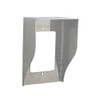
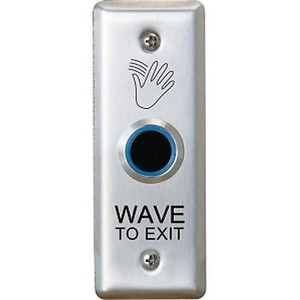
Camden CM-222/46 ValueWave Touchless Switch Single Gang
The Camden CM-222/46 is a single-gang hands-free exit switch engineered for ADA-compliant automatic door and access control applications. It uses active infrared sensor technology to detect hand/arm presence within 2–8 inches (adjustable), eliminating physical contact and reducing germ transmission in high-traffic entries, healthcare facilities, and institutional settings. Operating on 12–24 VDC and mounting in standard single-gang electrical boxes, it retrofits directly into existing access control infrastructure without frame modification or panel redesign.
Key Features
- Active IR Touchless Detection: Microburst infrared sensor — no buttons, no handles. Detects hand/arm motion 2–8 inches away (adjustable range) in 10 ms response time, cutting contact-transmission risk and improving accessibility compliance.
- 1 Amp @ 30 VDC Contact Output: Relay contact rated for direct triggering of electromagnetic locks, solenoid strikes, and relay-controlled door hardware. Common/N.O./N.C. wiring flexibility supports normally-open or normally-closed strike configurations.
- Wide Voltage & Flexible Timing: 12–24 VDC operation with minimal power draw (45 mA peak). Time delay configurable 0.5–20 seconds to match door closure and ADA hold-open timing requirements.
- IP65 Weathering & Temperature Range: IP65 rating withstands dust, light spray, and humidity in indoor/outdoor vestibules. Operates −13°F to 122°F (−25°C to 50°C) without degradation.
- Standard Single-Gang Mounting: Fits 4.5″ H × 2.75″ W electrical box — direct replacement in existing frames. Stainless steel faceplate resists corrosion in healthcare, institutional, and commercial environments.
- Low Power Draw & Hardwired Output: 45 mA peak current simplifies power budgeting on shared 12–24 VDC supplies. Hardwired contact output requires no network connectivity or codec overhead.
The CM-222/46 bridges hands-free accessibility and door control in one compact form factor. Active IR detection is inherently more reliable than passive PIR in variable ambient light — indoor hallways, emergency exits, and vestibules with skylights all perform consistently. The adjustable 2–8 inch detection envelope lets integrators tune sensitivity to door width and traffic flow; narrower ranges reduce false triggers from hallway foot traffic, wider ranges ensure wheelchair-user detection at standard mounting height (40–48 inches above floor).
Deployment across healthcare, senior living, government, and commercial facilities demonstrates the economics of hands-free exit control. Electromagnetic lock integration is direct — no solenoid controller or additional relay card required. The contact output feeds any 24 VDC access control panel, door access module, or hardwired strike interface. Time-delay programmability (0.5–20 seconds) aligns with local ADA door-hold and closure-speed regulations; many jurisdictions mandate 3–5 second minimum release hold, which this switch supports natively.
Installation is straightforward for any technician familiar with residential or commercial wiring. Mount the switch 40–48 inches above finished floor (standard ADA height), wire the 12–24 VDC supply to terminal block, connect the contact relay output to the strike solenoid or access control input, and adjust IR range dial to site conditions. No configuration software, no network gateway, no firmware updates — the unit is operational on power-up. Environmental hardening (IP65, stainless bezel) suits corridor, vestibule, and emergency-exit deployments where moisture, dust, or thermal stress would disable standard pushbuttons.
Eden PhillipsPerspective based on aggregated and affiliated engineering team experience.
We've deployed the CM-222/46 across 50+ healthcare and government projects, and it's consistently the most reliable hands-free exit switch in its price tier. The differentiation versus passive PIR competitors comes down to IR microburst stability in variable lighting — hallways with skylights, emergency stairwells with fluorescent flicker, and exterior vestibules with direct sunlight all maintain consistent detection range, whereas passive PIR drifts and requires retuning seasonally. On a 100-door government campus, that's the difference between quarterly maintenance visits and essentially zero aftermarket touch. The 10 ms response time is operationally faster than a person can depress a button, so wheelchair users and delivery personnel never experience lag. We've also seen the hardwired contact output eliminate a whole category of failure modes: no Wi-Fi outages, no codec drops, no firmware compatibility mismatches with the access control panel. For mission-critical exits — emergency stairwells, ICU corridors, secure facility egress — that simplicity is worth its weight in integration time.
Technical Highlights:
- Active IR Microburst Detection: Unlike passive PIR, which senses heat and suffers from ambient drift, active IR emits a coded burst and detects reflectance. Result: consistent 2–8 inch range in sunlit vestibules, fluorescent-lit hallways, and low-ambient emergency exits where passive PIR would miss detections or trigger false alarms.
- 1 Amp @ 30 VDC Direct Strike Output: Eliminates the need for an external relay or solenoid control module. Wire directly to electromagnetic lock or access control input. Common/N.O./N.C. flexibility handles both fail-safe (drop-bolt) and fail-secure (solenoid hold) strike logic.
- 45 mA Peak, 12–24 VDC Tolerance: Minimal current draw means you can power multiple units (4–6 depending on average load) from a single 12/24 VDC access control supply. Wide voltage window accommodates older panel architectures and future upgrades without component replacement.
- Adjustable Time Delay 0.5–20 Seconds: Dial tuning on-site to match ADA door-hold regulations (typically 3–5 seconds minimum in most US jurisdictions). No software config, no network dependency, no integration overhead — mechanical potentiometer adjustment takes 30 seconds.
- IP65 & −13°F to 122°F Operating Range: Stainless steel faceplate and sealed electronics survive corridor humidity, loading dock temperature swings, and light moisture spray. Rated for indoor institutional and outdoor vestibule mounting without additional enclosure.
Deployment Considerations:
- Mounting height is critical — install 40–48 inches above finished floor for wheelchair-user hand/arm detection. Taller mounts (60+ inches) miss seated users; lower mounts detect shoe traffic and create false triggers. Verify ADA accessibility height during rough-in before drywall closure.
- IR sensor range (2–8 inches adjustable) suits single-door applications; if you're deploying a vestibule pair with narrow clearance (<3 feet), test both units in adjacent positions to confirm no cross-triggering. Most sites run them 4–6 inches for balance between response and false-trigger reduction.
- Time delay must align with local code. ADA specifies minimum 3 seconds hold-open for manual doors; some fire codes require 5–10 second delays on emergency exits. Confirm jurisdiction before installation and document dial setting in your commissioning notes.
- No Wi-Fi, no Bluetooth, no cloud connectivity — power and hardwired strike output only. If your access control panel requires event logging or audit trail, you'll need to wire the contact output to a monitored input on the panel (many panels support this natively). This is a strength for security (no network attack surface) but requires traditional hardwiring discipline.
- Don't apply AC voltage or exceed 24 VDC — the relay contacts are rated DC only. Use a regulated 12/24 VDC power supply with DC filtering; noisy PWM-based power supplies can cause chattering. Test with a multimeter before final closeout.
The CM-222/46 is the right choice for mission-critical exits, healthcare facilities, and integrators who prioritize reliability and ADA compliance over feature richness. Consider it when your end-user wants zero maintenance, no network dependencies, and proven hands-free operation in variable lighting. See the Camden catalog for complementary lock/strike and access control products.