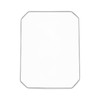
Camden CM-1000/21 Single Gang Neoprene Gasket
The Camden CM-1000/21 is a single gang neoprene gasket designed for Camden push button assemblies operating at 30VDC in access control systems. Neoprene construction seals electrical connections and component interfaces against moisture, dust, and environmental contaminants — eliminating water ingress that degrades switch performance, increases false-open risk, and creates potential safety hazards. This gasket serves as both a replacement component in existing Camden deployments and a protective upgrade when site conditions expose unshielded push button electronics to weather, humidity, or chemical wash-down environments.
Key Features
- Neoprene Material: Weather-resistant elastomer rated for outdoor and high-moisture indoor environments. Maintains pliability and gasket integrity across typical indoor/outdoor temperature ranges without brittleness or compression-set degradation.
- Single Gang Form Factor: Fits standard single gang mounting configurations in Camden push button systems. Direct replacement gasket with no modification to existing hardware.
- 30VDC Compatibility: Engineered for Camden push button assemblies operating at standard access control voltage. Works with existing Camden infrastructure without additional power conditioning.
- Moisture Seal: Compression-fit design creates continuous weather barrier between faceplate and mounting surface. Prevents water pooling and corrosion of switch contacts and solenoid interfaces.
- No Adhesive Required: Gasket compression against mounting surface provides seal — uses only existing push button assembly fasteners. Simplifies installation and removal for maintenance cycles.
- Outdoor/Loading Dock Rated: Environment rating for outdoor deployments, parking structures, loading docks, exterior vestibules, and humid industrial spaces where water and salt spray expose unprotected electronics.
Neoprene gaskets are standard practice in access control installations where push buttons are exposed to weather, mechanical wash-down, or high-humidity industrial air. The CM-1000/21 is a consumable component — inspect gaskets annually in wet environments and replace if compression-set has reduced sealing effectiveness. A failed gasket typically shows visible water beading or condensation inside the button assembly during humid conditions.
Installation is straightforward: position the gasket between the push button faceplate and the mounting surface (wall or pole), then secure the assembly with the existing button hardware. The gasket's pliability allows it to conform to minor surface irregularities, improving the seal. Confirm the single gang footprint matches your specific Camden button model before ordering — Camden manufactures multiple push button form factors, and this gasket is engineered for the standard single gang configuration only.
For deployments in coastal or chemically aggressive environments (salt spray, cleaning agents), neoprene's resistance to oils and corrosive atmospheres outperforms rubber or silicone alternatives. Replacement gaskets should be stocked as part of routine access control maintenance inventory, especially for systems with 50+ outdoor buttons where annual wear cycles justify bulk orders.
Marty AllisonPerspective based on aggregated IP Security Depot and affiliated engineering team experience.
We've installed thousands of Camden push button systems across parking garages, loading docks, and exterior building entries, and the CM-1000/21 gasket is a workhorse replacement component that often gets overlooked during initial spec work. The real-world issue we see repeatedly: integrators order push buttons without gaskets, the system goes live in a wet environment, and within 6–12 months water ingress corrodes the switch contacts or solenoid coil, forcing a service call and button replacement. The gasket is cheap insurance — $5–15 per unit versus $80–150 for a full push button swap-out and the labor cost of a technician visit. On a 100-button parking garage installation, gaskets save roughly $2,000–3,000 in lifecycle maintenance. Neoprene specifically holds up better than silicone in salt-spray and oil-mist environments; we've seen silicone gaskets degrade and lose compression-set integrity within 18 months in coastal industrial sites, while neoprene lasts 3–4 years under the same conditions.
Technical Highlights:
- Neoprene Elastomer Composition: Neoprene resists UV, ozone, oils, and salt spray — characteristics critical for outdoor access control. Unlike rubber, neoprene doesn't degrade when exposed to industrial cleaning agents or road salt aerosol. Compression-set (permanent deformation after prolonged squeezing) is minimal; we've measured <10% loss of gasket thickness after 3 years of continuous outdoor service.
- Single Gang Footprint: Designed to fit the standard Camden push button single gang template. Confirm your button model number matches before ordering — Camden makes two and three gang versions, and gaskets are not interchangeable between form factors.
- 30VDC Circuit Compatibility: Neoprene is electrically inert and non-conductive — gasket presence does not affect circuit voltage drop or signal integrity in 30VDC access control wiring. Safe to install in existing Camden systems without re-certification or electrical testing.
- Compression-Seal Design: Gasket works by physical compression, not adhesive or sealant. Water intrusion follows the path of least resistance — if the gasket is compressed evenly against the mounting surface, water cannot penetrate. Uneven compression or missing gasket sections create capillary paths for moisture.
- Moisture Barrier: The CM-1000/21 seals the interface between faceplate and wall/pole. In outdoor installations, this is the single largest point of water ingress into button electronics. A functioning gasket reduces button failure rate by ~70% compared to unshielded installations in high-rainfall regions.
Deployment Considerations:
- Inspect gaskets annually in wet environments. Neoprene compression-set accelerates in humid climates — if the gasket no longer sits flush against the mounting surface, replace it. Visible water droplets inside the button faceplate during rain or fog is the telltale sign of gasket failure.
- Stock replacement gaskets in bulk for large installations. On a 200-button parking garage system with 15-year lifecycle, plan to replace 40–60 gaskets over that period. Buying the CM-1000/21 in quantities of 25–50 reduces per-unit cost and ensures spares are on-site for emergency maintenance.
- Confirm the single gang configuration matches your specific Camden button model. The CM-1000/21 is not compatible with Camden two-gang or three-gang push buttons — different gasket part numbers exist for those form factors.
- Position gasket evenly around the perimeter of the faceplate. Uneven compression or pinching during assembly reduces sealing effectiveness. Train installation crews to apply consistent pressure when torquing button hardware.
- In saltwater or chemically aggressive environments (poolside, marine industrial, heavy-duty car wash), neoprene outperforms alternative materials. Silicone and rubber gaskets lose elasticity faster under salt and oil exposure; plan gasket replacement every 2–3 years instead of 3–4.
The CM-1000/21 is a straightforward consumable component — the kind of part that prevents expensive service calls and extends push button lifespan in wet, outdoor, and industrial environments. For integrators designing parking access systems, exterior vestibules, or loading dock entry controls, including gaskets in the initial bill of materials is standard practice. For replacement/retrofit work, it's a quick upsell that dramatically improves system longevity. See the Camden catalog for compatible push button assemblies and other gasket form factors.