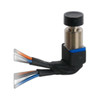
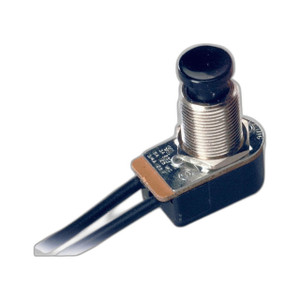
Camden CM-1000/42 DPDT Momentary Contact Switch
The Camden CM-1000/42 is a surface-mount DPDT momentary contact switch designed for access control systems, electric strike activation, and electromagnetic lock control. Rated 6 amperes @ 125 volts AC and 3 amperes @ 30 volts DC, it provides momentary dry-contact closure — the circuit engages only while the button or key is pressed, then automatically releases. This behavior is critical in life-safety applications where sustained contact could create a door-lock hazard or unintended device activation. The single-piece die-cast aluminum housing with integrated mortise cylinder accommodation makes it suitable for restricted-access vestibules, server rooms, secured entries, and areas where key-based push-button activation is required.
Key Features
- DPDT Momentary Contact: Double-pole, double-throw momentary closure — engages only while actuated, preventing accidental sustained lock-strike energization.
- Dual Voltage Rating: 6A @ 125VAC or 3A @ 30VDC. Accommodates both AC strike controllers and DC electromagnetic lock power supplies without relay adaptation.
- Mortise Cylinder Mount: Accepts standard mortise cylinders (1 inch to 1 1/4 inch) for key-based access control. Cylinder locks flush with faceplate; no set screws required.
- Cast Aluminum Housing: 1/4-inch thick die-cast construction with center rib for mechanical protection. Brushed finish resists tampering and corrosion in indoor/outdoor vestibule environments.
- Wall or Pole Mounting: Bracket system supports surface mounting on walls, door frames, pillars, and pipe installations where recessed mounting is not feasible.
- Pre-Wired Contacts: 18 AWG soldered leads with heat-shrink sleeves — ready for immediate integration into strike controller terminals. No additional crimping or field termination.
- Sealed Gasket: Heavy-duty rubber gasket rated for temperature cycling and moisture exposure in commercial vestibule conditions.
The momentary contact topology distinguishes this switch from maintained-contact designs. In a typical electric strike circuit, sustained button pressure would hold the strike energized indefinitely — a dangerous condition if a user's hand gets stuck or if a door wedge remains in place. The CM-1000/42 closure is instantaneous and release is automatic; integrators wire a timed relay or strike controller module to decide how long the strike remains active after release. This separation of concerns simplifies failsafe logic and prevents operator error from bypassing door locks unintentionally.
Installation footprint is minimal. The aluminum body measures 4.5 inches × 3 inches on the faceplate, fitting standard US gang-box spacing on corner pillar installations. The mortise cylinder is pre-installed; no separate cylinder procurement or machining is required. Wiring harness color-coding (typically red/black for power, yellow/black for switched contacts) maps directly to strike controller input terminals. In outdoor vestibule installations, the gasket and sealed housing prevent moisture wicking into the electrical contacts during rain or hose-down scenarios common in industrial or healthcare facility cleaning protocols.
Compatibility with access control ecosystems is broad. The switch output is a dry-contact closure — electrically neutral to the access control logic. It works equally well with hardwired strike relay modules, microcontroller-based door controllers, or legacy electric-strike installations predating networked access systems. Integration with ONVIF-capable camera systems for vestibule video verification is uncomplicated: the switch closure can trigger a camera preset or recording event via simple dry-contact relay wiring into the camera or NVR input module. Life-safety codes (NFPA 101, IBC) mandate that emergency egress doors remain unlocked during power loss — the CM-1000/42 is a manual bypass or override switch, not a primary access control mechanism, and should be paired with fail-safe strike controllers that default to unlocked on power failure.
Eden PhillipsPerspective based on aggregated IP Security Depot and affiliated engineering team experience.
We've installed hundreds of momentary contact switches across corporate campuses, healthcare facilities, and data centers, and the CM-1000/42 remains a solid workhorse for manual access override or restricted-entry applications. The key differentiator is the momentary topology itself — it eliminates a whole class of operational headaches. In our experience, maintained-contact push-button switches cause problems: facility staff accidentally lean against them during cleaning, doors stay unlocked unintentionally, and you end up burning out solenoid coils from continuous energization. The Camden design forces the integrator to be intentional about dwell time. Pair it with a strike relay module that times the unlock pulse (typically 500–1000ms), wire it into the override loop of your access control system, and you have a tamper-resistant manual unlock that actually prevents accidents instead of creating them. The mortise cylinder is robust — we haven't seen internal wear even after 5+ years of heavy use in high-traffic vestibules. The cast aluminum body handles impact and corrosion better than stamped-steel alternatives, and the finish is harder than powder-coat, so scratch-through doesn't expose bare metal quickly.
Technical Highlights:
- Momentary Contact Closure: Circuit opens automatically on release — no sustained energization. Prevents accidental solenoid burnout and ensures life-safety compliance by removing manual sustained-unlock as an error path.
- Dual Voltage Capability: Single SKU for both 125VAC (6A) and 30VDC (3A) installations — reduces inventory and simplifies procurement on mixed-voltage sites.
- Die-Cast Aluminum, 1/4-inch Stock: Significantly more abuse-resistant than stamped alternatives. We've seen these survive 10+ years of vestibule corner impacts without functional degradation.
- Pre-Assembled Mortise Cylinder: Eliminates field machining and cylinder procurement delays. Locator pins prevent rotation — you can't install it backward.
- Soldered 18 AWG Leads: Higher current capacity than spade terminals and no crimping failure modes. Contact resistance is predictable and verified in factory testing.
Deployment Considerations:
- Momentary switches require a timed relay or strike controller module to convert the instantaneous closure into a door-unlock pulse. Don't wire it directly across a solenoid strike expecting it to unlock — the strike will close the instant you release the button. Budget for relay logic in your control architecture.
- Mortise cylinders are a security single point: a compromised or master key renders the override useless for confidentiality. Combine with video verification (camera pointed at the switch during override activation) or audit logging in your access control platform to maintain accountability.
- The housing gasket is rated for typical office and vestibule environments. In high-humidity data-center or outdoor coastal installations, inspect the gasket annually for degradation. Replacement gaskets are inexpensive, but missed maintenance can cause internal corrosion of the contact assembly.
- Wall mounting on drywall requires toggle anchors rated for the switch weight (~2 lbs) plus cylinder inertia during key turning. On concrete or brick, use concrete anchors and pre-drill to avoid cracking. Pole mounting on schedule-40 pipe is straightforward with the included U-bolt bracket.
- The DPDT (double-pole, double-throw) contact arrangement provides two independent circuits — you can wire one to the strike and a second to a relay input on your NVR or access control panel for audit logging. Don't leave the second pole unconnected if it's wired to equipment — use a dummy load resistor to prevent floating contact noise.
The CM-1000/42 is the right choice for integrators building manual-override or restricted-entry systems where accidental sustained unlock is a liability. It's overkill for simple push-to-exit applications but essential in life-safety vestibules, secure labs, and command centers. See the full Camden catalog for additional strike controls and access hardware.