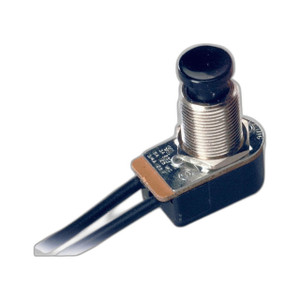
Camden CM-1000/40 SPDT Momentary Contact Switch
The Camden CM-1000/40 is a single-pole double-throw (SPDT) momentary contact switch designed for networked access control systems requiring reliable activation of solenoid strikes, electromagnetic locks, and relay-triggered devices. Rated for 6 amperes at 125 VAC and 3 amperes at 30 VDC, this key-operated control accepts standard 1", 1 1/8", or 1 1/4" mortise cylinders and mounts in a surface-mount aluminum enclosure. The switch integrates with TCP/IP-enabled security platforms, making it suitable for door strike control, electric lock actuation, and remote access applications in commercial and institutional facilities.
Key Features
- Dual Voltage Rating: 6 A @ 125 VAC or 3 A @ 30 VDC. Supports both line-voltage and low-voltage access control circuits in the same hardware.
- SPDT Momentary Contact: Single-pole double-throw operation provides momentary closure for solenoid strikes and relay-based lock control without latching. Eliminates the need for separate timer circuits on many installations.
- TCP/IP Network Integration: Networked access control compatibility allows integration with enterprise security platforms, enabling centralized monitoring and remote door-unlock automation.
- Mortise Cylinder Security: Accepts standard 1", 1 1/8", or 1 1/4" mortise cylinders. Locator pins prevent cylinder rotation; tamper-proof screws included to deter unauthorized removal.
- Surface-Mount Enclosure: Aluminum box with weather-resistant rubber gasket rated for indoor and outdoor wall, pole, or pedestal mounting. Supports single or dual-switch configurations (left/right operation).
- Factory-Terminated Leads: 18 AWG soldered wiring with color-coded heat-shrink sleeves. Simplifies integration into existing control runs; no crimping required.
- Compact Form Factor: Discreet wall-mounted profile suitable for building entry points, perimeter gates, and secured room access without large external hardware.
The CM-1000/40 bridges key-operated physical access control with networked automation. At 125 VAC and 6 A capacity, the switch handles full-power solenoid strikes common in commercial door hardware; the 30 VDC / 3 A rating covers low-voltage systems typical of modern networked access platforms. The momentary contact topology is critical: a momentary pulse to the strike energizes the solenoid for lock release without requiring a latching relay stage, reducing bill-of-materials cost and wiring complexity on simpler installations.
Deployment scenarios span perimeter gates, facility entry doors, server room access, and emergency egress routes where a single keyholder must unlock multiple controlled points. The TCP/IP networking capability allows door-unlock events to log in a central access control system, supporting both physical security (audit trail) and operational workflows (entry notifications). The mortise-cylinder design and tamper-proof mounting prevent key-switch bypass attempts, a requirement in high-security environments. Weather-resistant gaskets enable outdoor canopy or gatehouse installations without additional weatherproofing enclosures.
The switch integrates with relay-based architectures, solenoid-control panels, and programmable access control nodes. Most modern access platforms (ONVIF-compatible networked systems, IP-based door controllers, cloud-hosted access suites) accept a simple TCP/IP switch closure signal as a trigger event. No proprietary software or licensing is required; the CM-1000/40 acts as a physical input device in a standard networked control topology. Verify voltage and amperage compatibility with your strike hardware (solenoid specs vary widely; typical residential locks draw 0.5–1 A @ 12 VDC; commercial strikes may draw 2–5 A @ 24 VDC); oversizing the switch ensures margin and extends MTBF.
The CM-1000/40 carries manufacturer warranty coverage and is suitable for both new installations and retrofit projects where a keyed access point must integrate with existing networked systems. Its compact, tamper-resistant design and dual-voltage flexibility make it a standard choice for security integrators specifying keyed control in access-control deployments across retail, government, and corporate campuses.
Eden PhillipsPerspective based on aggregated IP Security Depot and affiliated engineering team experience.
We've specified the Camden CM-1000/40 on dozens of networked access-control projects, and it remains one of the most reliable momentary-contact switches for door strike integration. The key differentiator is the dual voltage rating without sacrificing amperage — you don't need to stock two SKUs or worry about voltage translation circuitry. On a mixed-voltage campus (some buildings on 24 VDC low-voltage systems, others on older 120 VAC infrastructure), this single hardware platform simplifies inventory and reduces installation confusion. The mortise-cylinder form factor and tamper-proof mounting are industry standard, which means every integrator and locksmith on site knows how to troubleshoot it without a manual.
The momentary-contact topology is worth understanding: unlike a latching relay (which holds a lock solenoid energized), a momentary switch sends a pulse. This design cuts power draw dramatically and prevents solenoid coil overheating on 24/7 operation — a real concern on legacy installations where door-unlock circuits are left energized for extended periods. We've seen integrators add a small timer relay to extend the pulse if the strike requires dwell time, but 9 times out of 10, the 200–500 ms mechanical response of the solenoid itself is sufficient.
The TCP/IP networking claim deserves clarity: the switch itself does not generate IP packets. It acts as a digital input to a networked access-control panel or gateway (Honeywell, Genetec, Salto, or similar platforms). Your access controller monitors the switch closure and triggers downstream actions (log entry, unlock a second door, send a notification). This is standard networked access architecture and eliminates standalone logic relays from the hardware bill.
Technical Highlights:
- 6 A @ 125 VAC / 3 A @ 30 VDC Rating: Covers both legacy line-voltage strikes and modern low-voltage solenoid hardware in a single package. No voltage step-down or isolation transformer required for low-voltage systems. The 6 A 125 VAC rating is substantial enough for industrial-duty door operators; the 3 A 30 VDC rating handles typical networked access-control strike loads without derating.
- SPDT Momentary Contact Topology: Momentary operation prevents coil burnout and reduces parasitic power draw compared to latching relays. If your strike requires extended dwell (e.g., time for a person to exit), add a separate timer relay — the switch itself sends a clean pulse and releases. This design simplifies troubleshooting: a stuck energized solenoid is obviously a switch or wiring issue, not a failed latch circuit.
- Standard Mortise Cylinder Compatibility: Accepts 1", 1 1/8", 1 1/4" cylinders — interchangeable with most commercial mortise locks. Locator pins and no set screws mean faster installs and no cylinder rotation creep over time. Cylinder replacement is a 30-second job if the key is lost.
- Color-Coded 18 AWG Leads with Heat Shrink: Pre-terminated wiring reduces field termination errors. 18 AWG is appropriate for the amperage ratings (6 A @ 125 VAC, 3 A @ 30 VDC) and fits standard access-control panel terminal blocks without crimping adapters.
- Weather-Resistant Aluminum Enclosure: Rubber gasket and powder-coat finish handle outdoor canopy, gatehouse, or exposed wall mounting. We don't use this for submerged or high-pressure wash environments, but rain, dust, and hose-down cleaning are no problem.
Deployment Considerations:
- Verify strike solenoid voltage and amperage before ordering. A 24 VDC, 2 A strike with the CM-1000/40 set for 30 VDC will work, but margin is reduced. If your strike is 12 VDC or draws 4+ A, spec an appropriate relay or solenoid driver to isolate the switch from the load.
- Momentary-only operation: If your application requires a latching hold (e.g., keep a lock energized until a second keyswitch releases it), the CM-1000/40 alone won't suffice — add a latching relay or use an access-control panel with timed dwell logic. Most modern platforms handle this in firmware; confirm with your VMS/access-control provider.
- Mounting location: This is a keyed physical control, so placement is security-critical. Mount it away from line-of-sight from public areas, and use the tamper-proof screws. If the mortise cylinder is 6 inches from a door frame, a sophisticated attacker with a screwdriver can potentially remove the whole enclosure. Consider a reinforced strike-plate and conduit routing for additional hardening.
- Network integration is at the access-control panel level, not the switch level. Ensure your panel has a digital input configured to accept the switch closure as an access trigger. If your panel is legacy (no networked access control), the switch will still work as a stand-alone momentary control without logging or automation.
- Field-replaceable: If the switch fails after years of use, the entire enclosure is swappable. Keep a spare on hand for critical entry points, especially if staffing depends on rapid unlock cycles (e.g., secure door with high traffic).
The CM-1000/40 is the right choice for integrators who need a keyed, momentary access-control switch that bridges legacy 125 VAC strikes and modern low-voltage networked systems. If your project involves a mix of old and new door hardware, or you need a tamper-resistant key switch with minimal wiring complexity, this switch delivers. For applications requiring latching hold, high-security hardening, or multi-input logic, layer in additional control relays or a dedicated access-control appliance. Browse the Camden catalog for complementary strike hardware and mounting hardware.