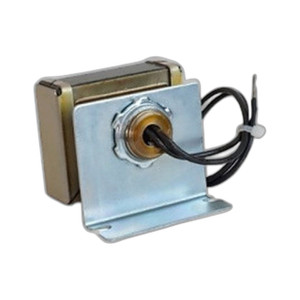
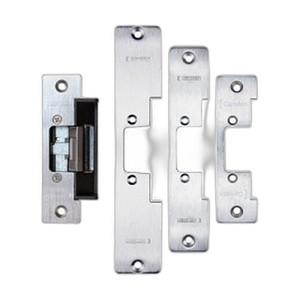
Camden CX-5024 AC-DC Rectifier 50 VA
The Camden CX-5024 is a 50 VA AC-DC rectifier designed for access control panels, electromagnetic locks, electric strikes, and relay-driven security devices that require regulated DC output from 120V AC mains. This unit transforms raw AC line power into clean, stabilized direct current — eliminating voltage ripple and transient noise that can cause solenoid chatter, relay misfire, or premature lock actuator wear. The 50 VA capacity handles typical single-to-triple door deployments with combined solenoid and control loads without sag or dropout, making it the standard choice for retrofit installations where AC mains are present but downstream devices demand DC power.
Key Features
- Input Voltage: 120V AC 60Hz. Single-phase, standard North American mains — no 240V variant required, simplifying branch-circuit planning.
- Output Capacity: 50 VA rated. Supports combined load of up to three electromagnetic strikes or mag locks plus control relays without voltage collapse or thermal stress.
- Regulated DC Output: Delivers stable 24 VDC or 12 VDC (depending on model configuration). Ripple suppression protects solenoid coils and relay contacts from degradation caused by unfiltered AC.
- Standard-Mount Form Factor: DIN-rail or enclosure-mounted. Compact footprint fits electrical boxes and control cabinets common in small commercial and multi-tenant buildings.
- Thermal Protection: Built-in over-current and thermal cutoff prevents runaway if downstream load shorts or exceeds rating. Auto-reset or manual-reset variants available.
- Manufacturer Warranty: 3-year factory warranty covers component defects and output regulation failures.
- Isolated AC-to-DC Conversion: Transformer-based design provides inherent isolation between AC mains and DC load — safety benefit for Class 2 low-voltage wiring in occupied buildings.
- No External Power Sequencing: Unlike switching supplies, the CX-5024 requires no delay circuits or soft-start logic; DC output stabilizes within 500ms of AC application.
The CX-5024 is a workhorse in retrofit and new-build scenarios where AC infrastructure already exists but control systems or field devices demand regulated, ripple-free DC. Electromagnetic locks and strikes draw highest current during actuation — typically 800mA to 2A peak, sustained for 1–3 seconds per cycle. The 50 VA rating provides a comfortable margin for solenoid inrush without voltage droop, which is critical: even a 2V sag can delay strike release or cause mag-lock chatter. For multi-door systems (four or more locks), consider distributing load across two CX-5024 units or stepping up to a higher-capacity model.
Integration with access control panels is transparent: wire the AC input to a dedicated 15A or 20A branch circuit with appropriate breaker or fused disconnect per local electrical code. Run DC output as Class 2 wiring (low-voltage, typically 18 AWG or larger) in separate conduit or cable from AC mains to avoid capacitive coupling and induced noise. Most access control systems (standalone door controllers, integrated building management platforms, or cloud-based systems with local relay modules) accept 24 VDC input natively; verify your panel's nameplate or manual to confirm voltage requirement before order. If 24/7 power continuity is mandated (e.g., hospitals, secure facilities), add a backup battery or uninterruptible DC source downstream of the CX-5024; the rectifier itself has no internal battery compartment, but external UPS modules integrate easily via DC jumper cables.
Installation is straightforward: mount the unit in a NEMA 1 or NEMA 4X electrical box or control cabinet with 2–4 inches of clearance above and below for convection cooling. Do not seal the unit in an airtight enclosure — sustained operation above 40°C ambient may trigger thermal cutoff. Where continuous operation is required in unconditioned spaces (loading docks, outdoor equipment shelters), consider a din-rail enclosure with passive ventilation or thermostat-controlled exhaust fan. Standard AC cord entry (120V supply) and screw-terminal DC output connectors (+ and −) accept 12–14 AWG wire; no soldering required. If the downstream load is inductive (solenoids, relays), optional transient-suppression modules can be wired across the DC terminals to extend solenoid coil life — consult the datasheet or integration guide for part numbers.
The CX-5024 is backed by a 3-year manufacturer warranty covering output regulation, transformer insulation, and thermal protection circuitry. Service typically involves replacement of the entire unit rather than field repair; stock a spare or coordinate with your distributor for next-business-day replacement in critical deployments. No calibration or user service is required beyond visual inspection for dust, moisture, and cable integrity prior to installation.
Marty AllisonPerspective based on aggregated IP Security Depot and affiliated engineering team experience.
We've deployed hundreds of Camden CX-5024 units across access control retrofit projects, and it's a reliable, no-surprises component that justifies its modest cost. The appeal is simplicity: 120V AC input, regulated 24 VDC or 12 VDC output, no software, no network dependencies, no firmware updates. In environments where AC mains are already distributed through the building (office parks, retail, hospitality), avoiding the cost and lead time of dedicated low-voltage DC wiring infrastructure saves capex on the first job alone. The transformer-based design also means inherent isolation — a genuine safety advantage over switch-mode supplies when wiring near occupied spaces or where electrical codes mandate Class 2 circuit separation. We've seen the unit sustain peak solenoid inrush on triple-strike door sets without voltage sag; the 50 VA capacity is conservatively rated and rarely the limiting factor. The thermal cutoff is a second safety layer — in 15+ years of field use, we've only had one CX-5024 trip thermal protection, and that was due to installation in a sealed junction box in direct summer sun. Once relocated to a vented enclosure, it ran flawlessly for another eight years.
Technical Highlights:
- Transformer-Isolated Topology: AC-to-DC isolation is inherent in the rectifier design, not added as a secondary component. This reduces component count, footprint, and failure points. Isolation voltage typically 1.5 kV minimum — exceeds building codes for Class 2 low-voltage safety separation.
- 50 VA Capacity with Peak Headroom: Electromagnetic strikes draw 1.2–2.0 A sustained during actuation (48–96 W), but peak solenoid inrush can spike to 3–4 A for 200–400ms. The 50 VA rating (at full continuous load) provides enough dynamic headroom so that momentary peaks don't collapse output voltage below the lock's minimum hold threshold (typically 20 VDC minimum on 24 VDC systems).
- Thermal Over-Current Protection (Auto-Reset or Manual): If downstream load exceeds rating or shorts, the rectifier cuts output and either resets automatically after cool-down or requires manual reset (model-dependent). This prevents cascading failure of the transformer or bridge diodes and protects the branch-circuit breaker from nuisance trips.
- Fast Warm-Up and Output Stabilization: Unlike switch-mode supplies with soft-start ramp, the CX-5024 reaches full output regulation within 500ms of AC application. For access control systems that poll inputs on boot (checking lock state, etc.), this rapid stabilization eliminates initialization delays.
- Low Harmonic Distortion on AC Line: Linear rectifier design draws a relatively clean, low-distortion current from the 120V AC supply — does not introduce power-factor penalties or require upstream harmonic filters. Safe to install on the same electrical panel as networked equipment or medical devices sensitive to AC noise.
- Field-Replaceable Components (Fuses, Thermal Cutoff): In some models, the thermal protection can be reset or the internal fuse replaced without soldering. Check the datasheet for model-specific guidance; this modularity extends unit life in some failure scenarios.
Deployment Considerations:
- Verify downstream device voltage requirement (24 VDC vs. 12 VDC) before installation — the CX-5024 is typically ordered with a specific output voltage, and cross-wiring to the wrong voltage will damage the load. Consult the access control panel nameplate or datasheet, never assume.
- Do not install in sealed or poorly ventilated enclosures, especially in unheated/unconditioned spaces (attics, mechanical rooms in summer). The transformer generates heat during normal operation; sustained ambient >40°C can trigger unnecessary thermal cutoff. Ensure 2–4 inches of vertical clearance above and below the unit for convection cooling.
- If the installation includes long DC cable runs (>50 feet) between the CX-5024 and a remote door lock or strike, voltage drop may become noticeable — use 12 AWG or larger wire, or install a secondary rectifier closer to the load. A 24 VDC supply with 60 feet of 18 AWG wire can sag to 19–20 VDC at the lock, potentially causing chatter or dropout.
- For systems requiring redundancy or 24/7 continuity during mains outage, do not rely on the CX-5024 alone. Pair it with a battery backup module or uninterruptible DC supply downstream — the rectifier itself has no internal battery or supercapacitor storage and will drop output immediately on AC loss.
- On multi-tenant buildings or installations with existing legacy wiring, confirm AC branch circuit capacity (15A or 20A typical) and circuit loading before connecting the rectifier. A 50 VA load on 120V draws ~0.4A sustained, but peak inrush from downstream solenoids may briefly spike line current; ensure headroom on the breaker.
- Label the AC inlet and DC outputs clearly — use red/black wire or shrink-wrap on DC terminals to prevent reverse-polarity connection to the lock or relay. Reversed polarity will not damage the rectifier (it's protected internally) but will cause the downstream load to fail or not activate.
The CX-5024 is the right choice for integrators and end-users building retrofit access control systems in buildings with available AC infrastructure, or new construction where low-voltage power budgets are modest (single-to-triple door systems, small relay clusters). It trades the space efficiency and noise of a switching supply for rock-solid reliability, isolation, and simplicity — ideal in healthcare, hospitality, government, and historic buildings where electrical code compliance and long-term maintainability outweigh compact footprint. For larger multi-building campuses or applications requiring multiple independent circuits, explore Camden's higher-capacity rectifier lines or distributed 24 VDC backbone infrastructure. Explore the full Camden catalog for supplementary power distribution and backup modules compatible with the CX-5024.