Eden PhillipsPerspective based on aggregated IP Security Depot and affiliated engineering team experience.
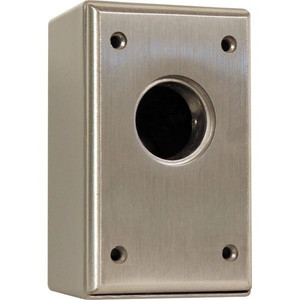
We've specified the CM-1182 across dozens of mid-scale access control retrofits—particularly in facilities transitioning from hardwired relay cabinets to networked strike control. The DPDT momentary design is what sets it apart from single-pole panic-bar switches: you get true dual-circuit independence in a compact form factor, which means fewer relays in the control cabinet and cleaner wiring runs to redundant strikes. On a three-door secure entry vestibule, this switch alone can signal both a perimeter strike and an interior lock coordinator without additional logic or external relay modules. The 30VDC rating is standard across most access control platforms—Salto, Abloy, Allegion—so integration is straightforward. The real operational win is the momentary action combined with die-cast aluminum housing: you energize the strike only when the key is turned, the switch springs back to neutral on release, and there's no sustained coil current burning energy or generating heat. In salt-spray or freeze-thaw climates (parking garages, coastal facilities, loading docks), the aluminum castings hold up where stamped steel would corrode; we've pulled units after eight years with zero mechanical failure. The tamperproof screws matter on public-facing installations—it deters casual prying. That said, the cylinder itself is sourced separately, so specify keying and rekey frequency upfront with your security manager.
Technical Highlights:
- DPDT Momentary Contact: True dual-circuit control means you can energize two independent strikes from one key activation, or wire both poles to a single strike for redundant energization. Eliminates external relay logic in many small-to-medium access control panels.
- 30VDC Direct Integration: Native match to access control loop voltage—no power supply step-down or external drivers required. Reduces bill-of-materials complexity and points-of-failure in cabinet wiring.
- Spring-Return Mechanism: Momentary action ensures zero sustained coil current; the strike de-energizes immediately on key release. Lowers thermal load in the door frame and reduces nuisance lockouts from stuck solenoids.
- 1/4" Die-Cast Aluminum Casting: Withstands salt spray, humidity, and mechanical abuse; far superior to stamped steel in wet or outdoor door-frame applications. Periodic cylinder cleaning prevents freeze-up in freeze-thaw zones.
- Mortise Cylinder Compatibility: Standard 1" cylinder fitment; keying and master-key coordination handled through your cylinder supplier. Allows independent rekeying without replacing the switch body.
- Tamper-Resistant Fastening: Socket and tamperproof screws included; prevents casual disassembly in public restrooms, stairwells, or parking-level entries where vandalism risk is real.
Deployment Considerations:
- Cylinder sourcing is separate—Camden does not include the mortise cylinder in the package. Coordinate key specifications and master-key strategy with your locksmith and access-control vendor before ordering the switch body.
- Verify 30VDC strike coil resistance and polarity before commissioning; a mismatched coil or reversed wiring will prevent the strike from energizing and create expensive troubleshooting overhead on installation day.
- In salt-spray or freeze-thaw climates, schedule quarterly cylinder cleaning and light lubrication (silicone spray) to prevent mechanical stiction and key binding. The aluminum body is durable, but the cylinder pivot points need maintenance.
- DPDT configuration enables redundant strike energization (both poles wired to the same strike) or dual-circuit control. Document the wiring intent in your as-builts—future service technicians will otherwise assume a single-pole wiring scheme.
- Mount in a standard electrical box or mortise opening with socket and slotted screws provided. Do not over-tighten fasteners on aluminum casting; use a calibrated screwdriver to prevent stripping.
The CM-1182 is the right fit for facilities running networked access control on 30VDC loop voltage and needing compact, vandal-resistant keyed switching at individual doors. It scales well across 2–10 door installations and eliminates relay clutter in small-to-medium control cabinets. Explore the Camden catalog for compatible strikes, cylinders, and control-panel integration components.