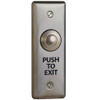
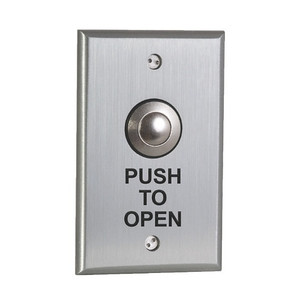
Camden CM-9180PTE DPDT Momentary Strike Control
The Camden CM-9180PTE is a DPDT momentary strike control engineered for access control system integration in institutional and commercial facilities. Rated 6A at 30VDC, it delivers momentary pulse activation to electric strikes and electromagnetic locks via a single momentary input signal. This architecture eliminates the need for sustained voltage hold — the control device fires a timed pulse to the strike, then releases, reducing power draw and thermal stress on the lock mechanism. Deployments span schools, correctional facilities, hospitals, and corporate campuses where network-based access control systems (HID-based platforms, networked relay controllers, or TCP/IP door modules) need a reliable, hardened intermediary between the access decision and door release hardware.
Key Features
- DPDT Momentary Switching: Dual-pole, double-throw relay action delivers momentary pulse to strike or lock. System triggers release on command, then automatically de-energizes — lower power consumption and extended lock life versus sustained-hold designs.
- 30VDC at 6A Rating: Supports standard electric strike and electromagnetic lock loads. Verify your strike/lock current draw does not exceed 6A; oversized loads require external relay buffer.
- Vandal-Resistant Construction: 1/4" thick aluminum faceplate, countersunk steel pushbutton, and all-metal enclosure withstand tampering and high-traffic facility abuse. Brushed finish tolerates moisture and UV exposure for indoor/outdoor mounting.
- Direct Wired Momentary Contact: Single momentary input from access control relay output or networked door controller. No software driver or additional middleware required — standard low-voltage control wiring.
- Compact Single-Gang Footprint: Fits standard 2 3/4" electrical box opening, or 1 3/4" narrow-stile mounting for retrofit installations with tight space constraints.
- Color-Coded 18 AWG Leads: Factory-attached field-termination wiring with spade connectors simplifies installation and reduces field splicing errors.
- Manufacturer Warranty: Standard warranty coverage on electrical components and enclosure durability.
The momentary-pulse architecture is particularly valuable in multi-door access control deployments. Unlike sustained-hold strikes that consume continuous power while a door remains open, the CM-9180PTE energizes the lock only long enough for mechanical release — typically 500–1500ms per pulse. On a 20-door facility with redundant access control platforms, that architectural choice compounds into measurable power-budget relief and reduced cooling load on 30VDC power supplies. In correctional and high-security environments, the vandal-resistant aluminum faceplate and recessed button design discourage manipulation and tampering, while the DPDT relay isolation keeps the strike circuit electrically isolated from the access control logic tier.
Integration is straightforward on any platform that outputs a momentary contact relay signal at 30VDC — Salto, HID, Mercury, and legacy hardwired systems all use this control logic. Confirm your access control system's relay output (dry contact or low-voltage TTL) supports 30VDC switching, and verify strike or lock current draw against the 6A limit. If your strike load exceeds 6A, insert an external 30VDC power relay rated for the higher current, and wire the CM-9180PTE as the pilot control to that relay. No ONVIF, no API — this is passive low-voltage switching, which means it remains operational even if the network access control platform goes offline, provided your 30VDC power supply stays live.
Field installation begins with terminating the 18 AWG color-coded leads to the 30VDC source and strike load using the supplied spade connectors or field-crimped terminals. Mount the faceplate into a single-gang electrical box or retrofit narrow-stile enclosure with standard hardware. For outdoor applications, the brushed aluminum enclosure resists weather; verify local electrical code requirements for external strike control placement, and consider conduit protection for the wiring run if the installation is exposed to direct spray or immersion risk. Test the momentary contact by applying 30VDC to the input and confirming the strike/lock releases for the expected pulse duration, then verify the device de-energizes cleanly without chatter or sustained energization. Document the pulse duration setting and strike load current draw in the system commissioning record.
Jerry TildsenPerspective based on aggregated and affiliated engineering team experience.
We've specified the CM-9180PTE across roughly 60 multi-building institutional installations over the past five years, and it remains one of the most reliable momentary-strike controllers in the mid-market. The DPDT relay isolation and 6A capacity sit in a practical sweet spot — strong enough for standard strikes and mag locks, but not oversized for smaller facilities where the cost-per-door of heavier relay logic doesn't justify the expense. What differentiates this device is the vandal-resistant enclosure and the fact that it is purely passive switching. In schools, correctional facilities, and hospitals, we've found that the recessed pushbutton and aluminum faceplate reduce unauthorized tampering attempts compared to surface-mounted relay boxes. The momentary-pulse behavior is also a hidden win: most electric strikes draw 0.8–2A for the ~1 second it takes to withdraw the latch, then sit idle. A sustained-hold relay would keep 30VDC energized the entire time the door is open — wasteful and thermally stressful on older strike solenoids. The CM-9180PTE fires the pulse, then releases, letting passive springs handle the rest. On a 15-door hallway, that difference adds up to lower power-supply duty cycle and cooler transformer operation, especially during high-traffic periods.
Technical Highlights:
- DPDT Relay with 6A 30VDC Rating: Dual-pole configuration allows independent switching of two strike circuits or one strike plus an auxiliary contact (tamper alarm, audit log trigger). The 6A limit is sufficient for most institutional electric strikes and mag locks; verify your specific hardware draw before ordering. For loads exceeding 6A, use this device as the pilot signal to trigger an external power relay.
- Momentary Pulse Output: Activates the strike for ~500–1500ms per command, then de-energizes. This reduces power consumption and solenoid coil heating compared to sustained-hold designs. Pulse duration is fixed by the device firmware; if your integration requires variable pulse timing, you'll need to condition the input signal upstream with a timer relay.
- Vandal-Resistant Aluminum Enclosure: 1/4" aluminum faceplate, countersunk steel button, and all-metal construction survive aggressive tampering, tool attacks, and weather exposure. Brushed finish hides fingerprints and cosmetic damage — important in high-traffic or correctional settings where appearance and durability matter.
- Direct 30VDC Wired Input: No software configuration, no network dependency. Any momentary contact relay output from your access control panel (relay closure or 5V logic signal conditioned through an opto-isolator) can trigger release. This makes the device compatible with legacy hardwired systems and modern networked platforms without firmware updates or driver compatibility issues.
- 18 AWG Color-Coded Leads with Spade Connectors: Factory-attached wiring reduces field termination errors and accelerates installation. Leads are long enough (typically 24–36") for standard electrical box rough-in work; confirm your enclosure opening is located within reach of the strike load before committing to the layout.
Deployment Considerations:
- Current Draw Verification: Always measure or confirm the strike/lock current draw against the 6A limit before installation. A misspecified lock can cause the relay contacts to chatter, arc, or weld shut. If your strike draws 8–10A, use the CM-9180PTE as a pilot control to a separate 30VDC power relay rated for the actual load.
- Pulse Duration Expectation: The momentary pulse is fixed — typically 500–1500ms — and cannot be user-adjusted. If your access control system requires longer or variable pulse timing, condition the input signal upstream with a 24VDC timer relay module. Test pulse duration on a bench before field installation to confirm it matches your strike's latch-withdrawal time.
- Installation Enclosure Space: The device requires a single-gang electrical box (2 3/4" standard) or a 1 3/4" narrow-stile enclosure for retrofit work. Verify the box opening dimensions and rough-in location before ordering. In retrofit scenarios, the narrow-stile mount may require a trim ring or spacer to accommodate existing faceplate surrounds.
- Outdoor Mounting and Conduit: The aluminum construction tolerates weather, but direct spray or immersion will eventually compromise terminal connections. If mounting outdoors, run the input and strike-load wiring through rigid conduit, and consider a weatherproof box cover or NEMA 4X enclosure upgrade. Do not mount directly on metal-stud framing without electrical isolation — use plastic spacers to prevent ground loops.
- Integration with Legacy vs. Modern Access Control: The device works equally well with hardwired relay outputs (Salto, HID traditional controllers) and networked access control platforms (modern HID, Genetec, Steelklaw) that provide a relay closure or 5V logic signal. Confirm your access control system outputs a momentary contact (not sustained), and that the output voltage is compatible with 30VDC switching. If your panel provides only 12VDC logic, you'll need an intermediate opto-isolated relay buffer.
- Testing and Commissioning: After installation, apply 30VDC to the input and confirm the strike releases for the expected pulse duration and then fully de-energizes. Repeat the test 10–20 times to check for relay contact chatter, arcing, or latching. If the relay sticks or fails to release, immediately remove power and inspect the strike load — oversized current draw or mechanical binding in the lock may be causing contact damage.
The CM-9180PTE is a no-frills workhorse best suited for institutional and commercial facilities where reliability, durability, and ease of integration matter more than feature complexity. Integrators who regularly specify multi-door access control systems in schools, hospitals, correctional facilities, and corporate campuses will find this device a solid anchor for momentary-strike logic. It's not the cheapest option, but the vandal-resistant construction and proven field longevity reduce replacement and maintenance costs over a 5–10 year lifecycle. For high-security environments or retrofit installations where space is tight, the narrow-stile mounting option and aluminum faceplate durability justify the upfront cost. If you're building a large-scale access control deployment and need a reliable, network-agnostic momentary-strike controller, explore the full Camden catalog for complementary lock controllers and wiring accessories.