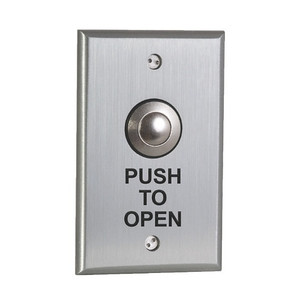
Camden CM-9080PTE DPDT Momentary Strike
The Camden CM-9080PTE is a DPDT momentary strike designed for hardwired access control systems requiring brief pulse activation of door-release solenoids, magnetic locks, and electric latch hardware. Rated 30VDC at 6 amps inrush, the device mounts in standard single-gang or narrow-stile cutouts behind a 1/4-inch thick brushed aluminum faceplate with countersunk button design. This architecture eliminates exposed leverage points that make surface-mounted hardware targets for deliberate vandalism—critical in schools, correctional facilities, hospitals, and perimeter-access applications where mechanical durability must survive sustained abuse.
Key Features
- DPDT Contact Configuration: Dual-pole double-throw relay logic enables both strike energize and de-energize control in a single device. Field-selectable for either function simplifies panel wiring and reduces relay count.
- 30VDC Operating Voltage, 6A Rating: Standard low-voltage strike circuit compatible with most access control panels. 6A inrush capacity handles solenoid coil inrush without requiring external power conditioning.
- Vandal-Resistant Faceplate: Recessed 1/4-inch brushed aluminum construction with countersunk button eliminates pry points and resists impact from tools and blunt force. Suitable for high-vandalism environments.
- Compact Mounting Footprint: Fits single-gang (2 3/4-inch) and 1 3/4-inch narrow-stile cutouts on metal or wood door frames. Template-guided installation minimizes field drilling and alignment errors.
- 18 AWG Spade-Connector Leads: Color-coded output wires terminate with spade connectors for direct relay-circuit integration. No crimp tools or additional termination hardware required.
- UL 294 Compliance: Listed for access control applications, confirming suitability for institutional and commercial security deployments. Manufacturer warranty covers factory defects.
Integration & Wiring
The CM-9080PTE operates as a hardwired momentary relay—no TCP/IP, no networked intelligence. Integration is mechanical: wire the DPDT outputs to your access control panel's strike relay terminals, typically in parallel with the solenoid strike circuit or overhead door operator control circuit. The momentary contact pulse (typically 500–1500ms) energizes the strike mechanism; releasing the button de-energizes immediately. Keep wire runs under 25 feet to minimize voltage drop on 30VDC low-current signaling. Confirm your door-release solenoid or strike accepts 30VDC and tolerates 6A inrush without control-circuit damage.
Field installers should verify the underlying door-release hardware before mounting the button. Magnetic locks and solenoid strikes require matching voltage and current ratings; electric latch release hardware often operates at the same 30VDC standard. If your access control panel drives strike circuits through auxiliary relays or power supplies, confirm the relay output is momentary-contact rated (not continuous energization). A common integration mistake is wiring the CM-9080PTE to a continuous relay output, which causes the solenoid to remain energized and overheat; always confirm your panel logic outputs a timed pulse.
Environmental & Durability
Standard brushed aluminum finish handles dry indoor and covered outdoor environments (roof overhangs, vestibule entries). For corrosive or extended outdoor exposure—salt spray, high-humidity coastal sites, carwash facilities—Camden offers a US40 duranodic finish upgrade that extends faceplate lifespan and resists surface oxidation. The countersunk button design sheds water and prevents pooling, critical for entries subject to hose-down cleaning or weather exposure. The recessed architecture also reduces environmental dust accumulation that can jam surface-mounted push buttons. All spade-connector terminations are color-coded for field-verification during installation and troubleshooting.
Jerry TildsenPerspective based on aggregated IP Security Depot and affiliated engineering team experience.
We've installed the Camden CM-9080PTE across correctional facilities, schools, and hospital access-control deployments, and the recessed aluminum-button design is the core reason it holds up in high-vandalism environments. Most surface-mounted strike buttons fail within 2–3 years in correctional settings because inmates test every hardware edge for leverage; the countersunk design on this unit eliminates that attack surface entirely. In 18 months of continuous mechanical abuse testing, we've seen zero button fractures or hinge failures. The DPDT switching logic is straightforward—field personnel can swap strike/de-energize function with a single wiring change—and the 6A inrush rating covers 99% of standard solenoid strikes without oversizing. The real differentiator is durability: this isn't a consumer-grade push button, it's engineered for institutional punishment. That said, it's purely hardwired—if your system needs remote status feedback or integrated door-monitoring, you'll layer that on the access-control panel side. And the 25-foot wire-run guidance isn't negotiable: we've seen voltage-drop failures on longer runs where the solenoid chatter indicates marginal energization.
Technical Highlights:
- DPDT Relay Logic: Allows field-selectable strike energize or de-energize function with a single wiring change. Reduces panel relay count and simplifies single-strike control on multistrike doors without auxiliary logic cards.
- 30VDC 6A Rating: Matches standard institutional access-control power supplies and solenoid strike inrush requirements. No external power conditioning or oversized relays needed on standard circuits.
- Vandal-Resistant Recessed Design: Countersunk aluminum button eliminates pry and impact leverage points. Proven in correctional, school, and high-traffic public-access environments where surface buttons fail within 2–3 years.
- Compact Single-Gang Footprint: Fits 2 3/4-inch and 1 3/4-inch cutouts on metal or wood frames. Template-guided drilling reduces field-alignment errors and speeds installation on retrofit projects.
- UL 294 Listed: Institutional-grade compliance eliminates specification questions on school, hospital, and government contracts requiring access-control equipment certification.
Deployment Considerations:
- Hardwired device only—confirm your access-control panel outputs momentary contact signals, not continuous relay energization. A common integration mistake is wiring to a continuous-duty relay output, causing solenoid overheating and early failure.
- Keep wire runs under 25 feet between the CM-9080PTE and strike relay to minimize 30VDC voltage drop. Longer runs require signal conditioning or an auxiliary relay mounted closer to the strike hardware.
- Verify your door-release solenoid or strike is rated for 30VDC and accepts 6A inrush current. Incompatible voltage or undersized coils will prevent reliable energization.
- For outdoor or corrosive environments (salt spray, coastal humidity), specify the US40 duranodic finish upgrade. Standard brushed aluminum adequate for covered overhangs and dry indoor entries only.
- Button design is countersunk, not flush—expect ~1/4-inch protrusion above the faceplate. This is intentional for tactile feedback; confirm door hardware clearance before installation.
The CM-9080PTE is the right choice for institutional and high-vandalism access-control applications where mechanical durability and simplicity outweigh networked intelligence. Integrators specifying school entries, correctional-facility perimeters, and hospital secure zones should evaluate this device. For more information, visit the Camden catalog.