
Best Barcode Scanners for Manufacturing
Scanners for manufacturing and the production line — direct-part-mark and damaged-label reading, rugged IP-rated housings for the plant floor, and fixed or handheld mounting.

Karl Wilson
Warehouse & Mobile Computing Specialist · Working integrator
Bottom line
Manufacturing floor barcode scanners need rugged IP ratings, reliable 2D imaging for direct-part-mark and damaged labels, and either fixed or handheld mounting. Match your choice to environment (wet/dusty), read distance, and integration (USB, RS-232, or Bluetooth)—not all handle the same thermal and chemical stress equally.
What This Setup Needs
Choosing a manufacturing barcode scanner means balancing durability, read reliability on poor labels, integration flexibility, and total cost of ownership. Here's what separates a workable choice from one that fails on the line.
- IP Rating & Material Durability: Manufacturing floors demand IP52 (protection from dust and splash) minimum; IP65 (full dust sealing and washdown tolerance) is better if you face coolant spray, washdown, or high humidity. Sealed optics and potted electronics prevent premature failure in harsh environments.
- 2D Imaging for Damaged/Direct-Part-Mark: All corded 2D imagers can read DPM and degraded labels better than laser scanners, but image resolution and contrast processing differ. Higher-density optics (typically 'HD' or 'high-resolution' variants) improve first-pass read rates on low-contrast marks and worn barcodes—critical for production efficiency.
- Operating Temperature Range: Verify the scanner's rated range matches your environment. Industrial fridges, ovens, or outdoor unloading areas may exceed a scanner's specs; 0–50°C is baseline; broader range = fewer thermal failures and better reliability across zones.
- Connectivity & Integration Cost: USB is plug-and-play; RS-232 suits legacy MES/ERP systems; Bluetooth adds flexibility but requires pairing, battery management (if wireless handheld), and IT approval. Wired is more reliable for line-speed production where dropped connections halt work.
- Form Factor & Mounting: Corded (fixed or stand-mounted) scanners eliminate battery worry and are cheaper than wireless handhelds. Stands work for conveyor/bench work; handheld (if corded with sufficient cable length) offers flexibility for variable part sizes and rework stations.
- Depth of Field & Read Distance: Manufacturing varies—some lines need close reading (5–10 inches), others need stand-off distance (12–24 inches). Check the datasheet; an imager optimized for close work may struggle with distance scanning and vice versa.
- First-Pass Read Rate & Decoding: In high-speed lines, even 1–2% miss-reads compound quickly. Choose scanners known for aggressive decode on common manufacturing codes (Code 128, Data Matrix, QR) and verify with your label supplier that the optical match is tight.
Our Picks
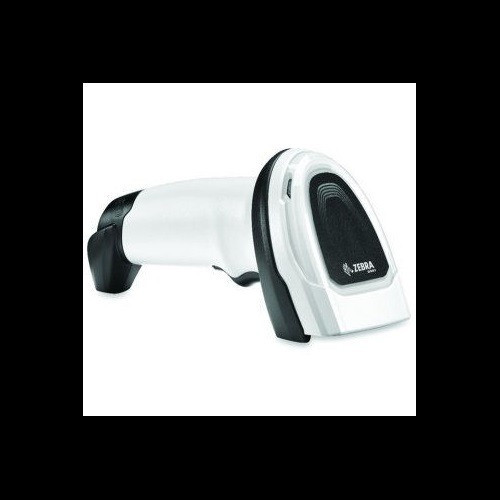
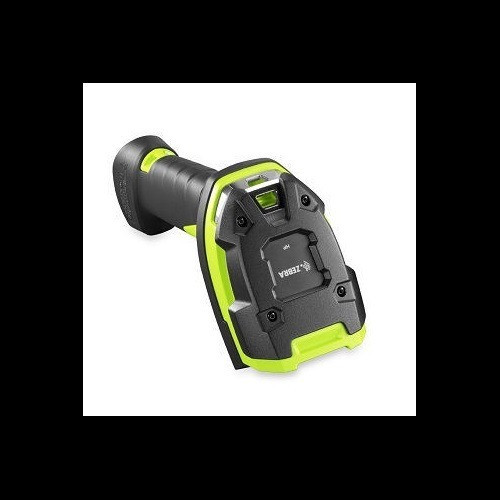
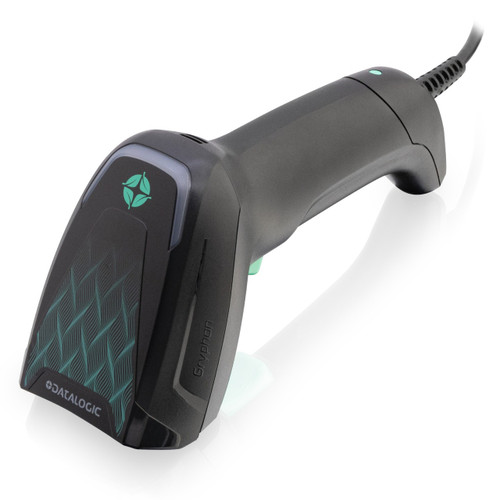
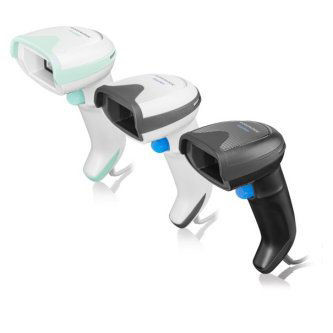
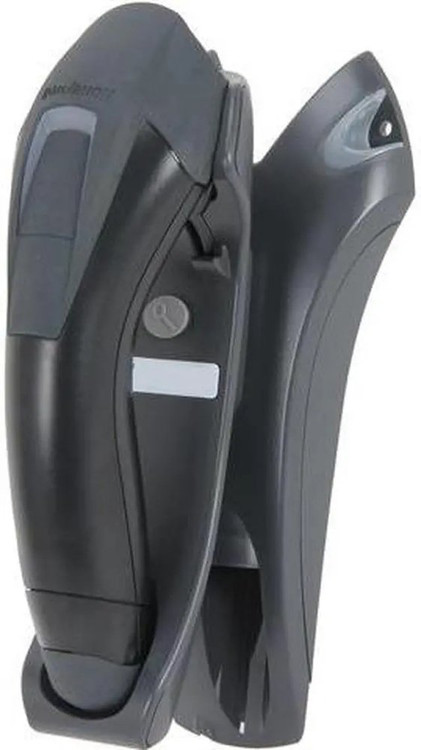
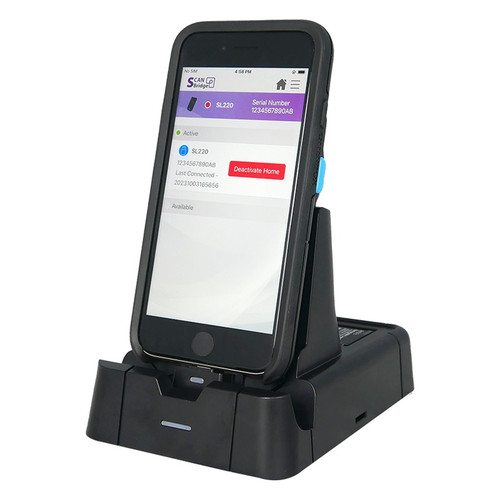
Selected from our catalog by spec-fit. All channel-direct and factory-new — not ranked by price.
Frequently Asked Questions
What's the real difference between IP52 and IP65 for a manufacturing scanner?
IP52 means the scanner tolerates dust exposure and light water spray but will fail under sustained washdown or immersion. IP65 is fully dust-sealed and survives direct spray from a hose—critical if your line uses coolant mist, high-pressure wash, or humidity above 80%. If you're in a dry assembly area, IP52 is adequate and often cheaper; in food, automotive wet-process, or chemical plants, IP65 is insurance against premature failure and warranty headaches.
Should I choose wired or wireless Bluetooth for the production line?
Wired (corded USB or RS-232) is the safer bet for high-speed or mission-critical lines: no battery drain, no pairing issues, no dropped scans mid-cycle. Wireless Bluetooth makes sense for low-volume stations, rework zones, or flexible assembly where a long cable would be a trip hazard. On the line itself—stick with corded unless you have a compelling reason (movement, multiple workstations) and IT support for regular re-pairing.
What does 'high-density' or 'HD' optics actually do for barcode reading?
HD optics have higher pixel resolution in the image sensor, letting the scanner resolve smaller, darker, or lower-contrast marks with fewer errors. On a production line reading direct-part-mark (etched serial numbers) or worn/faded stickers, an HD imager typically scores 5–15% better first-pass read rates than standard optics. If your labels degrade quickly or DPM is your primary input, the HD variant pays for itself in reduced line stoppages.
How do I know if a scanner will work with my existing MES or ERP system?
Check your system's required barcode format (Code 128, Data Matrix, QR, GS1) and the scanner's supported symbologies in the datasheet. For connectivity, RS-232 (serial) is nearly universal on legacy systems; USB HID emulates a keyboard (plug-and-play but less flexible); Bluetooth requires driver/middleware setup. When in doubt, request a test unit and run a proof of concept on your actual system before committing to a fleet purchase.
Why does operating temperature range matter for a factory scanner?
Most corded 2D imagers are rated 0–50°C (32–122°F). If your line includes cold storage zones, outdoor loading, or hot-process areas, a scanner rated for only 0–50°C will suffer image degradation, slower read times, or fail entirely outside that window. Verify your actual ambient range (including peak summer heat in uninsulated areas) and choose a scanner that stays comfortable; mismatches are a hidden cause of mysterious read failures.
Is a more expensive scanner always better for manufacturing?
Not necessarily. A Zebra DS8108 and a Honeywell 1202G may cost similarly but serve different needs: the Zebra is standard mid-range; the Honeywell's IP65 rating and broader interface support justify the cost in wet plants. Buy based on your environment, not price alone. A $200 scanner that stops working in six months is far more expensive than a $300 unit that lasts three years with zero downtime.
Related Resources
- Barcode Scanner comparisons — head-to-head spec matchups
- Barcode Scanner Buying Guide
- Best Barcode Scanners for Warehouse Receiving
- Best Barcode Scanners for Retail POS
- All product comparisons
Speccing this for a project?
Send us your requirements and our senior specialists will confirm specs, compatibility, availability and pricing — free, usually within one business day. Channel-direct, factory-new, serving commercial integrators since 2014.
Get a Free QuoteComparing for a project?
Send us the models you are weighing and our team will confirm specs, compatibility, availability, and pricing — free, usually within one business day.