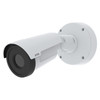
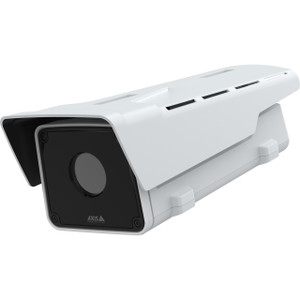
Axis 02174-001 Q1961-TE Thermal Outdoor Fixed IP Camera
Overview
The Axis 02174-001 (often searched as 02174 001) is a fixed thermal imaging camera engineered for outdoor perimeter security, critical infrastructure monitoring, and fire detection where visible light and infrared illuminators cannot penetrate darkness, fog, rain, or smoke. Unlike conventional IP cameras, this thermal sensor detects heat signatures independent of ambient lighting conditions—meaning round-the-clock monitoring without artificial illumination, lens fogging, or reflective interference. The 640x480 thermal output at 30 fps delivers smooth, forensically clear video suitable for real-time alert correlation and post-incident review.
Thermal detection spans -40°C to 350°C (-40°F to 660°F), making this unit effective for both security applications (detecting trespassers by body heat from 100+ meters away) and process safety (monitoring equipment temperatures, early fire detection in machinery or structures). The fixed 7 mm athermalized lens provides a 55° horizontal field of view—practical for typical perimeter posts while maintaining enough magnification to resolve human-scale targets at operationally useful distances. Built-in security features (Edge Vault, TPM 2.0 FIPS 140-2 Level 2) protect firmware integrity and credentials against tampering, a non-negotiable requirement in critical-infrastructure and industrial deployments. Standard PoE 802.3af powering eliminates the need for dedicated 12V supplies at the mounting point.
Key Features
- Uncooled Microbolometer Thermal Sensor: 384×288 pixel microbolometer with 17 µm pixel pitch and 8–14 µm spectral response. Uncooled architecture means no cryogenic cooling pump, lower power draw (~13W typical), and zero maintenance burden compared to cooled thermal detectors. Trade-off: slightly higher thermal noise than cooled sensors, but signal-to-noise ratio remains sufficient for reliable detection and temperature measurement in outdoor scenes. This is the practical choice for 24/7 surveillance where power efficiency and reliability matter more than laboratory-grade image quality.
- 30 fps Thermal Video at 640x480: Full-frame thermal output at 30 fps ensures smooth tracking of moving heat sources and eliminates jitter in recorded footage. At typical thermal scene content, this produces 2–4 Mbps H.264 bitrate—manageable for network video recorders and storage systems without requiring specialized bandwidth.
- Temperature Measurement & Zoned Alarms: Up to 10 independently configurable polygonal detection zones, each with custom temperature thresholds. Spot temperature reading allows precise measurement of specific locations in the frame, critical for predictive maintenance (e.g., detecting bearing overtemp 10–15°C above baseline before mechanical failure) and early fire detection (flagging localized hotspots before visible flames appear).
- Early Fire Detection Analytics: Built-in thermal analytics flag rapid temperature rise rates in monitored areas, triggering alerts 10–15 minutes ahead of visible smoke or flame detection. In warehouse, manufacturing, data center, or storage-intensive environments, this early warning window is the difference between controlled suppression and catastrophic loss.
- IP66 / IP67 / IK10 / NEMA 4X Durability: IP66 rating handles direct water jets from any angle; IP67 permits brief submersion (1 m depth for 30 minutes). IK10 impact rating withstands 20 J equivalent force—useful where falling debris, branch strike, or rough handling is a risk. NEMA 4X adds stainless-steel gasket and corrosion-resistant coating, extending service life in coastal salt-spray, washdown, or aggressive chemical environments. Together, these ratings eliminate weather-related downtime and extend mean time between failures on exposed outdoor structures.
- H.264 Compression: Thermal scene content is inherently lower-entropy than visible video, so H.264 encoding keeps bitrate lean (2–4 Mbps depending on thermal activity and scene complexity). At 24/7 recording across multiple thermal cameras, this reduces storage footprint and bandwidth consumption compared to MJPEG or uncompressed formats—meaningful when NVR capacity or WAN bandwidth is constrained.
- PoE 802.3af Powered (~13W): Fits within the 15.4W 802.3af per-port power budget of standard managed switches, eliminating the need for separate 12V supplies, dedicated conduit runs, or additional circuit breakers at the camera location. Simplifies installation on pole mounts, rooflines, and building edges where power infrastructure is scarce.
- Edge Vault & TPM 2.0: Signed firmware, secure boot, and FIPS 140-2 Level 2 cryptographic module protect against unauthorized code injection and credential compromise. Essential in environments where firmware tampering or credential theft pose operational risk (e.g., critical infrastructure, border security, industrial control perimeters).
Integration & Compatibility
The 02174-001 streams H.264 thermal video via ONVIF Profile S, compatible with most network video management systems. Thermal metadata—temperature readings, zone alarm states, analytics triggers—can be exported as ONVIF events or Axis Event API calls, enabling integration with building automation systems, fire alarm panels, or custom alerting workflows. PoE injection via standard Gigabit Ethernet switches simplifies power distribution on large perimeter networks.
When to Choose a Different Model
If you need higher thermal resolution (larger targets, longer-distance detection), consider higher-resolution thermal variants in the Axis thermal family. If the scene requires visible-light detail alongside thermal imaging (e.g., forensic facial recognition plus heat detection), pair this unit with a standard visible-light outdoor IP camera on the same PoE infrastructure. If interior-only thermal monitoring suffices and weather exposure is not a factor, evaluate compact indoor thermal models to reduce cost and physical footprint.
Frequently Asked Questions
Q: What is the maximum detection range for human-sized targets?
A: With a 7 mm lens and 55° horizontal field of view, human heat signatures are reliably detectable at 100+ meters in typical outdoor ambient conditions. Exact range depends on target size, ambient temperature, and thermal contrast—consult the manufacturer datasheet or conduct a site survey for your specific deployment.
Q: Does the 02174-001 require a separate power supply or can it use standard PoE?
A: The unit draws approximately 13W and operates on standard PoE 802.3af (15.4W per port), so a separate power injector or supply is not necessary. Any managed PoE switch with available 802.3af ports will power it directly.
Q: Can I integrate the thermal alarms with my existing fire suppression or HVAC system?
A: Yes. The camera exports temperature readings and alarm states via ONVIF events and Axis Event API. You can trigger external relays, send Modbus messages, or call webhooks using integration middleware or a capable building management system, allowing integration with BACnet, KNX, or proprietary fire/suppression panels.
Q: What is the warranty period on the Axis 02174-001?
A: Refer to your local Axis distributor or reseller for warranty terms specific to your region and purchase channel. Standard Axis products typically carry a 3-year or 5-year warranty.
Q: Is the thermal sensor cooled or uncooled?
A: The 02174-001 uses an uncooled microbolometer sensor. This reduces power consumption, eliminates cooling maintenance, and lowers cost compared to cooled detectors, though thermal image noise is slightly higher. For outdoor 24/7 surveillance, uncooled performance is sufficient.
Q: Can the 02174-001 be used for temperature measurement applications like predictive maintenance?
A: Yes. The camera supports spot temperature reading and up to 10 configurable detection zones, each with independent temperature thresholds. This makes it suitable for monitoring bearing temperature, motor case temp, electrical enclosures, or other equipment where early warning of overheating prevents failure. Accuracy depends on emissivity calibration; verify with the manufacturer for your specific application.
James EverettPerspective based on aggregated IP Security Depot and affiliated engineering team experience.
The Axis 02174-001 is purpose-built for scenarios where visible-spectrum cameras fail: complete darkness, dense fog, heavy rain, and smoke. The uncooled 384×288 microbolometer with 17 µm pixel pitch is the right trade-off for 24/7 outdoor deployments—you get reliable heat detection with a 13W power footprint and zero cryogenic maintenance, which matters when you're managing dozens of perimeter cameras across sprawling facilities.
Technical Highlights:
- -40°C to 350°C thermal range: This broad span handles both security detection (body heat ~37°C) and industrial process monitoring (bearing hotspots, electrical panel faults at 80–120°C). The 350°C ceiling is useful for early fire detection—you can flag localized hotspots 10–15 minutes before visible flame.
- 10 configurable polygonal zones with independent thresholds: You're not locked into a single global alarm; instead, configure a zone around a loading dock to trigger at 40°C (detecting body heat), while a second zone on an electrical cabinet alarms at 75°C. This reduces false positives in environments with legitimate heat sources (HVAC exhausts, steam pipes).
- IP66/IP67/IK10 ruggedization: This camera tolerates heavy washdown spray, direct rain from any angle, and brief submersion. NEMA 4X gasket and stainless hardware extend life in coastal or corrosive environments—critical for oil-and-gas, chemical processing, or offshore installations where standard powder-coat fails in months.
Deployment Considerations:
- Athermalized lens matters here: The 7 mm lens is designed to maintain thermal focus across the -40°C to 60°C operating range. Standard optics drift out of focus in cold climates; this design prevents that. If you're deploying in Arctic or high-altitude environments, this detail prevents costly field refocus calls.
- Watch PoE budget on large arrays: At ~13W per camera, you can fit 1 thermal + 1–2 standard cameras per 802.3af port. On a 48-port switch, that's roughly 24–36 thermal cameras. Beyond that, you need PoE+ injection or a dedicated thermal NVR line.
- Thermal metadata export is event-driven, not continuous: The camera exports temperature readings and zone alarms via ONVIF events, but it doesn't stream raw thermal pixel data to a central system. For continuous temperature trending (bearing diagnosis, statistical thermal monitoring), you'll need a recorder or middleware that logs the event stream.
The 02174-001 excels in perimeter security at petrochemical plants, wildfire detection on forest boundaries, and early fire warning in warehouses or cold-storage facilities. If your mandate is "detect intrusion or fire before visual conditions allow a person to see it," this is the right camera. If you need real-time visible identification alongside thermal, pair it with a standard visible-light outdoor IP camera on the same PoE infrastructure.
Key Specifications:
Color: White