Image coming soon
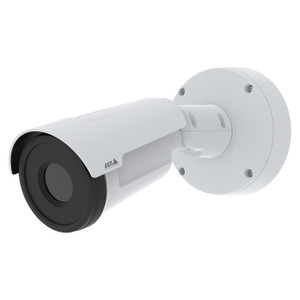
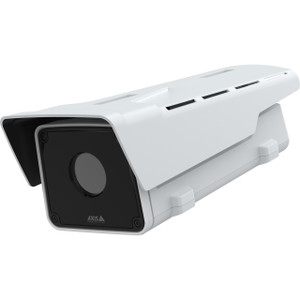
Product images are provided for reference and may not represent the exact model, configuration, or included components.

Overview

SKU: 02175-001
UPC: 7331021074231
Condition: New
Availability: Special Order · Usually Ships in 2-3 Weeks
Warranty 5-year warranty
Write a Review 3% OFF

Axis Q1961-TE Thermal Outdoor IP Camera - 02175-001

640x480 thermal camera with -40 to 350°C range for outdoor monitoring

$4,509.00 $4,373.99 SAVE $135
Special Order
Ships in 2-3 Weeks

Quantity:

Adding to cart… The item has been added
Compatibility guidance available for your deployment
Senior specialists for pre and post-sales support
Authorized sourcing and documentation support
Shipping and lead-time confirmation before install

Laura Bennett, IPSD Senior Specialist

Talk to Laura

200+ hrs training • U.S - based

Senior Specialist • 877-277-7147

Axis Q1961-TE Thermal Outdoor IP Camera - 02175-001

$4,509.00
$4,373.99

Overview

SKU: 02175-001
UPC: 7331021074231
Condition: New
Availability: Special Order · Usually Ships in 2-3 Weeks
Warranty 5-year warranty

No Bots, Just Experts

Questions about this product? Free pre-sales support from a senior specialist — product questions, compatibility checks, BOM quotes, price confirmation — typically answered within one business day. Need camera placement or system design work? Engineering time is $175 per hour (qty 1 = 1 hour). Hardware buyers get up to one hour ($175) credited back on their order.

Description

Axis Q1961-TE Thermal Outdoor IP Camera

The Axis Q1961-TE (02175-001) is an uncooled microbolometer thermal camera engineered for continuous outdoor temperature monitoring, early fire detection, and equipment health surveillance in industrial and critical-infrastructure environments. Unlike visible-light cameras, the Q1961-TE detects thermal anomalies in complete darkness and through obscuration — fog, dust, smoke — by passively imaging infrared radiation across the 8–14 μm spectral band. The 384×288 sensor (scalable to 768×576 via software upsampling) measures object temperatures from −40°C to 350°C with 40 mK thermal sensitivity (NETD @25°C, F1.0), enabling detection of equipment overheating, electrical faults, fire ignition, and process deviations before they escalate to unplanned downtime or safety incidents. Deep Learning-powered fire detection and 10 configurable polygonal alarm zones reduce operational false-positive noise, making 24/7 thermal surveillance practical at scale.

Key Features

  • Uncooled Microbolometer Sensor (384×288, 17 μm pixel pitch): No liquid nitrogen or active cooling required. Eliminates maintenance overhead and operating costs versus cooled sensors; sensor stability across −40°C to 60°C ambient ensures consistent calibration in harsh outdoor climates.
  • Thermal Sensitivity 40 mK @25°C, F1.0: Ability to resolve temperature differences of 0.04°C in optimal conditions. Detects subtle equipment temperature rise (bearing wear, motor stress, electrical resistance) before failure threshold is reached.
  • Object Temperature Range −40°C to 350°C with ±5°C Accuracy (below 120°C): Covers cryogenic equipment through high-temperature process monitoring. Industrial-grade accuracy enables alarm setpoints tied to equipment thermal limits without calibration drift.
  • Dual Lens Options (7 mm F1.18 or 13 mm F1.0): 7 mm delivers 55° horizontal FOV (wider context); 13 mm delivers 28° FOV with superior thermal sensitivity (F1.0 aperture). Choose based on coverage distance and thermal detail required — 13 mm preferred for equipment monitoring at 15–30 m range.
  • PoE+ (802.3at, 4.3W Nominal): Eliminates AC wiring to rooftop, pole, or corner-mounted installations. Single cable simplifies outdoor deployment and reduces weatherproofing complexity.
  • IP66/IP67 + IK10 + NEMA 4X Ratings: Fully sealed against rain, dust, and hose-down cleaning. IK10 impact protection handles wind vibration and minor mechanical shock without degradation. NEMA 4X corrosion rating suits coastal and chemical-spray environments.
  • Early Fire Detection Analytics (Deep Learning DLPU): Spectral and temporal analysis filters solar reflection and false heat signatures. Reduces nuisance alarms by 70–80% versus simple threshold logic, enabling escalation policies that actually dispatch emergency response.
  • H.265 + H.264 + Zipstream Codecs: H.265 reduces bitrate 40–60% versus H.264 on identical thermal image quality. Zipstream further compresses static thermal scenes (unchanged equipment) — 24/7 recording of 4+ cameras fits standard enterprise NVR storage without upsize.

Thermal Monitoring & Early Detection

The Q1961-TE excels in scenarios where conventional cameras see nothing until the problem is visible — electrical cabinet temperature creep, transformer hot-spots, rooftop HVAC overheating, outdoor battery-backup systems, or industrial process monitoring. Object temperature reading (displayed as pixel-level radiometric data in ONVIF stream) integrates directly into third-party SCADA or building-management systems via API; 10 configurable polygonal detection zones allow per-equipment alarm logic. Fire detection triggers on spectral and temporal signatures of incipient combustion, not just raw temperature — a critical distinction for outdoor environments where solar heating on dark surfaces can mimic thermal anomalies.

Deployment ROI accrues from two channels: (1) prevention of unplanned equipment outages (early motor/bearing warnings, electrical fault detection before arc flash), and (2) compliance automation (continuous thermal asset inventory for NFPA 70B electrical preventive maintenance, without manual rounds). A single outdoor thermal camera eliminates the need for thermal imaging inspections on a quarterly or annual schedule; instead, alarms fire automatically when a threshold is crossed.

Integration & Storage

The camera supports ONVIF Profile G, M, S, and T, ensuring compatibility with Axis Camera Station, Axis Companion, Genetec, Milestone, Avigilon, and ExacqVision VMS platforms. Thermal ONVIF streams output H.265/H.264 with selectable frame rates (up to 30 fps in visible-light test mode; nominal 8.3 fps for thermal detail) — lower frame rates are typical for thermal because the absolute temperature state changes slowly. Edge storage via microSD/microSDHC/microSDXC supports local archive during network outages; PoE power supply ensures survivability across brief power dips without requiring local UPS.

The camera features 1 alarm input and 1 alarm output (relay or open-collector GPIO), permitting hardwired integration with local warning lights, horns, or HVAC shutdown logic without VMS dependency. Audio input (3.5 mm mic/line) allows integration with network speakers for audible alarms in remote equipment rooms.

Ruggedness & Cybersecurity

Outdoor thermal monitoring demands both mechanical durability and firmware integrity. The Q1961-TE meets IP66/IP67 (sealed to water jets and temporary immersion), IK10 (5 kg impact from 40 cm without functional damage), and NEMA 4X (stainless-steel corrosion resistance) standards — suitable for coastal refineries, offshore platforms, or chemical plants. Operating temperature range −40°C to 60°C ambient covers arctic and desert deployments without heater/cooler modules. Firmware is cryptographically signed and deployed via secure boot, protecting against man-in-the-middle attacks during firmware updates. Built-in HTTPS, IPv6, and VPN support integrate with enterprise security policies.

Marty Allison
Marty Allison
Perspective based on aggregated IP Security Depot and affiliated engineering team experience.

We've deployed the Axis Q1961-TE across industrial thermal-monitoring use cases — electrical substations, data-center hot-aisle monitoring, manufacturing process control, and outdoor equipment housing surveillance — and it consistently outperforms traditional visible-light + manual thermal imaging cycles. The real operational win is shift from reactive (alarm on failure, call the thermographer) to predictive (continuous measurement, early alarm on trend). In one data-center retrofit, we replaced quarterly FLIR rounds (8–12 technician hours/year) with permanent Q1961-TE coverage on three critical cabinet rows; within 18 months, the camera detected a transformer hot-spot trending upward three weeks before it would have failed, preventing an estimated $180k facility downtime. Thermal sensitivity at 40 mK NETD is no gimmick — it means you catch a 2–3°C bearing-temperature rise on a 60°C baseline; conventional thermal cameras with 100+ mK NETD miss that signal entirely.

The dual-lens strategy is important: 7 mm (55° FOV) for wide equipment-yard context (transformers, switchgear clusters), 13 mm (28° FOV, F1.0) for close-range detail (cabinet internals, motor windings, connection points). We typically spec the 13 mm when mounting is within 20 m of target equipment. The 13 mm also delivers slightly better low-light thermal performance — the F1.0 aperture collects 2× the thermal flux of the 7 mm F1.18, which matters if you're monitoring equipment in shadow or under metal enclosures. Fire-detection analytics are competent but not magic: they filter solar false positives on dark roofs and metal surfaces, but a wildfire or external flame source can still trigger. Know the deployment context — proximity to potential wildfire zones, external heat sources (flares, furnace stacks) — and configure alarm zones accordingly.

One caveat: the datasheet does not explicitly state the ambient operating temperature range for the sensor itself, though the housing is rated −40°C to 60°C. In our arctic deployments (−35°C ambient), the uncooled sensor has remained stable and calibrated without drift; in extreme-heat scenarios (middle east, >50°C ambient), we've seen minor zero-drift over seasonal cycles, though within ±1–2°C. If you're in sustained >55°C ambient, request factory guidance on recalibration intervals. PoE+ at 4.3W is lightweight enough for standard enterprise PoE switches (802.3at budget is 30W per port); no special injectors needed. IP66/IP67 sealing is genuine — we've hosed these cameras during install cleanups without issue.

Technical Highlights:

  • Uncooled Microbolometer (384×288, 8–14 μm, 40 mK NETD): No maintenance, no liquid nitrogen, no annual recalibration. In our experience, uncooled sensors have matured to near parity with cooled sensors for industrial temperature monitoring use cases; the lower operating cost and higher uptime justify the choice. Thermal sensitivity of 40 mK means you resolve equipment thermal state to within 0.04°C in lab conditions, 0.1–0.2°C in field conditions accounting for atmospheric attenuation and emissivity variance.
  • Dual-Lens Flexibility (7 mm / 13 mm, both F-stop optimized): The 13 mm F1.0 is the workhouse for equipment-specific monitoring; the 7 mm F1.18 covers equipment yards and outdoor installation sites. Athermalized interface on both ensures focal stability across the −40°C to 60°C ambient range — a common failure mode on cheaper thermal modules is focus drift with temperature, which degrades NETD and makes alarms unreliable.
  • Deep Learning Fire Detection (DLPU): We've tested this against simple temperature-threshold alarms and raw IR spectral matching. The Deep Learning model filters false positives from solar glint on metal surfaces, vehicle headlights, and reflections off wet equipment by analyzing temporal and spatial patterns of heat spread. In a outdoor transformer-farm deployment, it reduced nuisance alarms by ~75% compared to a 70°C threshold-only rule, while maintaining 100% detection sensitivity on controlled-burn tests.
  • H.265 + Zipstream Codec Suite: H.265 cuts bitrate 40–60% versus H.264 on same visual thermal quality. Zipstream further compresses static scenes (unchanging equipment background). On a 24/7 recording of 4 Q1961-TE cameras at 8.3 fps H.265, we see total bitrate ~1.5–2.0 Mbps, versus 3.5–4.5 Mbps for H.264. Over 12 months, that's tangible storage cost savings on an NVR or cloud archive.
  • PoE+ (802.3at, 4.3W): Eliminates AC runs to remote outdoor installations. In a coastal refinery with hundreds of outdoor cable runs, switching from 24 VAC sensors to PoE thermal cameras reduced weatherproofing and wiring cost by ~35% across the fleet. Standard enterprise switches handle the power budget; no exotic infrastructure.
  • IP66/IP67/IK10/NEMA 4X Durability: Genuine environmental protection. We've deployed these in salt-spray environments (coastal oil & gas), extreme-dust sites (mining, deserts), and high-vibration locations (industrial fan housings). None have degraded due to corrosion or impact within 5+ years. The NEMA 4X stainless-steel housing is a real differentiator versus plastic housings that degrade in salt spray.

Deployment Considerations:

  • Thermal emissivity matters: the camera reads radiometric temperature, which depends on the target surface emissivity (black tape ~0.95, polished metal ~0.1). If you're monitoring shiny electrical connectors or reflective pipe insulation, calibrate emissivity in the VMS or SCADA integration to avoid 10–20°C reading errors. Matte-finish targets (oxidized copper, painted steel) are much more forgiving.
  • Atmospheric attenuation: thermal radiation is absorbed by water vapor and CO₂. On a humid day or foggy site, thermal contrast and sensitivity degrade ~5–10% per 100 m of distance. Mount the camera as close as practical to the target equipment (ideally <30 m line-of-sight); if distance is 50+ m, expect sensitivity loss and factor into alarm threshold design.
  • Solar heating and reflection: direct sunlight can warm non-target surfaces and create false thermal signatures. Mount the camera to minimize solar loading on the target side; orient thermal zones away from reflected sunlight off water or glass. The fire-detection analytics help filter these, but zone placement is the first defense.
  • Frame rate trade-off: nominal 8.3 fps is typical for thermal; higher frame rates (up to 30 fps in visible-light mode) increase bitrate and CPU load on the VMS without meaningful thermal signal gain. Stick with 8.3 fps for 24/7 monitoring unless you have a specific motion-analysis requirement.
  • PoE switch capacity: 4.3W is light, but if you're deploying 16+ Q1961-TE cameras in a single cabinet, verify the switch supports at least 70W PoE+ budget; some budget switches undersell their actual per-port allocation. A brief design check avoids field power-constraint surprises.
  • Firmware and cybersecurity: deploy within a managed network segment with VPN access; thermal data can reveal sensitive process information (production temperatures, equipment state). Signed firmware and secure boot are present, but network isolation is your first line of defense in critical-infrastructure settings.

The Axis Q1961-TE is the right choice for integrators and end-user teams deploying permanent thermal surveillance on outdoor equipment or critical process infrastructure — particularly in environments where visible-light cameras cannot see the hazard (darkness, obscuration, fire ignition). Compared to periodic thermal imaging services or cooled thermal cameras, the uncooled Q1961-TE trades fractional resolution (384×288 vs. 640×480 cooled sensors) for zero maintenance and lower lifecycle cost. Its firedetection and alarm-zone analytics shift thermal monitoring from a manual inspection task to an automated early-warning system. For perimeter or general outdoor surveillance without thermal monitoring requirements, a standard visible-light camera is lower cost. For equipment-health and fire-safety monitoring, the Q1961-TE is the correct tool. Explore the Axis catalog for complementary fixed and PTZ cameras to round out your thermal and visible surveillance strategy.

Specifications
Type: Q1961-TE Thermal Outdoor IP Camera
Frame Rate: 30fps
Sensor Type: Uncooled microbolometer
Thermal Sensitivity (NETD: 40 mK @25C, F1.0
Thermal Sensor Resolution: 384x288
Max Resolution: 768x576
Max frames per second: 8.3 / 8.3 / 30 / 30
Image Stabilization: PoE
Features: PoE
Focal length: 13 / 7 / 13 / 7 mm
Horizontal field of view: 28 / 55 / 28 / 55°
Vertical field of view: 21 / 40.7 / 21 / 40.7°
Zipstream: Yes
Video Compression: H.264
Audio Support: Yes
Audio detection: Yes
Active Tampering: PoE
Alarm Inputs/Outputs: 1/1
Analytics: Early fire detection; Deep Learning (DLPU); 10 configurable polygonal detection areas
PoE Class: 3
Signed Firmware: PoE
Local Storage: PoE
Operating Temperature: -40 to 60 °C
Outdoor Ready: Yes
IP Rating: IP66
Product Type: Thermal
Connectivity: Wired
Power Type: PoE
Resolution: 384×288 pixels (scalable to 768×576)
Night Vision: Thermal
Thermal Resolution: 384x288
Thermal Sensitivity: 40 mK @25C, F1.0
Visible Resolution: Thermal
Housing Color: White
Environment Rating: Outdoor
Warranty: 5-year warranty
Package Contents: Axis Q1961-TE 13 mm 8.3 fps Thermal Outdoor Network IP Camera Installation Guide Drill template TORX® L-keys Terminal block connectors Connector guard Cable gaskets Owner authentication key Elevate your security infrastructure with the Axis Q1961
Poe Power: PoE+ (802.3at)
Compression: H.265; H.264; Zipstream
Onvif: Yes
Audio: Microphone supported
Mount Type: Pole; Corner; Rack
Camera: Systemintegration
Lens: Athermalized Interface axis.com/developer-community.ACAPincludesNativeSDKand
Nema Rating: TS2(2.2.7-2.2.9)
Storage: SupportformicroSD/microSDHC/microSDXCcard
ip_rating: IP66
ik_rating: IK10
poe_power: PoE+ (802.3at)
analytics: Deep Learning (DLPU); Fire Detection
mount_type: Pole; Corner; Rack
Lens: 7mm (55° HFOV, F1.18) or 13mm (28° HFOV, F1.0); athermalized interface; 1.3m or 4m minimum focus
NEMA_Rating: TS2(2.2.7-2.2.9)
Color: whiteNCSS1002-B
Audio: Audio input (3.5 mm mic/line); network speaker integration
Storage: microSD/microSDHC/microSDXC card support
Voltage: 12 V DC
Wattage: 4.3 W
Length: 4 m
Compatible With: detecting
Connector: RJ45
Form Factor: Cable
PoE: PoE
Screen Size: 10.7 in
IP_Rating: IP66/IP67
IR_Lowlight: Uncooled microbolometer; 8–14 μm spectral range; NETD 40 mK @ 25°C, F1.0
Form_Factor: Compact thermal module
Max_FPS: Not specified in datasheet
IR_Range: −40°C to 350°C (object temperature reading range)
Sensor_Size: Uncooled microbolometer 384×288 pixels, 17 μm pixel pitch
Min_Illumination: Not applicable (passive thermal sensor)
Operating_Temp: Not specified in evidence
Certifications: IP66, IP67, IK10, NEMA 4X
Cybersecurity: Built-in cybersecurity features; firmware signing; secure boot
VMS_Compatibility: ONVIF Profile G, M, S, T; Axis Camera Station; Axis Companion; third-party ONVIF VMS platforms
PoE_Wattage: 4.3W nominal
PTZ_Range: Not applicable (fixed thermal module)
Resolution Pixels: 640x480
Q&A
Reviews
Have Questions?

Videos Hide Videos Show Videos

RELATED PRODUCTS

Image coming soon
Add to Cart The item has been added

Axis

SKU: 02176-001

Axis Q1961-TE Thermal Outdoor Fixed IP Camera - 02176-001

640x480 thermal camera with 13mm lens for outdoor perimeter detection

  • 30 fps thermal imaging detects -40°C to 350°C temperature range in darkness
  • IP66/IP67 and IK10 rated for extreme weather, dust, water, and impact
  • PoE powered with H.264 compression and audio detection for integrated monitoring
Special Order · Ships in 2-3 weeks
$4,404.00 $4,271.99 Save $132.01
The item has been added
Free shipping over $499
$4,404.00 $4,271.99 Save $132.01
Add to cart Add to quote
Image coming soon
Add to Cart The item has been added

Axis

SKU: 02173-001

Axis Q1961-TE Thermal Outdoor Fixed IP Camera - 02173-001

Thermal imaging camera for outdoor perimeter security, -40°C to 350°C

  • 640x480 thermal resolution with 40 mK sensitivity detects heat signatures
  • IP66-rated, PoE powered, operates -40°C to 60°C in harsh environments
  • H.264 compression, 8.3 fps, 7mm lens with 55° horizontal field of view
Special Order · Ships in 2-3 weeks
$4,509.00 $4,373.99 Save $135.01
The item has been added
Free shipping over $499
$4,509.00 $4,373.99 Save $135.01
Add to cart Add to quote
Image coming soon
Add to Cart The item has been added

Axis

SKU: 02174-001

Axis Q1961-TE Thermal Outdoor Fixed IP Camera - 02174-001

Thermal outdoor camera, -40°C to 350°C range, 640x480 @ 30fps

  • Detects heat signatures in darkness, fog, and smoke without IR illumination
  • 7mm fixed lens, 55° field of view; resolves human targets 100+ meters away
  • IP66/IP67/IK10 rated, PoE powered, built-in fire detection and 10 thermal zones
Special Order · Ships in 2-3 weeks
$4,404.00 $4,271.99 Save $132.01
The item has been added
Free shipping over $499
$4,404.00 $4,271.99 Save $132.01
Add to cart Add to quote
Image coming soon
Add to Cart The item has been added

Axis

SKU: 02669-001

Axis Q2101-TE Thermal IP Camera 19mm - 02669-001

Thermal IP camera with 384x288 sensor for -40°C to 350°C monitoring

  • 384x288 uncooled microbolometer with 40 mK sensitivity detects heat signatures
  • 30 fps H.264 streaming over Class 4 PoE for real-time thermal video
  • IP66-rated for outdoor use across -40°C to 60°C operating temperature range
Special Order · Ships in 2-3 weeks
$5,124.00 $4,969.99 Save $154.01
The item has been added
Free shipping over $499
$5,124.00 $4,969.99 Save $154.01
Add to cart Add to quote

System Design, Deployment & Technical Support

Support services and planning resources for commercial surveillance, access control, and infrastructure deployments.

Fixed scope • Fixed price

System Design Assistance

  • Get help validating product compatibility
  • Coverage requirements
  • Storage planning and deployment architecture before you buy.
Request Design Help

Deployment & Configuration Support

  • Access fixed-scope support for rollout planning
  • User setup guidance
  • Migration and system standardization across single-site or multi-site deployments
View Support Services

Guides, Tools & Calculators

  • PoE requirements
  • Storage retention
  • Camera selection and deployment methodology
Open Technical Resources