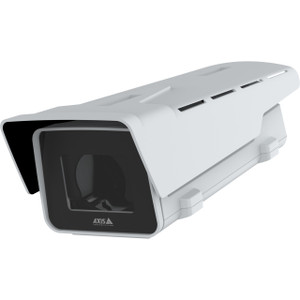
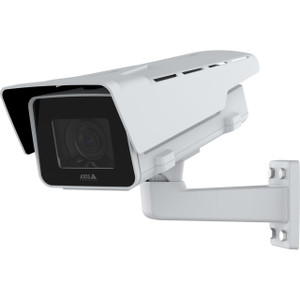
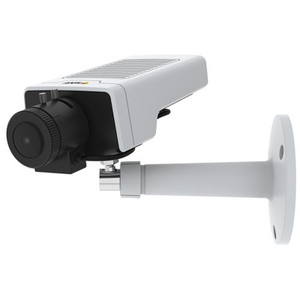
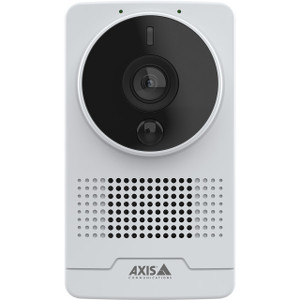
Type:
Box
Frame Rate:
30fps
Sensor Type:
CMOS
Image Sensor Size:
1/2.8"
Features:
Lightfinder 2.0
Wide Dynamic Range:
Forensic WDR
Max Resolution:
1920x1080
Max frames per second:
50/60
Image Stabilization:
PoE
Lens Mount:
CS
Lens Type:
PoE
Video Compression:
H.264
Audio Support:
Yes
PoE Class:
3
Signed Firmware:
PoE
Remote Focus:
PoE
Local Storage:
PoE
Built-in IR:
No
Operating Temperature:
-10 to 55 °C
Power (Max:
7.8 W
Power (Average:
3.2 W
DC Input Voltage:
10-28 V
Product Type:
Box
Connectivity:
Wired
Power Type:
PoE
Resolution:
2MP
Night Vision:
IR
Housing Color:
White
Environment Rating:
Indoor
Warranty:
5-Year Warranty
Poe Power:
PoE (802.3af) Class 4
Wdr:
Forensic WDR
Ir Lowlight:
OptimizedIR; Lightfinder
Compression:
Zipstream
Onvif:
Yes
Analytics:
Deep Learning (DLPU); Object Analytics; VMD
Lens Focal Length:
Varifocal 5.9-13.3 mm
Lightfinder:
Lightfinder 2.0
Zipstream:
Yes
H.264:
Baseline, High, Main
H.265:
Yes
Signed OS:
Yes
Secure Boot:
Yes
Secure Keystore:
Secure Element (CC EAL6+)
Sustainability:
BFR/CFR free, PVC free
Day And Night:
Automatically removable infrared-cut filter
Minimum Illumination:
1080p 25/30 fps with Forensic WDR and Lightfinder 2.0 :
Shutter Speed:
1/37000 s to 2 s with 50 Hz 1/37000 s to 2 s with 60 Hz
Model:
ARTPEC-8
Memory:
1024 MB RAM, 8192 MB Flash
Compute Capabilities:
Deep learning processing unit (DLPU)
Video Streaming:
Up to 20 unique and configurable video streams Axis Zipstream technology in H.264 and H.265 Controllable frame rate and bandwidth VBR/ABR/MBR H.264/H.265 Low latency mode Video streaming indicator
Signal-to-noise Ratio:
>55 dB
Multi-view Streaming:
Up to 8 individually cropped out view areas
Noise Reduction:
Spatial filter (2D noise reduction) Temporal filter (3D noise reduction)
Image Settings Scene Profiles:
forensic, vivid, traffic overview
Image Processing:
Axis Zipstream, Forensic WDR, Lightfinder 2.0
Pan/Tilt/Zoom:
Digital PTZ, preset positions Preset position tour, control queue, on-screen directional indicator Guard tour (max 100)
Output:
Output through speaker pairing
Encoding:
24bit LPCM, AAC-LC 8/16/32/48 kHz, G.711 PCM 8 kHz, G.726 ADPCM 8 kHz, Opus 8/16/48 kHz
Network Protocols:
IPv4, IPv6 USGv6, ICMPv4/ICMPv6, HTTP, HTTPS , HTTP/ 2, TLS , QoS Layer 3 DiffServ, FTP, SFTP, CIFS/SMB, SMTP, mDNS (Bonjour), UPnP , SNMP v1/v2c/v3 (MIB- II), DNS/DNSv6, DDNS, NTP, PTP, NTS, RTSP, RTP, SRTP/ RTSPS, TCP, UDP, IGMPv1/v2/v3, RTCP, ICMP
Application Programming Interface:
Open API for software integration, including VAPIX®, metadata and AXIS Camera Application Platform (ACAP); specifications at axis.com/developer- community . One-click cloud connection ONVIF® Profile G, ONVIF® Profile M, ONVIF® Profile S, and ONVIF®
Video Management Systems:
Compatible with AXIS Camera Station Edge, AXIS Camera Station Pro, AXIS Camera Station 5, and video management software from Axis’ partners available at axis.com/vms .
Onscreen Controls:
Electronic image stabilization Day/night shift Defogging Wide dynamic range Video streaming indicator Autofocus Privacy masks Media clip
Edge-to-edge:
Microphone pairing Speaker pairing
Event Conditions Device Status:
above/below/within operating temperature, IP address removed/blocked, new IP address, network lost, system ready, ring power overcurrent protection, live stream active Digital audio input status
Event Conditions Edge Storage:
recording ongoing, storage disruption, storage health issues detected
Event Conditions I/O:
digital input, digital output, manual trigger, virtual input
Event Conditions MQTT:
stateless
Scheduled And Recurring:
schedule
Event Conditions Video:
average bitrate degradation, day-night mode, tampering
Event Actions I/O:
toggle I/O once, toggle I/O while the rule is active
Event Actions MQTT:
publish
Event Actions Notification:
HTTP, HTTPS, TCP and email Overlay text
Event Actions Recordings:
record, record while the rule is active
Event Actions SNMP Traps:
send, send while the rule is active
Event Actions Status LED:
flash, flash while the rule is active
Upload Of Images Or Video Clips:
FTP, SFTP, HTTP, HTTPS, network share and email WDR mode
Built-in Installation Aids:
Leveling assistant, remote back focus
Applications:
Included : AXIS Object Analytics, AXIS Scene Metadata, AXIS Image Health Analytics, AXIS Live Privacy Shield , AXIS Video Motion Detection Supported : Support for AXIS Camera Application Platform enabling installation of third-party applications, see
Image Degradation:
blurred image, underexposed image
AXIS Scene Metadata Object Classes:
humans, faces, vehicles (types: cars, buses, trucks, bikes), license plates
Object Attributes:
confidence, position
Product Markings:
UL/cUL, UKCA, CE, KC, EAC, VCCI, RCM
EMC Japan:
VCCI Class A
EMC Korea:
KS C 9835, KS C 9832 Class A
EMC USA:
FCC Part 15 Subpart B Class A
Safety:
CAN/CSA C22.2 No. 62368-1 ed. 3, IEC/EN/UL 62368-1 ed. 3, IS 13252
Cybersecurity:
ETSI EN 303 645, BSI IT Security Label, FIPS 140
Edge Security Software:
Signed OS, brute force delay protection, digest authentication and OAuth 2.0 RFC6749 Client Credential Flow/OpenID Authorization Code Flow for centralized ADFS account management, password protection, Axis Cryptographic Module (FIPS 140-2 level 1)
Edge Security Hardware:
Axis Edge Vault cybersecurity platform Secure element (CC EAL 6+), Axis device ID, secure keystore, signed video, secure boot
Network Security:
IEEE 802.1X (EAP-TLS, PEAP-MSCHAPv2) , IEEE 802.1AR, HTTPS/HSTS , TLS v1.2/v1.3 , Network Time Security (NTS), X.509 Certificate PKI, IP address filtering IEEE 802.1X (EAP-TLS, PEAP-MSCHAPv2) , IEEE 802.1AR, HTTPS/HSTS , TLS v1.2/v1.3 , Network Time
Documentation:
AXIS OS Hardening Guide Axis Vulnerability Management Policy Axis Security Development Model AXIS OS Software Bill of Material (SBOM) To download documents, go to axis.com/support/ cybersecurity/resources To read more about Axis cybersecurity suppor
Casing Color:
white NCS S 1002-B, black NCS S 9000–N
Mounting:
¼”-20 UNC tripod screw thread
Connectors Network:
Shielded RJ45 10BASE-T/100BASE-TX/ 1000BASE-T PoE
Connectors I/O:
6-pin 2.5 mm terminal block for 2 supervised alarm inputs and 2 outputs (12 V DC output, max load 50 mA)
Serial Communication:
RS485/RS422, 2 pcs, 2 pos, full duplex, terminal block
Operating Conditions:
–10 °C to 55 °C (14 °F to 131 °F) Humidity 10–85% RH (non-condensing)
Dimensions:
For the overall product dimensions, see the dimension drawing in this datasheet.
Weight:
395 g (0.9 lb)
Box Content:
Camera, installation guide, terminal block connectors, owner authentication key
Optional Accessories:
AXIS Microphones, AXIS Midspans AXIS CS mount lenses AXIS T8415 Wireless Installation Tool AXIS Surveillance Cards For more accessories, go to axis.com/products/axis- p1385-b#accessories
System Tools:
AXIS Site Designer, AXIS Device Manager, AXIS Device Manager Extend, product selector, accessory selector, lens calculator Available at axis.com
Languages:
English, German, French, Spanish, Italian, Russian, Simplified Chinese, Japanese, Korean, Portuguese, Polish, Traditional Chinese, Dutch, Czech, Swedish, Finnish, Turkish, Thai, Vietnamese
Part Numbers:
Available at axis.com/products/axis-p1385-b#part- numbers
Substance Control:
PVC free, BFR/CFR free in accordance with JEDEC/ECA Standard JS709 RoHS in accordance with EU RoHS Directive 2011/65/ EU/ and EN 63000:2018 REACH in accordance with (EC) No 1907/2006. For SCIP UUID, see echa.europa.eu
Renewable Carbon-based Plastic Content:
3% (bio- based) Screened for conflict minerals in accordance with OECD guidelines To read more about sustainability at Axis, go to axis. com/about-axis/sustainability
Environmental Responsibility:
axis.com/environmental-responsibility Axis Communications is a signatory of the UN Global Compact, read more at unglobalcompact.org
Image Sensor:
1/2.8
Audio Input:
Built-in microphone or optional analog or digital microphone
Audio Output:
Two-way audio with speaker pairing
Digital Input:
Supervised I/O
Digital Output:
Supervised I/O
Serial Interface:
RS422/485
Power Input:
IEEE 802.3af Type1 Class 3 (PoE) or 10-28 V DC
Shipping Weight:
1.570 lb
Country Of Origin:
TH
UNSPSC:
46171610