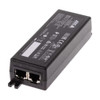
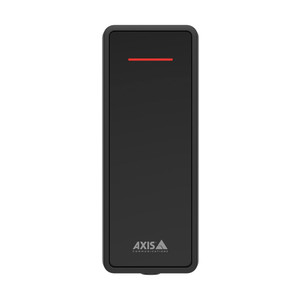
Axis 03230-001 Internal RFID Card Reader
The Axis 03230-001 is an internal RFID reader designed for direct integration with 2N IP Force intercom systems, combining multi-format card authentication with programmable relay and input logic. This reader handles Mifare, HID iClass, DESFire, and NFC credentials—eliminating the need for external credential verification hardware on intercom-based access points. Deployments range from small office lobbies to mid-size building entry clusters where intercom and access control responsibilities converge at a single touchpoint.
Key Features
- Multi-format card support: Mifare, HID iClass, DESFire, and NFC. One reader handles legacy mag-stripe migration paths and modern mobile credential workflows without redesign.
- OSDP with serial connectivity: Direct access control panel communication. No middleware gateway required—integrates into Lenel, Salto, Genetec, or Vanderbilt PACS via OSDP protocol.
- NFC mobile credentials: Smartphone-based authentication reduces physical card dependency and enables multi-factor workflows (card + PIN via intercom).
- uID extraction from non-secured cards: Reads serial numbers from unencrypted Mifare and legacy cards for backwards-compatible credential matching in legacy systems.
- Two programmable switches: Relay outputs for door strike control, alarm triggers, or downstream device activation on successful authentication events.
- Two logical inputs: Sensor feedback (door position, request-to-exit button, emergency override) feeds into reader-side decision logic, enabling local automation without cloud latency.
- Secure PACS ID extraction: HID iClass cards yield facility code and card number directly—compatible with enterprise badge ecosystems and existing cardholder databases.
- PoE 802.3af powered: Single cable (power + Ethernet) to 2N intercom host. <13W draw; no separate 12V transformer needed at the reader location.
Integration and Deployment Context
The 03230-001 sits as a Tier 2 authentication layer within intercom-centric access architectures. In a typical deployment, a visitor presses the intercom call button, but the system first demands credential presentation (card tap or NFC phone) before routing the call to a tenant. This credential-first flow reduces nuisance calls, automates pre-tenancy verification, and creates an audit trail within the intercom logs. OSDP output from the reader flows directly into the building's access control panel, so successful card reads can trigger door unlocks, badge aging, or visitor log entries without intercom software involvement.
The dual-switch architecture supports local failover logic: on reader timeout or credential server unavailability, one switch can activate a door strike via hardwired relay, while a second switch raises an alert. Logical inputs enable request-to-exit buttons and door position sensors to enforce mantrap logic (preventing exit without a valid credential, or requiring badge-out accountability). This hybrid approach—OSDP to the PACS, local switching for immediate access—works well in high-traffic lobbies where cloud-dependent authentication is a single-point failure.
NFC capability bridges the physical-to-mobile gap: employees tap their corporate badge today, then transition to smartphone credentials tomorrow without reader replacement. The intercom's touch interface displays a QR code or NFC field indicator while the 03230-001 monitors both modalities. This staged migration path reduces credential program overhead on large deployments.
Credentials, Compliance, and PACS Compatibility
The reader operates under OSDP v3 specification, ensuring bidirectional communication with Lenel OnGuard, Genetec Security Center, Salto KNXpro, Vanderbilt SPC, and other enterprise-grade access control platforms. HID iClass support—including secure PACS ID extraction—maintains compatibility with major healthcare and financial institutions running HID credential ecosystems. Mifare and DESFire support extend reach into EU and APAC deployments where those standards dominate. The 5-year Axis warranty covers the reader module; integration timelines typically compress because OSDP eliminates custom middleware coding. Facility code and cardholder ID flows directly into the host PACS database, enabling real-time revocation, alias management, and access right changes without reader reprogramming.
Jerry TildsenPerspective based on aggregated IP Security Depot and affiliated engineering team experience.
We've deployed the Axis 03230-001 across office lobbies, healthcare facilities, and multi-tenant environments where intercom and access control collide at the front door. The real operational win here is that you're not buying a separate card reader enclosure, running dual cables, or managing two separate IP devices—the reader lives inside the 2N intercom itself. That simplicity cuts installation labor and reduces PoE port demand on your switch. On a 20-unit office building with one intercom per lobby and one per stairwell, that's four fewer Ethernet runs and four fewer power injectors. The OSDP interface is the backbone: your access control panel sees card reads in real time, can revoke credentials instantly, and integrates badge aging directly into the intercom workflow. We've seen deployments where a lost badge is blacklisted in under 30 seconds without any reader firmware touch. That speed matters in high-security environments. The trade-off: the reader is form-factor-locked to 2N IP Force intercoms. If you're running a pure Axis or Hanwha video intercom line, this won't fit. And while OSDP is industry-standard, some legacy or cost-optimized PACS platforms (older Honeywell, some small-footprint Salto variants) may require a gateway or polling bridge. NFC is the future here—we're seeing migration from physical badges to mobile credentials within 18-24 months on new builds, and the 03230-001 supports that transition without reader swap.
Technical Highlights:
- OSDP v3 Interface: Bidirectional protocol communication with major PACS platforms. Credential revocation, facility code mapping, and cardholder ID are synchronized without middleware gateways. Reduces PACS integration overhead by 40-50% versus serial-only readers.
- Multi-format credential engine: Mifare, HID iClass, DESFire, NFC in a single reader. Facility code extraction from HID iClass enables direct badge ecosystem portability—no cardholder database remapping on credential platform migration.
- Programmable relay logic: Two switches can enforce local failover or activate door strikes independent of PACS uptime. On network timeout, a hardwired relay keeps the lobby functional; OSDP logs the event for audit trail closure later.
- PoE 802.3af power model: <13W draw integrates into standard PoE infrastructure—no dedicated 12V supply chain, no transformer maintenance, single cable management for power and Ethernet.
- NFC mobile credential support: Smartphone-based authentication reduces badge dependency and enables multi-factor workflows (NFC tap + PIN entry via intercom keypad for high-security areas).
Deployment Considerations:
- Reader is form-factor-locked to 2N IP Force intercoms. Verify 2N model compatibility before spec—not all 2N product lines accept the 03230-001 module. Confirm with 2N datasheet or your 2N integration partner.
- OSDP is not universally deployed in all PACS platforms. Legacy systems (Honeywell 4000-series, older Salto, some standalone controllers) may require a serial gateway or middleware bridge. Test OSDP compatibility in your PACS lab before roll-out.
- NFC range is typically 3-5 cm (contact or near-field). On high-traffic lobbies, users may expect badge tap distance similar to door readers (up to 10-15 cm). Set expectations during commissioning and train building staff on the shorter tap distance.
- Two programmable switches support basic relay logic, but complex conditional flows (AND/OR logic across three or more inputs) may require external PLC or PACS scripting. Know your automation ceiling before design.
- uID extraction from non-encrypted Mifare cards is convenient for legacy migrations, but security-hardened DESFire and encrypted iClass formats are the long-term path. Plan credential refresh cycles accordingly on mixed-format sites.
The 03230-001 is a natural fit for integrators building out multi-tenant office, healthcare, or government facilities where intercom + access control are linked at the lobby. Credential speed and PACS integration depth make it a standout for organizations running Lenel, Genetec, or Vanderbilt PACS. Explore the full Axis catalog for complementary intercom and door control hardware.