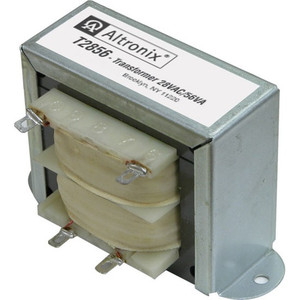
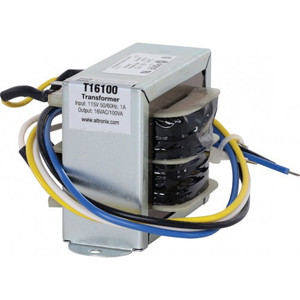
Altronix T1656 16VAC 56VA Open Frame Transformer
The Altronix T1656 is a 16VAC 56VA open frame transformer engineered for North American security and access control installations where reliable, efficient AC voltage conversion is non-negotiable. This unit accepts standard 115VAC mains input and delivers a regulated 16VAC secondary output — the industry standard for powering access control readers, alarm panels, and auxiliary security devices across distributed deployments.
Key Features
- 16VAC Output Voltage: Delivers the standard AC voltage required by most access control systems, alarm panels, and security device auxiliaries. This eliminates the need for custom voltage management or secondary regulators in typical enclosure installations.
- 56VA Power Capacity: Sufficient to support multiple concurrent loads — typically 3–5 card readers, multiple solenoid relays, or equivalent auxiliary devices. Verify draw against your specific reader/device datasheets to avoid overload.
- 115VAC Input (North American Standard): Accepts standard facility power without conversion. Confirm your mains supply meets this rating before installation; 220–240VAC supplies require a different transformer model.
- Open Frame Construction: No enclosure means lower cost and compact footprint, but requires mounting inside a panel, rack, or wall box. Airflow is unrestricted, so thermal cycling in climate-controlled spaces poses minimal risk. Do not expose to moisture or dust without an external enclosure.
- Lifetime Limited Warranty: Altronix backs the unit for as long as you own it — typical for industrial transformers. Review the warranty statement for exclusions related to overload, environmental damage, or misapplication.
- Passive Design (No Electronics): A true transformer with no active regulators or switching circuitry means no failure points from component degradation. Reliability is high across typical 10–20 year deployment cycles.
Deployment Scenarios
The T1656 is purpose-built for wall-mounted and rack-mounted security enclosures. Common installations include distributed access control nodes (where one transformer serves multiple reader locations), dedicated backup power supplies for NVRs or alarm panels in small-to-medium facilities, and auxiliary power zones in multi-panel alarm systems. Mount it inside a DIN-rail enclosure or bolt it to a panel frame — the open form factor gives you design flexibility.
One practical note: if your facility has variable mains voltage (±10%), the T1656's output will vary proportionally. If you need tighter voltage tolerance (e.g., for sensitive card readers), consider a regulated supply or a secondary buck-boost regulator downstream.
Electrical Specifications
- Input Voltage: 115VAC (±10% acceptable per NEMA standards)
- Output Voltage: 16VAC at rated load
- VA Rating: 56VA (maximum capacity)
- Maximum Current (Secondary): 3.5A (56VA ÷ 16V), assuming unity power factor. Real-world loads (solenoids, readers with rectifiers) may draw reactive current; use actual device specifications to size.
- Form Factor: Open frame (no enclosure)
- Warranty: Lifetime Limited Warranty
Consult a power infrastructure guide or your facility's electrical standards if you are unsure about load calculation or mains voltage stability in your installation.
Frequently Asked Questions
Q: Can I use the T1656 with 220–240VAC mains?
A: No. The T1656 is designed for 115VAC input only. Using it with 220–240VAC will damage the transformer and create a fire hazard. If your facility is on 220–240VAC mains, you need a different Altronix model rated for that input.
Q: How many access control readers can the T1656 power?
A: That depends on the reader model. Typical modern card readers draw 40–80mA at 16VAC. The T1656 can supply up to 3.5A (3500mA) before hitting its 56VA limit, so you could theoretically support 40–80 readers. However, most real-world installations with solenoid locks, request-to-exit buttons, and door sensors on the same circuit draw more power. Calculate your actual load using manufacturer datasheets and leave 20–30% headroom for inrush current and future expansion.
Q: What is the warranty?
A: Altronix covers the T1656 under a Lifetime Limited Warranty, provided it is not damaged by overload, physical trauma, or environmental exposure beyond its design limits.
Q: Must the T1656 be mounted inside an enclosure?
A: The open frame design assumes you will mount it inside a control panel, wall-mounted box, or DIN-rail enclosure. Do not leave it exposed to moisture, dust, or direct contact. Ensure adequate spacing around the transformer for airflow and thermal dissipation.
Q: Does mains voltage fluctuation affect the output voltage?
A: Yes. A passive transformer has no regulation circuitry, so if your facility experiences mains sag (e.g., 105VAC instead of 115VAC), the secondary output will drop proportionally to ~14.6VAC. For critical applications requiring stable 16VAC, consider a regulated power supply or add a buck-boost regulator downstream of the T1656.
Q: Is the T1656 compatible with modern access control system architectures?
A: Yes, provided your system or device is designed for 16VAC auxiliary power input. Most traditional access control panels, standalone readers, and alarm modules support 16VAC. Verify your equipment's power requirements before purchase; some modern networked devices are 12VDC or PoE-only and cannot use this transformer.
Ted PerryPerspective based on aggregated IP Security Depot and affiliated engineering team experience.
The Altronix T1656 is a straightforward, no-nonsense transformer for access control and alarm power distribution in North American facilities. The 56VA capacity is the real constraint here — it sounds like plenty until you start adding solenoids, multiple readers, and request-to-exit relays on the same secondary circuit. Work backward from your actual device datasheets, not nameplate ratings.
Technical Highlights:
- 56VA capacity translates to 3.5A at 16VAC secondary: A single 12VDC solenoid strike pulling 2A at lock time will consume most of your budget on the 16VAC side; factor in reader draw, status relays, and you are often 80–90% utilized on real jobs. This is not a weakness — it is just arithmetic. Size conservatively.
- Passive transformer design means zero regulation: If your facility has weak or sag-prone mains (common in older buildings or areas with heavy industrial load), you will see output voltage drop proportionally. A 10% sag on the input line becomes a 10% sag on 16VAC. For critical readers or security locks, this matters; for general-purpose solenoid feed, it is acceptable.
- Lifetime warranty with no active components: There are no capacitors to dry out, no switching circuits to fail. Reliability approaches infinity on a passive transformer — your failure mode is physical damage or sustained overload, not age degradation.
Deployment Considerations:
- Do the load math before you buy. A typical access control cabinet with 4 readers, 2 solenoid strikes, and a panel backup battery charger often runs 2.5–3A on this transformer. You are not breaking 56VA, but you have no margin for field additions or inrush tolerance.
- Open frame is cost-effective but requires you to provide physical protection. Mounting inside a UPS enclosure or lockable panel box is standard; exposing it to dust or moisture, even in climate-controlled spaces, invites oxidation on the secondary terminals after a few years.
The T1656 is a defensible choice for retrofit or branch-circuit power distribution in small-to-mid-size access control installs. Use it when you need simple, reliable 16VAC secondary power and your load is mapped and stable. If your facility is growing or mains power is unstable, budget for a regulated supply or oversize to the next Altronix model in the family.