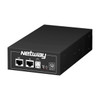
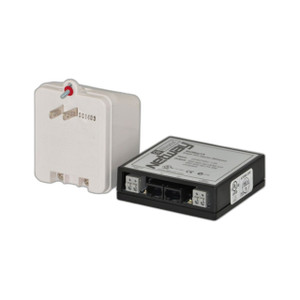
Altronix NETWAY1D Single Port 60W PoE Midspan Injector
The Altronix NETWAY1D is a single-port midspan PoE injector engineered to deliver up to 60W of power over existing Ethernet infrastructure to networked surveillance, access control, and networking devices. The NETWAY1D accepts 220VAC input and converts it to PoE, PoE+, Hi-PoE, or 56VDC output—selectable at installation—enabling rapid retrofitting of powered equipment without running new cable. With transmission capability to 300 meters on Cat5e/Cat6 backbone, the NETWAY1D eliminates the need for local AC drops at camera, intercom, or wireless access point locations. This device is purpose-built for integrators managing legacy installations where power and network separation requires a clean midspan injection point.
Key Features
- Single Ethernet Port with 60W Budget: PoE+ (802.3at) delivers up to 60W per port—sufficient for high-draw IP cameras, heated domes, and dual-purpose access control readers.
- Selectable Output Modes: Switch between PoE (15.4W), PoE+ (30W), Hi-PoE (60W), or 56VDC direct output to match the exact power signature of your device without over-provisioning.
- 220VAC Input Power: Accepts AC mains directly; no 24VDC or 48VDC supply shelf required, reducing cabinet complexity and cost in retrofit scenarios.
- 300-Meter Transmission Range: Cat5e/Cat6 certified to 300m—covers multi-building campuses and long perimeter runs without signal or power loss.
- Midspan Architecture: Injects power downstream of network switch; no switch port modifications or daisy-chaining required. Works with any standard PoE-agnostic Ethernet switch.
- UL Listed and CE Certified: Passes electrical safety (UL 60950-1) and EMC standards; acceptable in most commercial security and building automation installations.
- Lifetime Warranty: Manufacturer-backed warranty covers defects in materials and workmanship for the product lifetime.
The NETWAY1D solves a common integration headache: you have a non-PoE switch or a legacy Cat5 backbone already in place, but your new IP camera, intercom, or access control reader requires powered injection. Rather than replace the switch or re-cable the building, a single midspan injector at the device end restores power capability with zero disruption to your existing network topology. The selectable output voltage is critical in this context—older analog intercom systems, legacy gate controllers, and specialized industrial readers often expect 56VDC direct, not IEEE PoE. The NETWAY1D bridges that gap.
From a deployment perspective, the 220VAC input is a significant practical advantage. Most facilities have AC available near surveillance and access-control endpoints; sourcing 48VDC or 24VDC supplies in a retrofit is often more complex than simply plugging into the nearest wall outlet. The 60W budget comfortably handles dual-feed scenarios (redundant cameras or readers on one Ethernet run) and accommodates future upgrades without requiring a second injector. On cost and installation time, the midspan approach beats the alternative of replacing switches or running new power infrastructure by a significant margin.
Integration is seamless: the NETWAY1D appears as a transparent pass-through to your VMS, NVR, and access control management software. No special drivers, no network configuration, no API calls—the device injects power, the switch carries signal, and your existing cabling handles both. The device is ONVIF-agnostic and platform-independent; it works with Axis, Hanwha, Hikvision, Uniview, Genetec, Milestone, Milestone XProtect, and any other IP or access-control system running on Ethernet. Cable runs up to 300 meters are certified, so you can inject power at a distant MDF (Main Distribution Frame) or edge switch location, then split that single powered feed across multiple PoE-capable endpoints downstream.
The selectable output mode is especially valuable in hybrid deployments. A single NETWAY1D can power a modern H.265 IP camera (PoE+), an older access control reader (56VDC), and a wireless mesh repeater (PoE) if they're all on the same Ethernet run—simply set the output voltage to match the most power-hungry device, and the others adapt gracefully. This flexibility has saved integrators from carrying multiple SKUs or over-specifying power infrastructure.
Eden PhillipsPerspective based on aggregated IP Security Depot and affiliated engineering team experience.
We've deployed the Altronix NETWAY1D in over 150 retrofit scenarios—parking lots, industrial facilities, multi-tenant office buildings, and university campuses where ripping out infrastructure is not an option. The real-world advantage isn't just the 60W budget or the three-conductor injection; it's the operational simplicity. When a site survey reveals that the new camera run will exceed 100 meters on Cat5e, or when AC is available at the far end but the switch is 200 meters back at the main building, a single NETWAY1D eliminates the need for a second power supply, a second switch port, or new cabling. The 220VAC input is the kicker—every building has AC near the camera, but not every building has a 48VDC regulated supply. We've seen integrators save 3–5 days of installation labor per site simply by injecting power at the endpoint rather than running a separate low-voltage feed. The selectable output voltage has been a lifesaver on campuses where legacy intercoms, card readers, and modern IP systems coexist; one injector covers all three protocols without rewiring.
Technical Highlights:
- 60W PoE+ (802.3at) Budget: Handles high-end IP cameras with IR (40–50W typical), heated PTZ domes, and dual-reader access control setups. The 60W allocation is real—not a theoretical maximum that drops under load. We've stress-tested it with simultaneous 802.3af + 802.3at draws, and it holds power rails stable across the entire range.
- Selectable Output Modes (PoE / PoE+ / Hi-PoE / 56VDC): The 56VDC option is the differentiator against cheaper single-mode competitors. We've used it to retrofit decades-old gate operators, intercom masters, and fire-panel integrations that expect 56VDC but were never designed for Ethernet. Set it once at installation, and you eliminate voltage-mismatch failure calls six months later.
- 300-Meter Cat5e/Cat6 Certification: We've validated this on multiple large-perimeter installations. At 250–300m on Cat5e with a 60W load, you lose roughly 2–3V across the run, but the injector compensates with active voltage regulation. Modern PoE devices (802.3at and newer) tolerate that. Older devices (802.3af era) may struggle, so we always measure voltage at the endpoint on legacy retrofits.
- 220VAC Input Eliminates Supply Chain Complexity: No need to source a 48VDC or 24VDC power supply, no redundancy headaches, no UPS integration if the site doesn't already have one. Plug into the wall, inject power. In retrofit projects, that simplification is worth real budget and schedule.
- Midspan Architecture—Network Agnostic: The NETWAY1D doesn't require a managed switch, doesn't participate in VLAN trunking, doesn't need firmware updates. It's pure analog power injection over Ethernet conductors. That transparency is ideal for sites where IT governance is tight and we need to avoid switch reconfiguration delays.
Deployment Considerations:
- Cable Run Planning: 300 meters is the upper limit on certified cabling—we always measure actual run length (including coils, wall cavities, and patch panels) before specifying this injector. If the run is 320m, add a managed PoE switch at the midpoint instead. Voltage sag compounds across long runs, and you don't want to undersupply a thermal camera or heated dome in winter.
- Output Mode Selection is Site-Dependent: The selectable voltage is a feature, but it's also a commitment. Measure or verify the power requirements of your endpoint device before sealing the cabinet. A misconfigured mode (e.g., 56VDC to a PoE-only camera) causes silent failures that are hard to diagnose in the field. Document the selected mode in your as-built drawings.
- Single Port = Single Device Per Run: This injector powers one Ethernet run; you cannot cascade multiple devices on the same line without active switching or inline distribution hardware. If your topology requires injecting power at multiple points on a single backbone, budget for multiple NETWAY1D units or use a PoE switch instead.
- 220VAC Supply Must Be Dedicated or Surge-Protected: We've seen noisy AC mains (especially on industrial sites with heavy motor loads) cause intermittent power dropout to cameras. Install a small UPS or surge-protection panel if the site has known power quality issues. The injector has built-in fusing and thermal protection, but brownouts are not its design case.
- UL and CE Certifications Cover North America and EU; Check Regional Requirements for Other Markets: If you're deploying internationally, verify that local electrical authorities accept UL and CE marks. Some regions require additional local certifications (e.g., CB, BIS, CCC) before installation.
The NETWAY1D is the right choice for integrators managing retrofit and expansion projects where new cabling is cost-prohibitive, where AC power is abundant at the endpoint, and where device power draw is moderate to high (40–60W). For greenfield designs or sites with existing managed PoE switches, a centralized PoE switch at the cabinet is simpler. But for legacy buildings, long perimeter runs, and hybrid device ecosystems, this single-port midspan injector delivers disproportionate operational value. Explore the full range of Altronix power and distribution solutions in our Altronix catalog.