
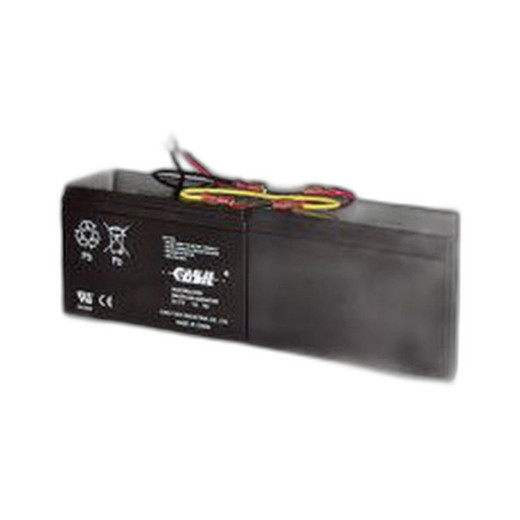


Product images are provided for reference and may not represent the exact model, configuration, or included
components.
Overview
SKU:
EFLOW3NV
Condition:
New
Availability:
Backorder Available — Contact for ETA
Warranty
Lifetime Limited Warranty

Altronix EFLOW3NV TEMP UNAVAIL Recommended (AL400X220)
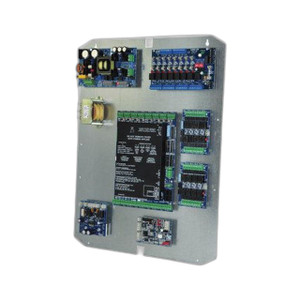
Altronix EFLOW3NV Power Supply ChargerThe Altronix EFLOW3NV is a regulated power supply and battery charger engineered for security integrators, telec…
Altronix EFLOW3NV TEMP UNAVAIL Recommended (AL400X220)
$222.99
Your recommended setup
Review items below — quantities update pricing automatically.
Item
Qty
Status
Price
Optional Add-Ons recommended
Services optional
Bundle Summary
Bundle Subtotal:
$0.00
Optional Add-Ons:
$0.00
Services:
$0.00
Total:
$0.00
Overview
SKU:
EFLOW3NV
Condition:
New
Availability:
Backorder Available — Contact for ETA
Warranty
Lifetime Limited Warranty
Description

Altronix EFLOW3NV Power Supply Charger
The Altronix EFLOW3NV is a regulated power supply and battery charger engineered for security integrators, telecom installers, and IT managers who require reliable backup power in access control, alarm, and surveillance deployments. This single-unit solution delivers 12/24VDC output at 2A maximum current with integrated battery charging capability, fire alarm disconnect functionality, and full AC supervision. The EFLOW3NV operates from standard 120VAC 60Hz input and is housed in a compact BC300 enclosure, making it suitable for both wall-mounted and cabinet installations.
Key Features
- Dual Output Configuration: Provides 12VDC and 24VDC output from a single unit with 2A maximum current capacity for flexible system design
- Battery Backup Integration: Built-in battery charger with battery presence supervision enables uninterrupted operation during AC loss events
- Fire Alarm Interface (FAI): Compliant fire alarm disconnect capability meets code requirements for life-safety system integration
- LinQ2 Ready: Compatible with Altronix LinQ2 platform for enhanced system integration and remote monitoring
- AC Supervision: Continuous monitoring of AC input status with automatic alert on power failure
- Low Battery Supervision: Proactive battery health monitoring prevents unexpected power loss during critical operation
- UL Listed Certification: Third-party tested and approved for commercial security and life-safety applications
- Compact BC300 Enclosure: Space-efficient form factor designed for integration into existing installations without requiring dedicated cabinet space
- 120VAC Input Standard: Operates on standard North American single-phase power without requiring specialized electrical infrastructure
- 2A Output Current: Rated capacity supports multiple 12/24VDC devices including locks, readers, and auxiliary circuits in a single power module
Integration and Supervision
The EFLOW3NV delivers comprehensive supervision capabilities essential for unattended security deployments. AC fail detection signals immediately when utility power is lost, triggering automatic battery backup operation. Low battery supervision monitors charger and battery health status, alerting system administrators to degradation before capacity is compromised. Battery presence detection confirms backup power availability at power-up and during periodic diagnostics. LinQ2 platform compatibility enables centralized management of multiple EFLOW3NV units across distributed locations, simplifying commissioning and ongoing maintenance for larger installations.
The fire alarm interface disconnect feature ensures compliance with fire code requirements that mandate disconnection of non-life-safety loads during alarm events. This functionality is critical for buildings hosting both security and fire alarm systems, preventing power competition during emergencies.
Application Suitability
The EFLOW3NV addresses the mid-range power requirements of access control systems, integrated alarm platforms, and networked video installations. Its 2A output current and dual voltage configuration support legacy 12VDC equipment alongside modern 24VDC infrastructure, simplifying mixed-generation deployments. The battery charging function eliminates the need for external charger modules, reducing panel clutter and service points. Integrators deploying the Altronix EFLOW3NV benefit from UL listing, FAI compliance pre-certification, and LinQ2 ecosystem support, all of which reduce engineering time and site validation requirements.
Ted Perry
I've specified the Altronix EFLOW3NV in several mid-sized access control deployments where battery backup and fire alarm integration are non-negotiable. This unit consolidates power supply, battery charger, and supervision logic into a single BC300 package, which eliminates the panel wiring complexity I'd encounter with discrete modules. The EFLOW3NV's LinQ2 compatibility is particularly valuable when integrating with larger Altronix systems — it gives you remote telemetry on AC status and battery health without additional monitoring hardware.
Technical Highlights:
- Dual Output Flexibility: Supporting both 12VDC and 24VDC from one supply simplifies mixed-equipment environments and eliminates the need for separate power rails
- Fire Alarm Compliance: Built-in FAI disconnect function removes approval burden for life-safety code compliance on the integrator
- Battery Supervision Suite: AC fail, low battery, and battery presence monitoring provide the visibility needed to catch degradation before field failures
Deployment Considerations:
- Verify battery capacity separately; the EFLOW3NV charger function requires external battery sizing based on connected load and backup duration requirements
- Plan LinQ2 wiring if leveraging remote supervision — additional twisted-pair runs may be needed depending on cabinet layout
- Confirm FAI compatibility with the specific fire panel in the facility; documentation should be reviewed during design phase
The EFLOW3NV is a solid choice when you need certified backup power, fire code compliance, and a reputable charging platform in a compact form. It's not the heaviest-duty supply, but it's reliable, well-supported, and integrates cleanly into Altronix-centric designs.
Specifications
Product Type:
Power Supply/Charger
Approvals:
UL Listed
Input Voltage:
120VAC 60Hz
Max Current:
2A total
battery_backup:
Yes
fire_alarm_disconnect:
Yes
Supervision:
AC Fail, Low Battery, Battery Presence
Output Voltage:
12/24VDC
Number of Outputs:
2 (12VDC and 24VDC)
Enclosure_Dimensions:
BC300
Warranty:
Lifetime Limited Warranty
Battery Backup:
Yes
Have Questions?
Ask an Expert.
Your recommended setup
Review items below — quantities update pricing automatically.
Item
Qty
Status
Price
Optional Add-Ons recommended
Services optional
Bundle Summary
Bundle Subtotal:
$0.00
Optional Add-Ons:
$0.00
Services:
$0.00
Total:
$0.00
RELATED PRODUCTS

System Design, Deployment & Technical Support
Support services and planning resources for commercial surveillance, access control, and infrastructure deployments.
Fixed scope • Fixed price
System Design Assistance
- Get help validating product compatibility
- Coverage requirements
- Storage planning and deployment architecture before you buy.
Deployment & Configuration Support
- Access fixed-scope support for rollout planning
- User setup guidance
- Migration and system standardization across single-site or multi-site deployments
Guides, Tools & Calculators
- PoE requirements
- Storage retention
- Camera selection and deployment methodology