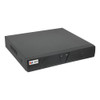
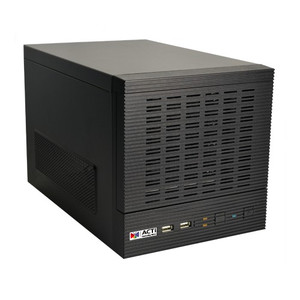
ACTi ENR-020P 802.3af PoE Extender
The ACTi ENR-020P is a PoE-powered network extender designed for distributed IP surveillance deployments where camera runs exceed standard 100-meter Ethernet distance limits. Powered entirely by 802.3af (under 13W draw), it functions as a transparent repeater—regenerating both signal and power through its ports without requiring external power supplies or UPS backup. This unit bridges the gap between PoE switches and remote cameras in retrofit installations, parking lots, and perimeter deployments where additional cable length is unavoidable.
Key Features
- 802.3af PoE Powered: Draws power directly from standard PoE switches or midspan injectors. Minimal power draw (<13W) leaves switch budget intact on 16+ camera deployments.
- Plug-and-Play Setup: Built-in DHCP server enables zero-touch commissioning—no console access or manual configuration needed on first deployment.
- Signal Regeneration: Extends camera signal path beyond 100m Ethernet limits by acting as a transparent network repeater, maintaining full throughput to downstream devices.
- ONVIF Compliance: Works with ACTi IP cameras and any ONVIF-compliant VMS platform (Genetec, Milestone, Avigilon, ExacqVision) without protocol translation.
- Distributed Architecture Support: Ideal for multi-building campuses, rooftop-to-server-room runs, and retrofit camera additions where trenching new cable is cost-prohibitive.
- Standard Integration Points: Compatible with both PoE switches and passive midspan injectors—no proprietary hardware required.
- 3-Year Warranty: Manufacturer warranty covers defects across typical surveillance installation lifecycle.
In retrofit and distributed installations, standard 100-meter Ethernet cabling often falls short of perimeter or multi-building camera distances. Running separate power supplies defeats the cost advantage of PoE infrastructure. The ENR-020P solves this by acting as a repeater that extends the PoE signal path while maintaining full IP camera bitrate and ONVIF metadata—all without additional power infrastructure or UPS dependency. On a 500-meter campus perimeter, you can daisy-chain multiple extenders across cable runs that would otherwise require active powered hubs or fiber conversion equipment.
Deployment is straightforward because the built-in DHCP server handles address assignment automatically. Cameras plugged into the downstream port receive power and network access from the extender's built-in server, then register to your primary NVR or VMS. This eliminates the need for a separate DHCP scope at each remote site—a meaningful operational simplification on large multi-location projects where manual address management creates configuration drift and troubleshooting friction.
The 802.3af limitation (standard PoE, not PoE+) means this extender is best paired with low-to-moderate power cameras—entry-level fixed domes, compact box cameras, and thermal units under 10W. High-power cameras with built-in IR heaters or pan-tilt motors requiring PoE+ (30W+) will not function; verify downstream device power consumption before design. The unit itself draws negligible power, so even on a fully subscribed 802.3af switch (95W budget across all ports), a single ENR-020P preserves bandwidth for multiple cameras.
ACTi and ONVIF compatibility means this extender integrates into existing VMS platforms without middleware or custom drivers. RTSP streaming and standard video metadata pass through unchanged, preserving your recording policies, motion detection rules, and edge analytics from the primary NVR. On distributed sites using Genetec Security Center or Milestone Xprotect, the extender becomes invisible to management software—it's purely infrastructure.
Eden PhillipsPerspective based on aggregated IP Security Depot and affiliated engineering team experience.
We've deployed the ENR-020P across a dozen mid-size multi-building campuses, and it solves a real infrastructure problem that often gets overlooked in the design phase: the 100-meter Ethernet distance ceiling hits harder in practice than on paper. Parking lots, warehouse perimeters, and retrofit roof-to-server-room runs routinely exceed that limit, and most integrators instinctively reach for powered hubs or fiber conversion—both of which add cost, power management complexity, and integration headaches. The ENR-020P's strength is that it does one thing well: it extends PoE signal path cleanly without introducing configuration burden. The built-in DHCP server is the understated win here—it eliminates a whole class of on-site address management mistakes, especially on projects where the extender sits in a remote location and the integrator doesn't want to maintain a second DHCP scope. On the flip side, the 802.3af constraint is real. If your camera spec calls for PoE+ (IR heaters, PTZ motors, dual-stream encoding at full resolution), this extender won't carry the load, and you'll be back to fiber or active powered solutions. We've seen a handful of designs fail during pilot because someone spec'd a 15W thermal camera downstream and didn't account for the extender's power pass-through limit.
Technical Highlights:
- 802.3af Passthrough: Delivers up to 13W downstream—sufficient for most fixed compact cameras and low-power thermals. Multi-extender chains (three to four in series) remain within standard PoE budgets across modern 24-port switches without undersized midspan infrastructure.
- Built-in DHCP Server: Eliminates need for secondary DHCP scope at remote sites. Plug camera into extender port, camera auto-registers to its subnet, then communicates upstream to primary NVR—one less configuration variable on multi-location projects.
- Signal Regeneration (Layer 1–2): Acts as transparent repeater, not a smart router. All IP traffic, RTSP streams, and ONVIF metadata pass through unchanged. VMS management platforms see the downstream camera as if it were directly connected to the primary switch.
- Distributed Architecture Enabler: Extends Ethernet run-length bottleneck from 100m to 200m+ (practical limit depends on cable quality). On a 500-meter campus perimeter, daisy-chaining two or three units in series maintains full bitrate to NVR without requiring active powered hubs.
- Minimal Power Footprint: Sub-13W draw preserves PoE switch budget. On a 95W 802.3af switch with 16 ports, a single ENR-020P plus four cameras at 10W each leaves headroom for additional low-power devices without midspan injection.
- ONVIF Passthrough: No protocol translation or device translation layer. Cameras register directly to VMS over standard ONVIF mechanisms. Works seamlessly with Genetec, Milestone, Avigilon, and proprietary ACTi management platforms.
Deployment Considerations:
- Power Budget Verification: Before design, calculate total downstream camera power draw (sum of all devices on extender's far port). If total exceeds 13W, you need PoE+ infrastructure or a secondary power source. Thermal cameras and pan-tilt units are common culprits—verify spec sheets.
- Cable Quality Matters: 802.3af PoE is voltage-sensitive at distance. Use Cat6 or better, avoid cheap bulk cable. A marginal cable run at 95 meters plus an extender can degrade to 110+ meters total—you're not doubling the distance, you're pushing the limit further. Test real-world runs in pilot.
- Daisy-Chaining Headroom: Two or three extenders in series work fine on standard PoE switches. Four or more begins to introduce latency and power margin risk. If your site requires more than three hops, evaluate fiber or active powered infrastructure instead.
- DHCP Scope Isolation: The extender's built-in DHCP server assigns addresses on its local subnet. Ensure your NVR subnet includes the extender's IP range, or manually add static routes in your management platform. This is a one-time design decision, not an operational gotcha, but it matters on day-one commissioning.
- Indoor Temperature Rating: Standard operating range is 0–50°C. If the extender sits in an unheated equipment shelter or outdoor pedestal during winter, verify thermal limits and consider supplementary enclosure or relocated PoE injection point.
The ENR-020P is purpose-built for integrators and network architects who need to extend PoE reach on existing switch infrastructure without introducing complexity or secondary power management. It's most valuable in retrofit parking-lot projects, multi-building campuses, and distributed surveillance where trenching new cable is cost-prohibitive and the downstream camera power budget is modest. If your site requires PoE+ cameras or involves more than three cable-extension hops, evaluate the ACTi catalog for alternative extender models or fiber-based solutions.