
Showing Results for Biometric & Fingerprint Readers
-
Save $26.01

2N AU 2.0 Fingerprint Reader - 02263-001
Fingerprint reader for 2N AU 2.0 access control systems
- Fingerprint reader for 2N AU 2.0 access control units
- Eliminates lost or shared credential risks
- IP54-rated for indoor/sheltered outdoor entry points
In stock · Ships same business day Free shipping over $499$859.00 $832.99 Save $26.01 -
Save $20.01
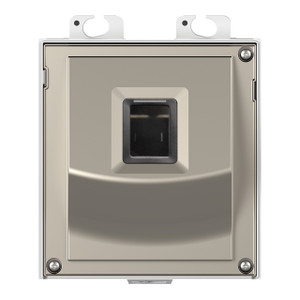
2N IP Verso Fingerprint Reader - 01276-001
Fingerprint reader for 2N IP Verso intercoms, PoE powered, indoor/outdoor
- Biometric fingerprint recognition with sub-second matching speed
- PoE powered design eliminates separate power wiring requirements
- Encrypted biometric data storage compatible with 2N IP Verso series
Usually Ships in 2-3 Weeks Free shipping over $499$639.00 $618.99 Save $20.01 -
Save $21.01
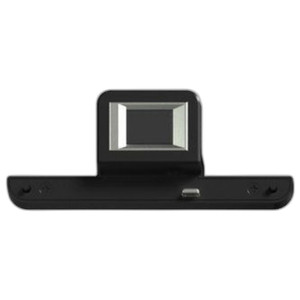
ELO Touch Elo Edge Connect Fingerprint Scanner - E134286
Fingerprint scanner designed specifically for the Elo Edge Connect accessory ecosystem, integrating directly into the bezel of compatible Elo
- Edge Connect interface eliminates external cables, keeping POS bezel clean and secure.
- Native compatibility with I-Series and EloPOS reduces integration testing overhead.
- USB-based Edge Connect mount enables tool-free peripheral swaps during maintenance windows.
Usually Ships in 2-3 Weeks Free shipping over $499$256.00 $234.99 Save $21.01 -
Save $659.48

HID 25B Biometric Reader - 25BNKS-10-000000
When you need to eliminate credential sharing and enforce true identity verification at sensitive access points, biometric authentication becomes
- Multispectral fingerprint sensor stores up to 10,000 templates for 1:1 and 1:N matching.
- OSDP v2 Secure Channel and Wiegand output integrate with existing panel infrastructures.
- IP65-rated enclosure operates from -31°F to 150°F, supporting demanding installation sites.
Usually Ships in 2-3 Weeks Free shipping over $499$1,602.47 $942.99 Save $659.48 -
Save $95.01

PioneerPOS Fingerprint reader URU - T3P-FPR100
Fingerprint capture and verification device designed for retail point-of-sale environments, employee access control, and warehouse inventory workflows
- URU sensor delivers consistent fingerprint capture across varied skin types and conditions.
- USB bus-powered connection requires no external power supply or network configuration.
- ANSI/NIST template support enables integration with legacy POS and workforce platforms.
Usually Ships in 2-3 Weeks Free shipping over $499$290.00 $194.99 Save $95.01 -

PioneerPOS Fingerprint Reader USB - 46B-000F11
USB-connected fingerprint reader designed for point-of-sale and access environments where fast, password-free employee authentication matters
- USB connectivity enables plug-and-play integration with existing POS workstations.
- Flap-free design reduces mechanical failure points in high-frequency access environments.
- Compatible with 15-inch and 17-inch Stealth terminals for targeted deployment flexibility.
Usually Ships in 2-3 Weeks Free shipping over $499$167.99 -
Save $121.84

PioneerPOS ST3 Fingerprint Reader Black - 4MB-BIO100
Fingerprint biometric reader designed to add cryptographic identity verification to PioneerPOS ST3 point-of-sale terminals
- Fingerprint biometric auth eliminates shared PINs and lost-card credential resets.
- Single-port connection delivers both power (12VDC) and data — no external supply needed.
- Native ST3 integration requires no USB adapters, middleware, or network configuration.
Usually Ships in 2-3 Weeks Free shipping over $499$370.83 $248.99 Save $121.84 -
Save $82.01
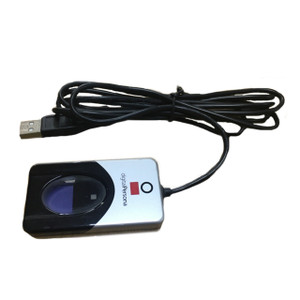
PioneerPOS T3P Fingerprint Reader URU USB-A - Q12-T3P-BIO100
URU-platform fingerprint biometric reader designed for healthcare access control, patient verification, and credential-gating workflows where
- URU platform enables native SDK integration with existing identity and access control systems.
- Bus-powered USB-A connection eliminates separate power supplies, simplifying clinical deployments.
- Real-time scan-to-match cycles support high-throughput verification at registration and med points.
Usually Ships in 2-3 Weeks Free shipping over $499$250.00 $167.99 Save $82.01 -
Save $72.01

Posiflex SD4040037 Ks Fingerprint Reader Attachmtattach W/O
Snap-on optical fingerprint reader designed specifically for Posiflex KS-series POS terminals
- Optical fingerprint sensor enables secure user authentication directly at the POS terminal.
- Snap-on bezel attachment installs without tools, minimizing KS-series deployment time.
- USB interface ensures plug-and-play connectivity with no additional driver infrastructure.
Usually Ships in 2-3 Weeks Free shipping over $499$177.00 $104.99 Save $72.01 -
Save $13.87

STI STI-6522-S Bopper Stopper Biometric Reader
Fingerprint + PIN dual-factor reader for access control door entry
- Fingerprint recognition with integrated keypad for two-factor authentication
- Standalone or multi-reader infrastructure compatible with door control systems
- IR low-light capability with mounting frame for direct installation
Usually Ships in 2-3 Weeks Free shipping over $499$41.86 $27.99 Save $13.87