
Exit Buttons
Showing Results for Exit Buttons
-

Camden
SKU: CV-7820
Camden CV-7820 Proximity Reader Single Gang
Single gang 125kHz proximity reader with 8-inch read range
- 8-inch read range fits standard door access control installations
- OSDP and Wiegand protocols integrate with existing access systems
- 16VDC operation in single gang form factor for retrofit deployments
$235.00 $141.99 Save $93.01 -

Camden
SKU: CV-CSE-B
Camden CV-CSE-B 125kHz Proximity Card Reader (100-Pack)
- Dual OSDP/Wiegand output integrates with legacy and modern access control panels.
- Supports up to 250,000 users and 4 doors, scaling to enterprise facility deployments.
- 100-unit bulk pack at 16VDC simplifies large rollouts using standard commercial power supplies.
$650.00 $397.99 Save $252.01 -

Camden
SKU: CV-ISH-B
Camden CV-ISH-B HID Format ISO Proximity Card Reader
- Supports up to 250,000 credentials, scaling across multi-facility enterprise deployments.
- OSDP and Wiegand outputs integrate with both legacy panels and modern networked controllers.
- Single reader manages up to 4 door strike circuits, reducing interface hardware requirements.
$550.00 $336.99 Save $213.01 -

Camden
SKU: CV-KTA
Camden CV-KTA 125kHz Proximity Key Tag (25-Pack)
- AWID-format encoding ensures compatibility with HID and HID-compatible 125kHz readers.
- Passive operation eliminates batteries, reducing credential lifecycle overhead at scale.
- 25-pack bulk quantity covers a typical departmental rollout in a single procurement order.
$200.00 $122.99 Save $77.01 -
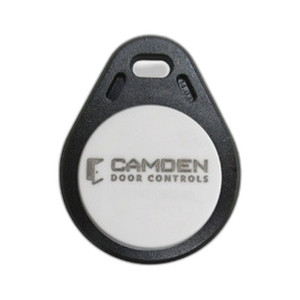
Camden
SKU: CV-KTE
Camden CV-KTE 125kHz Proximity Tag (25-Pack)
- 125kHz HID-standard format works with installed North American reader bases—no firmware changes.
- Dual Wiegand and OSDP support lets one credential stock serve legacy and modern panels alike.
- Passive, read-only tags need zero battery maintenance and resist UID reprogramming attacks.
$200.00 $121.99 Save $78.01 -

Camden
SKU: CV-KTH
Camden CV-KTH HID Proximity Reader Tag (25-Pack)
- 125kHz HID-format credential works with legacy and current proximity readers, no replacement needed.
- Dual OSDP and Wiegand support lets these tags integrate into mixed-protocol access control panels.
- 25-unit bulk pack at 16VDC simplifies mid-scale deployments across 10–15 doors on existing wiring.
$200.00 $122.99 Save $77.01 -

Camden
SKU: CV-WRX4
Camden CV-WRX4 Four Channel Wiegand Receiver
- Supports four independent Wiegand channels, eliminating extra multiplexing hardware.
- DIP-switch selectable Wiegand 26 or 37 per channel enables mixed-protocol deployments.
- 9–21VDC input at 14mA idle fits battery-backed and PoE-adjacent power budgets.
$400.00 $239.99 Save $160.01 -

Camden
SKU: CV-WTX2-H26
Camden CV-WTX2-H26 Two-Channel Wiegand Proximity Reader
- Dual Wiegand and OSDP outputs let one device serve both legacy and modern controllers.
- Reads HID 125kHz and AWID 34-bit credentials, preserving existing card and key tag stock.
- Two-channel architecture cuts panel port usage and simplifies wiring in multi-door clusters.
$50.00 $30.99 Save $19.01 -

Camden
SKU: CV-WTX2H
Camden CV-WTX2H Two Channel Wiegand Proximity Reader
Dual-channel 125kHz proximity reader with Wiegand and OSDP output
- Two independent reader channels for multi-door access control setups
- Reads HID 125kHz proximity cards and fobs on 16VDC power
- Wiegand and OSDP protocol support for retrofit and new installations
$46.00 $27.99 Save $18.01 -
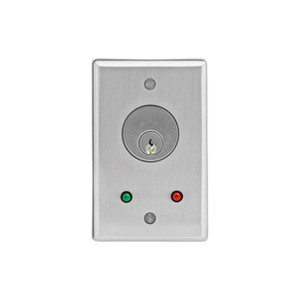
Camden
SKU: CV-WTX2H-H26
Camden CV-WTX2H-H26 Dual-Channel Wiegand Proximity Reader
- Dual Wiegand/OSDP outputs let one reader serve legacy and modern panels simultaneously.
- IP67-rated housing and −35°C to +66°C range support outdoor and harsh-environment installs.
- Reads HID 37-bit and AWID 34-bit 125kHz credentials, preserving existing card ecosystems.
$50.00 $30.99 Save $19.01 -

Camden
SKU: CV-WTX4H-H26
Camden CV-WTX4H-H26 Four Channel Wiegand Proximity Reader
Four-channel proximity reader for multi-door access control systems
- Four independent channels support simultaneous multi-door deployment
- OSDP and Wiegand protocols integrate with existing access control systems
- Reads HID 125kHz proximity credentials at 16VDC operation
$53.00 $32.99 Save $20.01 -

Camden
SKU: CV-WTX4H-H26SE
Camden CV-WTX4H-H26SE Four-Channel Wiegand Proximity Reader
Four-channel proximity reader for Wiegand and OSDP access control
- Reads 125kHz HID proximity cards and HID iCLASS SE smart cards
- Dual protocol output via Wiegand and OSDP for system integration
- Operates at 16VDC for standard power infrastructure compatibility
$57.00 $34.99 Save $22.01 -
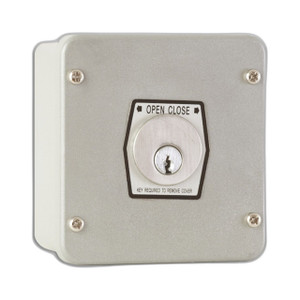
Camden
SKU: CI-1KX
Camden Diecast aluminum enclosure, painted gray enamel, NEMA 1, 2, ...
Diecast aluminum enclosure, NEMA 1/2 rated, DIN rail mount
- Gray painted enamel finish resists corrosion in indoor environments
- Compact metal housing accommodates access control wiring and modules
- DIN rail compatible mounting for standard security panel integration
$310.00 $189.99 Save $120.01 -

Camden
SKU: CI-SCP1
Camden Diecast Aluminum Enclosure, SPDT Momentary, 15 A @ 240 VAC, ...
Diecast aluminum SPDT momentary enclosure rated 15 A @ 240 VAC
- SPDT momentary contact for access control, gate, and door strike applications
- 15 A @ 240 VAC electrical rating with diecast aluminum construction
- Indoor/outdoor wall and ceiling mounting for industrial switching circuits
$155.00 $94.99 Save $60.01 -
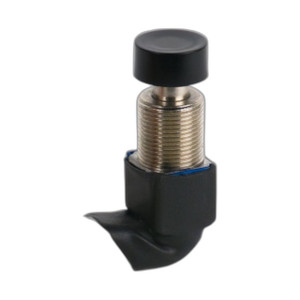
Camden
SKU: CM-1000/47
Camden DPDT maintained contact switch 6 A @ 125 VAC - CM-1000/47
- DPDT maintained contact latches in position, controlling two circuits simultaneously.
- Rated 6 A @ 125 VAC / 3 A @ 30 VDC — drives most EM locks and strikes without a relay.
- Accepts standard 1"–1¼" mortise cylinders, integrating into existing master key systems.
In stock · Ships same business day$65.00 $39.99 Save $25.01 -

Camden
SKU: CM-1000/42
Camden DPDT momentary contact switch 6 A @ 125 V 3 - CM-1000/42
- DPDT momentary closure prevents sustained strike energization, reducing life-safety risk.
- Dual rating (6A@125VAC / 3A@30VDC) works with AC strike and DC mag-lock supplies directly.
- Mortise cylinder mount (1"–1¼") enables key-controlled access without added hardware.
$62.00 $37.99 Save $24.01
Exit Buttons
Exit buttons, also known as request-to-exit (REX) devices, allow occupants to safely unlock doors from the secured side. Proper selection ensures reliable operation, life-safety compliance, and smooth integration with your access control system.
Plan Your Deployment
- Fail-safe vs fail-secure door configuration
- Door type and mounting location
- Integration with controller inputs and timing rules
- Local fire and life-safety code compliance
- Durability and vandal-resistant requirements
Exit Buttons — Engineering-Grade Door Hardware for Commercial Deployments
This category covers 105 working models of exit buttons sourced manufacturer-direct or through channel-direct US distribution. Build the rest of your system around the architectural choices below — compatibility, environmental rating, and lifecycle decisions made here propagate through every downstream component you specify.
What to Look For
Fail-safe versus fail-secure determines what happens during power loss. Fail-safe locks unlock on power loss (used on egress doors where life safety dominates); fail-secure locks remain locked (used on storage, server rooms, and exterior doors where security dominates). Code typically mandates fail-safe on stairwell and egress doors. Confirm with the AHJ before specifying — misapplied lock mode is a common code violation.
Strike, mortise, magnetic lock, and electrified panic hardware each have distinct installation, current draw, and code implications. Electric strikes work with most mechanical locksets and are easiest to retrofit. Magnetic locks (maglocks) provide high holding force on glass and wood doors but require dedicated REX and panic-bar interfaces for egress compliance. Verify the door's existing prep before choosing.
Power draw and inrush current dictate power supply sizing. A 5-door system with 1A peak per lock can exceed an undersized 12VDC supply at simultaneous lock-down events. Account for accessories — REX motion sensors, door-position switches, electrified levers — when sizing the supply and the battery backup required for code compliance.
Tamper switches, door-position monitoring, and request-to-exit sensors generate the audit trail your security team needs. Mechanical contact switches are cheaper; magnetic reed switches resist tampering better. Pair each door with a position switch and a REX sensor at minimum — without door-position monitoring, you can't distinguish 'authorized entry' from 'door held open after authorized entry,' which is a common compliance gap.
Key Specs in This Category
| Spec | Available Options |
|---|---|
| Power | AC/DC |
| Type | Lock/Strike, Reader, Switch, Accessory, Credential, Controller, Diecast Aluminum Enclosure, 3-Button Control Station |
Top Brands in This Category
Frequently Asked Questions
Fail-safe or fail-secure for stairwell doors?
Fail-safe is mandatory on most stairwell doors and other code-designated egress paths — the lock must release on fire alarm or power loss to allow evacuation. Fail-secure on those doors is a code violation. Confirm the local fire code and AHJ requirements; commercial buildings in the U.S. follow NFPA 101 and the International Building Code, both of which detail egress lock behavior in detail.
What current draw should I plan for electrified locks?
Typical 12VDC electric strikes draw 200-500 mA continuous, with inrush spikes of 1-2A at engagement. Magnetic locks rated for 1,200 lbs holding force draw around 500 mA continuous at 24VDC. Power supplies need to handle simultaneous lock-down current — emergency lockdown events activate all locks at once. Size the supply with at least 25% headroom and confirm battery backup runtime requirements.
Do I need a request-to-exit (REX) sensor?
Most code-compliant electrified door installations require a REX sensor to shunt the alarm during authorized egress. Without REX, every egress event registers as a forced-door alarm. PIR motion sensors are the common choice and integrate with the door controller's REX input. Mechanical push-bar REX is also acceptable for hardware that includes that switch natively.
Can I use one lock for both card and mechanical key entry?
Yes — most electrified strikes and locks allow mechanical key override on the same door. Maintaining a master key for emergency mechanical access is required by code in many jurisdictions and recommended in all. Document the master key holders carefully; an uncontrolled master key program undermines the electronic audit trail.
What's the lifespan of a magnetic lock?
Quality maglocks (Securitron M62, HES, von Duprin) typically last 15-20 years with no mechanical wear. Failure points are the connector, the armature plate-to-lock alignment, and contamination of the magnetic face. Plan for armature replacement at year 10 as a hedge against alignment drift. Strike-type locks with mechanical parts last 5-10 years before strike-plate wear becomes a reliability issue.
Need help choosing? Talk to a Senior Specialist — direct line 877-277-7147 or request a quote.