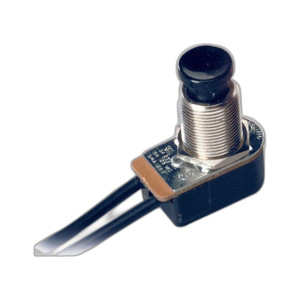
Camden CM-1000/47 DPDT Maintained Contact Switch
The Camden CM-1000/47 is a surface-mount DPDT (double-pole, double-throw) maintained contact switch designed for direct control of electric strikes, electromagnetic locks, overhead door operators, and access control relay circuits. Rated 6 amperes at 125 VAC and 3 amperes at 30 VDC, the CM-1000/47 provides key-activated latching control without requiring integration into a central access control system or TCP/IP network — ideal for retrofit installations, emergency manual override stations, or standalone door control points where wired key activation is preferred over credential readers or push-buttons.
Key Features
- DPDT Maintained Contact Switching: Double-pole, double-throw configuration latches in either position until key is turned again. Enables simultaneous control of two separate circuits or energize/de-energize a single load without momentary contact requirements.
- Voltage/Current Rating: 125 VAC 6A or 30 VDC 3A — accommodates most standard electromagnetic locks and electric strikes without relay intermediaries on low-voltage DC systems.
- Standard Mortise Cylinder: Accepts industry-standard 1", 1⅛", or 1¼" mortise cylinders. Keying is not proprietary — use existing master key systems or rekey to site standard with any locksmith-compatible blank.
- Surface-Mount Aluminum Housing: ¼" thick die-cast aluminum one-piece body with weather-resistant gasket. IP54-equivalent protection against dust and moisture spray — suitable for indoor or covered outdoor applications (e.g., vestibules, loading dock overpasses, interior control rooms).
- Tamper-Resistant Design: Includes tamper-proof screws with proprietary driver; cylinder locators prevent spin-out. Central rib casting reinforces switch contact area against impact.
- Soldered Lead Termination: Color-coded 18 AWG leads with heat-shrink sleeves — no connector blocks required; direct termination to strike, lock coil, or relay control reduces component count and failure points.
- No Rewiring Retrofit Path: Mounts to walls, poles, or pedestals via template-guided drilling. Compatible with existing door frame geometry — no need to replace mortise cylinders or relocate strike hardware.
- Flush-Mounted Aesthetics: Cylinder sits flush to brushed aluminum faceplate, reducing snag risk and improving appearance in high-traffic entry points.
Deployment Scenarios & Operational Benefits
The CM-1000/47 fits three core use cases. First, emergency manual override: integrators install it in a keyed box or pull-station near an access-controlled exit to provide fail-safe unlock during power loss or system failure — the maintained contact bypasses reader logic until key is turned back to neutral. Second, dual-circuit control: facilities needing simultaneous energization of two independent loads (e.g., strike + audible alarm, or lock + door-open sensor reset) leverage the DPDT contact set. Third, retrofit access points in older buildings where running new cable or deploying a new reader would be cost-prohibitive; the CM-1000/47 replaces a mechanical lock with electrical control while preserving the existing mortise opening and keying infrastructure.
On 30 VDC systems (common in older access control panels and 12/24V hardwired lock ecosystems), the 3A rating is adequate for electromagnetic locks drawing under 60W and most energized-to-secure strikes. On 125 VAC circuits, the 6A capacity supports heavier solenoid loads — verify strike coil current draw before installation. The maintained (latching) contact design eliminates the need for holding relays: once the key turns, the strike remains energized even after the key is released, simplifying wiring logic and reducing relay parts count.
Integration & Control Architecture
The CM-1000/47 is a pure hardwired component — it has no TCP/IP, ONVIF, or API capability, and requires no software or network configuration. This is an asset for offline-critical facilities (prisons, data centers, secure storage) where network outage must not disable emergency egress or manual override. It integrates into access control systems through the DC control output of a relay module or panel: the panel energizes the lock circuit, and the keyed switch interrupts that circuit via the maintained contact. In fail-secure (powered-to-lock) configurations, turning the key de-energizes the strike until the key is returned to the locked position. In fail-safe (powered-to-unlock) systems, the switch adds a second layer of unlocking authority independent of the reader.
Installation & Environmental Considerations
Installation requires a ⅞" hole for cylinder insertion and two pilot holes for the tamper-proof fasteners. The supplied template aligns drilling; no special tools are needed beyond a drill and the included driver. The aluminum body and rubber gasket tolerate indoor humidity and light spray, but the CM-1000/47 is not rated for continuous outdoor exposure or salt-fog environments — mount it under a soffit or inside a weather-tight enclosure if deployed in harsh climates. The cylinder and tumblers are accessible to service, but the internal switch contacts and wiring are sealed. If contacts fail (rare, given the electromechanical robustness of the design), the entire assembly should be replaced rather than repaired in the field. Standard RoHS/lead-free solder is used; no special recycling is required.
Verify the strike or lock coil voltage and continuous draw before final wiring. Do not exceed the 6A (125 VAC) or 3A (30 VDC) limit — an oversized load will cause contact erosion and premature failure. If your strike draws more than 3A at 30 VDC, interpose a 30 VDC relay rated for the full strike current and use the CM-1000/47 to control the relay coil instead. Solder all terminations to prevent corrosion in humid environments; avoid crimp terminals on the factory leads.
Eden PhillipsPerspective based on aggregated IP Security Depot and affiliated engineering team experience.
We've installed the Camden CM-1000/47 in dozens of retrofit projects where replacing the entire lock or strike assembly was not feasible — and it consistently delivers. The appeal is simplicity: a keyed switch is immediately understood by facility staff (no badge reader confusion, no PIN entry), the DPDT contact set offers flexible wiring options, and the 125 VAC 6A rating handles virtually any standard electromagnetic strike without intermediary relays on AC systems. On 30 VDC hardwired systems (we still encounter these in older prison facilities and industrial plants), the 3A limit is the binding constraint — most energized-to-secure strikes draw 1.5–2.5A, so it works, but it's not a margin-rich design. The maintained contact is the real differentiator: it eliminates the need for a holding relay or continuously powered solenoid logic. Once the key turns, the strike stays energized; you turn the key back, and it de-energizes. It's as deterministic as mechanical hardware. We've seen integrators wrongly assume a momentary switch will work in place of a maintained one — read the spec carefully. The die-cast aluminum body is solid, but it's not stainless, so don't spec it for salt-fog or direct exterior sun without a weatherproof cabinet. Finally, standard mortise cylinders mean no proprietary rekey costs — a site locksmith can change the cylinder for under $50 if needed, which is not true for integrated card readers.
Technical Highlights:
- DPDT Maintained Contact: Latches in either position until key is turned again. This eliminates the need for a holding relay or solenoid energize logic — a single turn locks, a single turn unlocks. On long strike cables (over 100 feet), the DPDT configuration also provides better noise immunity than momentary contacts on 125 VAC circuits.
- Dual-Voltage Rating (125 VAC 6A / 30 VDC 3A): Works on modern AC panel systems (most common) and legacy 24–30 VDC hardwired installations. However, do not assume the switch can be cross-connected to 24 VAC or 48 VDC — verify your supply voltage before installation. The 3A 30 VDC limit is the most common bottleneck; high-inrush strikes may require a relay intermediary.
- Standard Mortise Cylinder: No proprietary keying locks you into one vendor. Cost of rekeying is $40–80 instead of $400–600. Cylinder locators prevent spin-out, and the design tolerates worn cylinders gracefully (no false switching).
- One-Piece Die-Cast Aluminum Housing: Monolithic design — no sheet-metal seams to corrode or gaskets to fail. The ⅜" center rib reinforces the switch contact zone, reducing flex and contact chatter over 10+ years of daily use.
- Soldered 18 AWG Leads: Factory heat-shrink sleeves and color coding reduce termination errors. RoHS-compliant solder; no lead contamination. Direct solder termination to relay coils or strike terminals eliminates crimp-connector corrosion in humid spaces.
- Tamper-Proof Fasteners: Included proprietary driver prevents casual removal. Useful in high-risk facilities but not a substitute for physical facility hardening — a determined adversary with angle grinders is not meaningfully slowed by tamper-proof screws.
Deployment Considerations:
- The 3A @ 30 VDC rating is the critical constraint on legacy DC systems. Before installation, measure the continuous draw of your strike or electromagnetic lock. If it exceeds 3A, interpose a 30 VDC relay (2-3A coil, 15+ amp contact rated); use the CM-1000/47 to control the relay coil. This adds $40–80 to the bill of materials but prevents contact failure and nuisance resets.
- Maintained contact, not momentary. If your access control panel or door operator requires a momentary pulse, the CM-1000/47 will not work — you need a momentary push-button or a timed relay in series. Verify the downstream device spec before ordering.
- Mount under a soffit or inside a weather-tight box if exposed to rain or direct sunlight. The aluminum body is not stainless; salt-fog and UV exposure will degrade the finish and potentially cause corrosion inside the switch cavity. We've seen this in coastal installations — specify a NEMA 4X enclosure if in doubt.
- Solder all terminations; do not use crimp terminals on the factory leads. Crimped connections on soldered lead ends will corrode within 2–3 years in humid environments (humidity >60% RH continuous). If you must use crimp connectors, transition from the soldered lead to fresh 18 AWG wire via a solder joint.
- Test the switch action before final installation. A turn of the key should produce a positive mechanical click and audible contact engagement. If the switch feels mushy or exhibits hesitation, the tumbler may be worn — do not override with force. Replace the entire assembly if the cylinder or contacts are suspect.
- Cylinder access is through the faceplate — no need to disassemble the housing to rekey. However, the switch contacts and internal wiring are sealed and not field-serviceable. If contacts fail (rare), the unit must be replaced as a whole. No parts are stocked separately by most distributors.
The CM-1000/47 is best suited for retrofit installations, emergency manual override stations, and facilities requiring simple, keyable, offline access control without network dependencies. It excels in prisons, secure data centers, industrial plants with legacy infrastructure, and any site where integrating a new reader or control system is cost-prohibitive. For new construction or systems requiring remote monitoring or audit logging, a network-capable access control reader is the better choice. Consult the Camden catalog for other keyed control and lock hardware options.