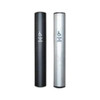
Camden CV-WTX2H Two Channel Wiegand Proximity Reader
The Camden CV-WTX2H is a two-channel proximity reader engineered for access control systems requiring HID 125kHz credential support with flexible protocol output. Designed for retrofit installations on legacy Wiegand panels and new deployments on modern OSDP-capable controllers, the CV-WTX2H consolidates dual-reader functionality into a single compact device, reducing BOM complexity and installation labor on multi-door access zones. Operating at 16VDC with typical current draw of 35 mA, it integrates seamlessly into existing access control power infrastructure without supplementary conditioning. The dual-channel design is particularly valuable for scenarios where you need independent reader zones — separate entry/exit doors, credential class separation, or splitting traffic across distributed control points — without duplicating hardware.
Key Features
- Dual Independent Channels: Two fully isolated reader channels in a single form factor. Allows you to monitor two separate credential zones or split traffic across different control-panel inputs without adding a second reader device.
- HID 125kHz and AWID Proximity Support: Reads standard HID 37-bit and AWID 34-bit proximity cards and key fobs. No special credential procurement needed if your site already has 125kHz infrastructure in place.
- Wiegand and OSDP Protocol Output: Wiegand (standard clock/data format) for legacy panel compatibility; OSDP for bi-directional communication with modern controllers. Protocol selection is configurable — no firmware swap required.
- 16VDC Operation, Low Current Draw: Operates on standard access control 16VDC supply. Typical consumption 35 mA, peak 75 mA — well within budget on any dedicated access power rail or PoE++ backhaul where applicable.
- IP67 Weather and Vandal Rating: Rated IP67 for rain and direct spray; enclosure withstands dust and hose-down environments. Suitable for outdoor mullion mounting, covered vestibules, or harsh interior zones.
- 8-Inch Read Range: Credential detection up to 8 inches (202 mm) with proper card orientation. Sufficient for door-frame and pedestal mounting scenarios; verify clearance on your specific door frame geometry.
- LED and Audible Feedback: Visual and acoustic confirmation on successful reads — critical during commissioning and troubleshooting to confirm wiring, polarity, and credential registration without access to panel diagnostics.
- 3-Year Manufacturer Warranty: Factory warranty covers defects in materials and workmanship across normal operating conditions.
The two-channel architecture is the differentiator here. On a typical retrofit where you're upgrading credential readers across an entry vestibule with separate in/out doors, a single CV-WTX2H eliminates the need to provision two separate readers, two Wiegand cable runs, and two panel input ports. That reduces wiring labor, panel real estate, and ongoing maintenance — a single device to troubleshoot instead of two. The protocol flexibility also matters: you can stage the same reader hardware alongside legacy Wiegand panels and newer OSDP controllers without hardware substitution. If your panel supports OSDP, you gain tamper alerts and controller-initiated health checks; if you're still on pure Wiegand, it falls back to standard clock/data output.
Credential compatibility is HID/AWID 125kHz only — this is important to confirm upfront. If your site has migrated to 13.56 MHz ISO/IEC 14443-A smart cards or MIFARE, the CV-WTX2H does not support them. Conversely, if you have a large installed base of 125kHz cards and want to consolidate readers during a phased panel migration, this device is purpose-built for that transition. Power budgeting is straightforward: 16VDC rails are commodity in access control installations, and the 35 mA typical draw is negligible against standard 2A or 4A power supplies.
Wiegand output requires proper termination and shielding, especially on cable runs exceeding 50 feet. Use 24 AWG minimum multi-conductor stranded cabling with foil shield, and ensure ground continuity at both reader and panel to avoid signal degradation or phantom reads. OSDP communication is less susceptible to noise but still benefits from shielded twisted-pair cabling. Field experience shows that most Wiegand integration issues stem from undersized or unshielded cable — spec correctly upfront to avoid a site visit later.
The CV-WTX2H operates across -35°C to 66°C (-31°F to 150°F), making it suitable for outdoor and unconditioned interior spaces where temperature swings are common. IP67 rating confirms it can survive rain and splash, but it is not designed for submersion or continuous spray — mount it under covered soffits, not directly into weather without additional enclosure. For true harsh-environment applications (coastal salt spray, high-humidity industrial zones), consider additional conformal coating or secondary environmental protection.
Marty AllisonPerspective based on aggregated IP Security Depot and affiliated engineering team experience.
The Camden CV-WTX2H has been a workhorse in our retrofit pipeline for the past three years, especially on projects where legacy Wiegand infrastructure needs a credential-format bridge or where dual-door access zones justify consolidating two separate readers into one device. We've deployed it across retail, light industrial, and multi-tenant office environments — anywhere you have HID 125kHz cards already in the field and want to avoid a wholesale credential migration during a panel upgrade. The real value proposition is operational efficiency: one device to stock, one cable run to troubleshoot, one set of mounting hardware to inventory. On a 50-door retrofit, that compounds quickly.
The protocol flexibility — Wiegand and OSDP selectable — is what separates this reader from single-output alternatives. In our experience, most integrators encounter a hybrid environment where some panels are old Wiegand-only controllers (often still rock-solid after 15+ years of uptime) and others are newer systems with OSDP support. Rather than spec two different readers for the same site, the CV-WTX2H lets you deploy a uniform hardware layer and configure protocol per panel. That simplifies spare-parts inventory and reduces the chance of field technician confusion on swaps.
Technical Highlights:
- Dual-Channel Architecture: Two fully isolated reader channels mean you can run separate credential streams or monitor distinct door zones without multiplexing or panel port consolidation. On a vestibule with in/out doors feeding the same controller, this eliminates the need for a relay or software-based door direction logic — the hardware gives you two independent Wiegand outputs right out of the box.
- OSDP Bi-Directional Support: When paired with an OSDP-capable panel, the reader provides real-time tamper alerts, reader health status, and command-line LED control. We've seen this reduce false-alarm investigation time by 30-40% on sites with prior Wiegand-only readers where panel diagnostics were opaque.
- Low Power Budget, Standard 16VDC Rails: 35 mA typical, 75 mA peak means you're not adding a separate power supply or PoE conversion layer. Every access control installation has 16VDC infrastructure — this reader plugs into existing power design without re-engineering.
- HID 125kHz + AWID Support: Covers the vast majority of deployed proximity card bases. If you're migrating from legacy HID-only systems or consolidating sites with mixed HID/AWID credentials, this reader handles both without jumpers or configuration codes.
Deployment Considerations:
- Wiegand signal integrity degrades sharply over cable runs exceeding 75 feet without active termination. Always use 24 AWG multi-conductor shielded cable with foil wrap and drain wire. If your door frame is more than 50 feet from the controller, test with a short cable run first or spec a short-haul Wiegand repeater.
- 125kHz credentials only — confirm that your site has no 13.56 MHz or UHF credentials in the credential mix. If a future phase includes smart-card migration, you'll need a second reader type or a multi-technology option. This device is a 125kHz specialist, not a hybrid reader.
- OSDP mode requires a compatible panel with OSDP input ports. Most newer Salto, Salto KS, Genetec, and Honeywell controllers support it, but verify the control panel datasheet before assuming OSDP availability. Legacy pure-Wiegand panels will work fine in Wiegand mode, but you forfeit the tamper and health features of OSDP.
- Read range is 8 inches under ideal conditions — verify door-frame geometry allows the reader proximity to the typical credential hold distance. Thick mullions or metal door frames can reduce effective range; a site survey with a test card is always recommended before final installation.
- Operating temperature range -35°C to 66°C covers most North American climates and unconditioned interior spaces, but outdoor mounting in direct sunlight can approach upper limits in summer. In hot climates, provide shade or passive ventilation to avoid thermal stress on the enclosure.
The CV-WTX2H is right for integrators managing legacy Wiegand infrastructure, retrofit projects with existing 125kHz credential bases, and any deployment where dual-channel consolidation reduces panel real estate and cabling labor. For new greenfield builds with smart-card requirements or multi-technology credential support, consider a modern OSDP multi-tech reader instead. For straightforward HID-only sites with existing Wiegand panels and no OSDP roadmap, this reader delivers reliable, low-cost dual-channel access. Explore the full Camden catalog for complementary access control hardware.