
Control Systems
Sub categories
Showing Results for Control Systems
-
Takex
SKU: TXF-125E
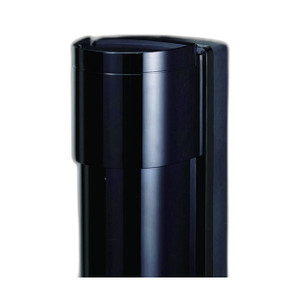
Takex TXF-125E Battery Operated Quad Beam
Battery-operated quad beam for outdoor perimeter detection in harsh weather
$1,413.00 $1,197.99 Save $215.01 -

Takex
SKU: TXF-125E-KH
Takex TXF-125E-KH Heated Battery Quad Beam
Quad beam outdoor detector with IP66 rating and integral heating
$1,248.00 $1,029.99 Save $218.01 -

Takex
SKU: TXF-20TDM
Takex TXF-20TDM Battery Operated Beam
Battery-powered outdoor photoelectric beam with IP66 weather sealing
$588.00 $502.99 Save $85.01 -
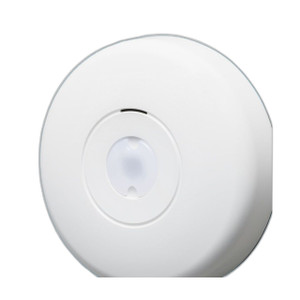
Takex
SKU: VS-1000E
Takex VS-1000E Vape & Smoking Sensor
Indoor vape and smoking sensor for offices, schools, and hotels
$349.00 $275.99 Save $73.01
Control Systems
Access control control systems manage doors, credentials, and policy enforcement across commercial facilities. These systems serve as the central platform for authentication, monitoring, reporting, and integration with broader security infrastructure.
Plan Your Deployment
- Door count and future expansion planning
- On-premise vs cloud-based management platforms
- Credential format compatibility (card, mobile, biometric)
- Integration with video, intercom, and alarm systems
- Network segmentation and cybersecurity considerations
Control Systems — Engineering-Grade Access Control for Commercial Deployments
This category covers 53 working models of control systems sourced manufacturer-direct or through channel-direct US distribution. Build the rest of your system around the architectural choices below — compatibility, environmental rating, and lifecycle decisions made here propagate through every downstream component you specify.
What to Look For
Door count today versus expansion in 5 years dictates controller architecture. Single-door PoE controllers (HID Aero, Axis A1601) are economical for small sites and scale linearly. Multi-door panels (Mercury, Lenel S2, Kantech KT-400) consolidate hardware and reduce per-door cost on large deployments but require upfront commitment to a head-end platform. Plan capacity to absorb growth without ripping out boards mid-life.
Credential strategy locks you to a reader and controller ecosystem. Modern 13.56 MHz options (HID iCLASS Seos, Mifare DESFire EV2/EV3, OSDP-native) resist cloning that 125 kHz prox cards do not. Mobile credentials (HID Mobile Access, LEAF, Bluetooth/NFC) demand readers that support secure transports. If you anticipate migrating credentials, choose controllers and readers that accept multiple formats and OSDP from the start.
Integration with your video, intrusion, and identity systems is the long-tail cost. Native ONVIF Profile A (access control) is uncommon; most integrations rely on vendor APIs, scripted IFTTT-style bridges, or middleware. Confirm controller-to-VMS and controller-to-active-directory integration paths before you commit — retrofitting these later is expensive.
Power, network, and physical mounting requirements vary widely. Some controllers run on 12VDC, others on 24VAC, others on PoE+. Door-frame mounting versus closet/rack mounting changes wire-pull strategy. Budget for door hardware (electrified locks, strikes, REX, door position) and the secondary power supply with battery backup that fire code requires on egress doors.
Key Specs in This Category
| Spec | Available Options |
|---|---|
| Resolution | 8MP, 2MP |
| Connectivity | Wired |
| Power | AC/DC |
| Type | Accessory, Mobile Computer, Controller, Reader, Cable, Speaker, Camera, Control module |
Top Brands in This Category
Frequently Asked Questions
What's the difference between OSDP and Wiegand?
Wiegand is the legacy reader-to-controller protocol — open, unencrypted, vulnerable to spoofing and limited to short cable runs. OSDP (Open Supervised Device Protocol) is the modern replacement: encrypted, bidirectional, supports tamper detection and firmware updates, and runs reliably over longer distances. SIA SP1/SP2 designations indicate OSDP Secure Channel support. New deployments should specify OSDP everywhere unless legacy infrastructure forces Wiegand.
Can I use one controller across multiple buildings?
Most modern IP-based controllers can manage geographically distributed doors as long as network connectivity to the head-end is reliable. However, doors at remote sites lose access decision capability if WAN goes down unless the controller supports offline mode and caches valid credentials locally. For multi-site deployments, choose controllers with documented offline operation and consider redundant head-ends for compliance-sensitive industries.
How many credentials can a typical controller hold?
Entry-level controllers hold 5,000-10,000 credentials. Mid-range hold 50,000-100,000. Enterprise platforms scale to millions through the head-end software with the controller acting as a cached decision point. Card-to-reader presentation time matters more than raw capacity once you're above 10,000 — confirm the read time at the maximum cardholder count, not the controller's spec-sheet headline number.
Do I need PoE or can I use a separate power supply?
PoE simplifies installation — one cable per door — and is the dominant approach for single-door IP controllers. Multi-door panels typically need a dedicated 12VDC or 24VAC power supply with battery backup sized to drive electrified locks and accessories. Egress doors often require code-mandated battery backup regardless of controller power source. Confirm local fire code requirements before finalizing the power architecture.
What's the typical lifespan of an access control panel?
Hardware lifespan is 10-15 years for well-built panels (Mercury, Lenel, Kantech, HID Aero). The platform software typically forces a refresh sooner — 5-8 years — through driver deprecation, mobile credential support gaps, or end-of-life of the head-end version. Plan for software-driven refresh ahead of hardware failure. Migration projects always run longer than planned; start scoping a replacement in year 5 of a 10-year hardware horizon.
Need help choosing? Talk to a Senior Specialist — direct line 877-277-7147 or request a quote.