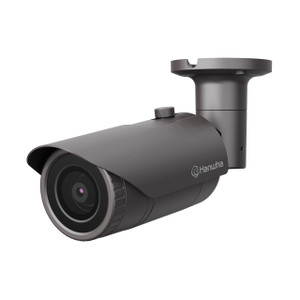
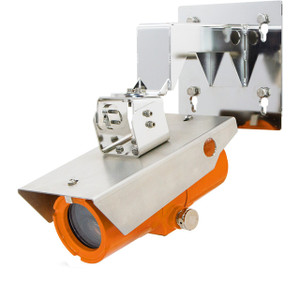
Hanwha TNO-X6320E2F2WT1-Z Explosion Proof Fixed Camera
The Hanwha TNO-X6320E2F2WT1-Z is an explosion-proof camera housing built around the XNZ-6320 imaging engine, designed for hazardous-location deployments where standard commercial enclosures aren't legal to install — think refineries, chemical processing plants, grain elevators, oil and gas terminals, and other Class I/Division 1 environments. This isn't a camera you spec for a retail corridor. It's a purpose-built solution for sites where flammable gases, vapors, or combustible dust are a routine hazard, and the enclosure itself carries the safety certification that lets you legally mount a camera in that space at all. TNO-X6320E2F2WT1-Z (often searched as TNO X6320E2F2WT1 Z) ships in a white explosion-proof housing with an integrated wiper for lens clearing in outdoor, contaminant-heavy environments.
Overview
At the core of this unit is cLCus Class I/Division 1 (C1/D1) certification — the North American standard for equipment installed in locations where ignitable concentrations of flammable gases or vapors may exist under normal operating conditions. That certification is the entire reason this housing exists: a standard IP-rated dome or bullet camera is not legal to install in a C1/D1 zone, full stop. If your site has a hazardous-area classification study on file, this is the category of product you're required to source from.
Key Features
- cLCus Class I/Division 1 Certification: Meets the electrical safety standard for hazardous locations where flammable gas or vapor concentrations are a normal operating condition — a mandatory spec for petrochemical, oil and gas, and grain-handling sites, not an optional upgrade.
- Operating Range -40°C to +60°C (-40°F to +140°F): Holds function across an extreme swing, from arctic outdoor installs to sun-loaded industrial equipment yards, without a separate heater/cooler enclosure.
- IP66/IP67/IP68 Ingress Protection: Stacked ratings mean the housing handles driving rain and dust (IP66), temporary submersion (IP67), and continuous or high-pressure washdown exposure (IP68) — relevant on sites that pressure-wash equipment as part of routine sanitation or decontamination.
- Single Mode Fiber Uplink: Fiber transmission avoids the distance and EMI limitations of copper Ethernet runs, which matters on industrial sites where cameras sit far from the network closet and near heavy electrical equipment that can inject noise onto copper lines.
- 110VAC Power Input: Runs on standard AC mains rather than PoE, appropriate for explosion-proof installations where PoE injectors and switches are typically kept outside the hazardous zone anyway.
- Integrated Wiper: Clears rain, dust, and residue from the lens automatically, reducing the need to schedule confined-space or hazardous-area entry just to wipe a lens by hand — a real operational factor when the camera sits inside a permitted work zone.
- White Explosion-Proof Housing: The heavy-wall cast housing is the certified barrier itself, not just cosmetic — it's engineered to contain and cool any internal ignition event before it can reach the external atmosphere.
Integration & Compatibility
Because this unit is built on the XNZ-6320 imaging platform, it fits into a broader Hanwha camera catalog alongside standard commercial models, which simplifies VMS licensing and configuration if you're already running Hanwha hardware elsewhere on site. Given the fiber uplink and hazardous-area rating, plan your network design around a fiber-capable switch near the edge of the classified zone — review a PoE and network planning guide when scoping the transition point between fiber and copper segments. This camera belongs in the same project scope as other explosion proof cameras when you're specifying a full hazardous-area perimeter, and should be paired with a rated network video recorder capable of handling fiber-fed, high-uptime industrial feeds. For sites doing a full classified-area buildout, consult a camera selection guide before finalizing housing and certification choices — hazardous-location specs are not interchangeable between C1/D1 subtypes.
Frequently Asked Questions
Q: What hazardous-location rating does the TNO-X6320E2F2WT1-Z carry?
A: It carries cLCus Class I/Division 1 (C1/D1) certification, the standard for locations where flammable gases or vapors may be present under normal operating conditions.
Q: What's the operating temperature range on the TNO-X6320E2F2WT1-Z?
A: -40°C to +60°C (-40°F to +140°F), covering both extreme cold and high-heat industrial environments.
Q: Is the TNO-X6320E2F2WT1-Z rated for washdown or submersion?
A: Yes — it carries stacked IP66/IP67/IP68 ratings, covering wind-driven rain and dust, temporary submersion, and continuous washdown exposure.
Q: Does the TNO-X6320E2F2WT1-Z use PoE or AC power?
A: It runs on 110VAC power input, not PoE.
Q: Does the TNO-X6320E2F2WT1-Z have a lens wiper?
A: Yes, it includes an integrated wiper for automatic lens clearing.
Q: What connects the TNO-X6320E2F2WT1-Z to the network?
A: Single mode fiber, which supports longer transmission distances and better immunity to electrical interference than copper Ethernet.
The spec that jumps out on the TNO-X6320E2F2WT1-Z is the cLCus Class I/Division 1 certification stacked with 110VAC-only power — this isn't a drop-in replacement for a PoE dome, it's a different installation category entirely. I've spec'd C1/D1 housings before, and the AC power requirement usually catches integrators off guard mid-quote when they've priced the job assuming standard PoE switch gear.
Technical Highlights:
- cLCus C1/D1 rating: qualifies the housing for continuous flammable-gas or vapor environments — required documentation for petrochemical and grain-handling site audits, not a nice-to-have.
- -40°C to +60°C operating range: a 100°C swing that covers both northern winter installs and equipment-yard heat loading without supplemental climate control.
- IP66/IP67/IP68 stacked rating: tells you this housing survives everything from driving rain to pressure washdown — relevant if the site does routine decontamination wash cycles near the mounting point.
Deployment Considerations:
- Because power is 110VAC only, budget for a hazardous-area-rated conduit run and disconnect rather than a PoE injector at the switch — the electrical scope on this install looks more like a facility power drop than a typical camera pull.
- The single mode fiber uplink means you need a fiber-capable switch or media converter at the demarcation point outside the classified zone — don't assume standard copper patching will work here.
This is the right call for a refinery perimeter or grain elevator project where the site's hazardous-area classification study already mandates C1/D1-rated equipment — not a general-purpose outdoor camera for a warehouse dock or parking lot.