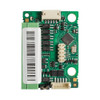
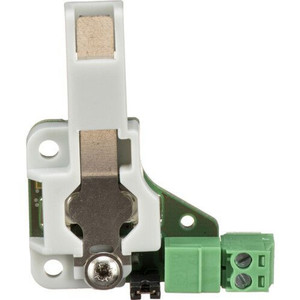
2N 01259-001 IP Verso Wiegand Interface Module
The 2N 01259-001 is a compact integration module that connects your 2N IP Verso intercom system to external access control hardware via the Wiegand protocol. If your facility already uses card readers or access controllers that speak Wiegand, this module eliminates the need for external bridges or gateway hardware — the intercom talks directly to your access control system, reducing complexity and single points of failure.
Key Features
- Wiegand Protocol Support: Native Wiegand interface means your 01259-001 module communicates directly with standard card readers, badge systems, and access control panels without requiring a separate translator box. That cuts deployment time and ongoing maintenance burden.
- Space-Efficient Design: Installs directly under another 2N IP Verso module in a stacked configuration. No external enclosure, no extra panel real estate consumed — critical when mounting space is constrained.
- Mixed-Vendor Compatibility: Works with standard Wiegand implementations across access control brands. You don't need to replace existing investments in card readers or controllers to integrate with modern IP intercom infrastructure.
- H.264 Compression: The parent IP Verso system uses H.264 video compression, which delivers acceptable quality for intercom video streams while keeping bandwidth and storage reasonable on typical office network infrastructure — roughly half the throughput you'd see with Motion JPEG.
- Modular Architecture: Install only the interfaces your deployment needs. Wiegand, OSDP, or other protocol modules stack as required, letting you tailor functionality without paying for unused features.
- Integrated Installation: No separate power supply, no external relay board — everything mounts within the modular IP Verso frame. Installation footprint stays minimal and integrated appearance is maintained.
Integration and Deployment Context
Use the 01259-001 when upgrading legacy card-based access control systems to modern IP intercom infrastructure. Common scenarios include corporate office receptions, healthcare facility entries, or educational building access points where existing Wiegand readers must coexist with new two-way video intercom stations. The module bridges the gap without requiring you to retire working card readers or purchase new access control panels.
The Wiegand protocol itself is a mature, well-understood standard that transmits 26-bit, 34-bit, or customer-defined formats. Your 2N 01259-001 module handles the conversion between Wiegand signaling and the IP Verso system's internal protocol, letting the intercom station react to badge swipes, trigger door release solenoids, or log access events through your existing readers.
Why This Matters for System Design
Intercom and access control are often managed separately. The 01259-001 (also searched as 01259 001) solves the integration headache by letting a single device handle both entry request (via intercom button) and access authorization (via card reader at the same station). Your IT team configures the rules once — no middleware, no separate database synchronization.
H.264 compression in the parent IP Verso system means you're not consuming excessive bandwidth for video during normal operation. For a 5-station office lobby intercom setup, total video throughput stays well within a standard PoE switch's capabilities, so you avoid unnecessary network upgrades.
Stacking design also matters: because the module installs under another 2N frame component, you maintain a professional, compact footprint. There's no external box dangling on DIN rail or taking up cabinet space — it's all self-contained and integrated.
Frequently Asked Questions
Q: What Wiegand formats does the 01259-001 support?
A: The module supports standard Wiegand protocol formats commonly used in access control, including 26-bit and 34-bit card data transmission. Exact format options and custom configurations should be verified in your specific IP Verso firmware version and 2N documentation.
Q: Can I stack multiple protocol modules on a single IP Verso intercom?
A: Yes. The 01259-001 is designed to install in a modular stack under other 2N IP Verso interface modules. This lets you combine Wiegand with OSDP or other protocols as your access control system requires.
Q: Does the 01259-001 require separate power?
A: No. The module draws power from the parent IP Verso intercom system — no additional power supply or external wiring needed. Installation is purely modular connection within the frame.
Q: Is the module compatible with non-2N access control panels?
A: Yes, as long as the external device supports standard Wiegand protocol. The module is device-agnostic for Wiegand readers and controllers from major access control vendors.
Q: What happens if the access control system goes offline?
A: The intercom continues to function for video and audio communication. Card reader integration will not function until the access control system is restored. System behavior (door unlock, alarm trigger, etc.) depends on your specific access control configuration and any programmed fail-safe rules.
Q: Do I need a separate NVR to record intercom video?
A: Recording depends on your overall IP Verso deployment architecture. Standard practice is to route IP Verso video streams to an IP video recorder or VMS. The 01259-001 module itself does not record — it bridges access control signaling only.
Ted PerryPerspective based on aggregated IP Security Depot and affiliated engineering team experience.
The 2N 01259-001 solves a real integration problem: most facilities don't replace working Wiegand access control hardware just to add IP intercom. This module lets you avoid that wholesale replacement by bridging the two systems directly. The Wiegand protocol itself is straightforward — it's been the de facto standard for card reader communication for decades — so any integrator familiar with access control installation will recognize the 01259-001's role immediately.
Technical Highlights:
- Direct Wiegand Bridging: No external gateway or bridge hardware required. The 01259-001 talks Wiegand natively, eliminating a middleman device and reducing failure points in a critical access pathway.
- Modular Stack Architecture: Installs under another 2N IP Verso module, preserving mounting footprint and keeping the installation compact. Matters when you're retrofitting a reception desk or hallway entry point with space constraints.
- H.264 Video in Parent System: The IP Verso parent system uses H.264 compression, delivering acceptable intercom video quality while consuming roughly 50% of the bandwidth and storage you'd see with Motion JPEG — a real factor if your network is bandwidth-constrained or you're recording 24/7 across multiple stations.
Deployment Considerations:
- Wiegand signaling itself is unencrypted and unsecured by design — it was developed in an era before network security was a primary concern. If you're integrating with a modern access control system that supports OSDP (Open Supervised Device Protocol), consider whether upgrading readers to OSDP would be worthwhile instead, since OSDP offers encryption and tamper detection. That said, if your readers are new and your access control rules are properly configured, Wiegand integration is reliable and proven.
- The module depends on the parent IP Verso intercom for power and network connectivity. If the intercom station goes down, Wiegand bridging goes with it. Ensure your access control system has fail-safe rules configured — if the intercom is offline, doors should remain locked or in a predetermined safe state, depending on your security posture.
- Card format compatibility: standard 26-bit and 34-bit Wiegand formats are typical, but some proprietary access control systems use custom bit lengths. Verify your readers' output format matches what the 01259-001 expects before commissioning.
Deploy the 01259-001 in facilities upgrading from analog intercom to IP-based intercoms while retaining Wiegand badge readers — corporate office lobbies, healthcare building access, educational institutions, or light industrial secured entry points. It's the pragmatic choice when you need modern intercom capability but the existing access control investment is still delivering value.