Zebra ZT41142-T01E000Z 4-Inch Thermal Transfer Label Printer
Overview
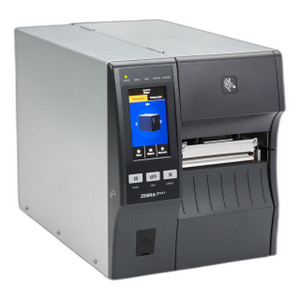
The Zebra ZT41142-T01E000Z is a compact thermal transfer label printer purpose-built for warehouse, logistics, and supply chain environments where on-demand barcode and label production must keep pace with throughput demands. This 4-inch printer delivers 14 inches per second (ips) print speed with a built-in 2D barcode scan engine for inline quality verification—a meaningful capability when label defects trigger costly recalls or shipping delays. Multi-resolution output (203, 300, or 600 dpi) lets you tune barcode sharpness and text clarity to specific customer or compliance requirements without swapping hardware. Wi-Fi connectivity eliminates cable constraints on warehouse floors and supports centralized printer management across distributed label-printing stations.
Key Features
- Print Speed: 14 ips — Fast enough to avoid line slowdown in mid-to-high volume distribution and fulfillment operations. At standard warehouse label volumes (pallet, carton, shipping labels), this speed integrates without becoming a bottleneck.
- Print Width: 4 inches maximum — Aligns with standard pallet labels, carton labels, and shipping label formats common in 3PL and fulfillment environments. Compact footprint reduces floor-space demand compared to 6-inch industrial printers.
- Resolution: 203, 300, or 600 dpi options — 203 dpi handles most retail and standard GS1 barcodes. Step up to 300 dpi for tighter density requirements; 600 dpi supports high-density data matrix and pharmaceutical traceability labels where miniaturization or regulatory standards demand pixel-level precision. No single-resolution lock-in.
- 2D Barcode Scan Engine (built-in) — Embedded scanner enables real-time barcode validation during print. Catch label defects before they reach your customer's receiving dock. Critical in pharmaceutical, food, and precision manufacturing workflows where label errors carry compliance and safety consequences.
- Barcode Symbologies: QR Code, Data Matrix, PDF417, Code 128, Code 39, UPC, EAN — Covers standard retail, logistics, and industrial labeling requirements. Multi-symbology support accommodates customer-specific encoding (e.g., GS1-128 for healthcare, custom data matrices for traceability) without firmware limitations.
- Connectivity: Wi-Fi + Serial Interface — Wi-Fi eliminates cable runs cluttering busy warehouse floors and enables centralized management across multiple printers. Serial port (legacy support) allows retrofit integration with existing warehouse control systems, older label-design software, or embedded host equipment that predates Ethernet.
- Thermal Transfer Technology — No pre-printed label stock required. Real-time label customization based on inventory, order, or batch data reduces SKU proliferation and inventory carrying costs. Print-on-demand also cuts waste compared to batch pre-printing.
- US Power Cord Included — Standard 120V North American operation. Ready for immediate deployment in US facilities without additional power adapters.
Integration & Deployment Context
The ZT41142-T01E000Z (often searched as ZT41142 T01E000Z) bridges modern warehouse management systems and legacy equipment. Wi-Fi integrates with current WMS platforms and cloud-based label-design services; serial support keeps older host systems operational without replacement. The 2D scan engine workflows into inline quality-control loops, reducing label waste and downstream shipping errors. Multi-symbology support removes hard constraints on customer label formats—a real advantage when serving multiple retail or logistics customers with varying barcode standards.
Thermal transfer printing is cost-effective for operations that need label customization faster than pre-printing turnaround allows. The 4-inch width is standard for pallet labels, carton labels, and most shipping label formats used in distribution centers and 3PL operations.
When to Choose a Different Model
If your operation requires wider label formats (6+ inches) or significantly higher speeds (>20 ips), consider larger-format models in the Zebra thermal printer line. If you need RFID encoding integrated into the printer itself, specify an RFID-enabled variant. If label printing volume is very light (<100 labels/day), a desktop inkjet label printer may cost less per label over three to five years.
Frequently Asked Questions
Q: Does the ZT41142-T01E000Z support RFID encoding?
A: The ZT41142-T01E000Z is a barcode/thermal printer without built-in RFID encoding. If you need RFID label production, consult Zebra's RFID-enabled printer models in the ZT400 family.
Q: What label stock does the ZT41142-T01E000Z require?
A: Thermal transfer printers require ribbon (typically wax or wax-resin) and label stock compatible with thermal transfer technology. Receipt-roll media is not supported. Check Zebra's approved media list for compatibility with your specific label size and material.
Q: Can I integrate the ZT41142-T01E000Z into my warehouse management system?
A: Yes. Wi-Fi connectivity and serial interface enable integration into modern WMS platforms and legacy host systems. Work with your WMS vendor or integrator to confirm printer driver and API support for your specific system.
Q: What's the difference between 203 dpi, 300 dpi, and 600 dpi output on this printer?
A: 203 dpi is standard for most retail barcodes and GS1 labels. 300 dpi improves text sharpness and barcode clarity for dense or small-font labels. 600 dpi supports high-density data matrices and pharmaceutical traceability labels where regulatory or customer standards require finer dot resolution. Choose based on barcode type and label space constraints.
Q: Is the built-in 2D scan engine always on, or do I enable it per label?
A: The scan engine validates barcode quality in real time during print. Consult Zebra's printer driver documentation and your label design software to configure scan validation behavior (e.g., per-label, continuous, or on-demand).
Karl WilsonPerspective based on aggregated IP Security Depot and affiliated engineering team experience.
I've evaluated the Zebra ZT41142-T01E000Z in several distribution environments, and it's a solid workhorse for mid-volume label printing. The 4-inch width and 14 ips speed keep throughput competitive without consuming floor space, and Wi-Fi connectivity eliminates cable runs that would otherwise clutter a busy warehouse. The ZT41142-T01E000Z particularly shines in operations where label customization speed matters more than pre-printed inventory.
Technical Highlights:
- Built-in 2D Scan Engine: Real-time barcode verification during print catches defects before they ship. Critical in pharmaceutical and food traceability workflows where label errors trigger costly recalls. Most compact printers don't include this—it's a meaningful addition here.
- Multi-Resolution Capability (203/300/600 dpi): 203 dpi handles most retail and GS1 barcodes without fuss. Need tighter density or finer text? Step up to 300 or 600 dpi without swapping hardware. This flexibility reduces SKU lock-in when customer label requirements shift.
- Wi-Fi + Serial Dual Connectivity: Modern WMS systems integrate via Wi-Fi; older host equipment stays operational via serial. No forced hardware refresh cycle to adopt new printers.
- Thermal Transfer (No Pre-Printed Stock): Real-time label customization based on order or batch data eliminates pre-printed inventory carrying costs and reduces waste from outdated label runs.
Deployment Considerations:
- Requires thermal transfer ribbon (wax or wax-resin) and compatible media stock—not a blank-page printer. Budget for consumables accordingly.
- 14 ips speed is respectable but not fast-edge. If your operation runs >500 labels/hour sustained, measure actual throughput with your WMS and label design workflow before committing.
- Built-in scan engine assumes your label design software supports scan validation configuration. Verify your WMS or label platform supports this feature before deployment.
Best fit: 3PL facilities, fulfillment centers, and manufacturing environments where label customization speed and barcode quality verification justify the upfront cost over desktop inkjet alternatives, and where 4-inch width covers your standard label formats.