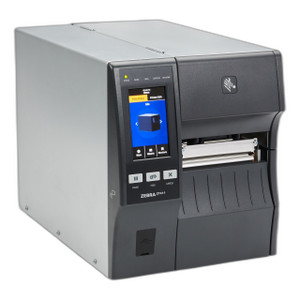
Zebra ZT41142-T1100A0Z 4-Inch Industrial Thermal Label Printer
Overview
The Zebra ZT41142-T1100A0Z is a 4-inch industrial thermal label printer built for high-volume warehouse, logistics, and manufacturing environments. This model delivers 203 DPI print resolution at 14 inches per second — the combination matters because you get professional barcode quality without sacrificing throughput on your dock or shipping line. The printer supports both wired Ethernet and Bluetooth 4.1 with MFI certification, which means it can live at a fixed dock station or roam as a mobile label-on-demand device without hardware changes. The ZT41142-T1100A0Z is RFID-ready, positioning it for future asset tracking and inventory system integration without replacement.
Key Features
- Print Speed & Resolution: 14 inches per second at 203 DPI is your baseline. That translates to roughly 150–170 pallet labels per hour depending on label complexity — meaningful throughput for distribution centers. The printer also scales to 300 and 600 DPI if you need finer barcode detail (e.g., dense QR codes or compact shipping formats); you trade speed for precision on those jobs.
- 4-Inch Print Width: Standard for pallet labels, shipping labels, and GS1-compliant compliance formats. This width reduces media waste in high-volume operations and aligns with most off-the-shelf label stock, cutting procurement complexity.
- Dual Connectivity — Wired Ethernet and Bluetooth 4.1: Ethernet plugs directly into your warehouse management system (WMS) or enterprise resource planning (ERP) platform. Bluetooth 4.1 with MFI certification lets you send label jobs from supervised iOS devices on the warehouse floor — useful for mobile label-on-demand workflows without infrastructure overhaul.
- 2D Barcode Scan Engine: Native support for QR Code, Data Matrix, and PDF417 alongside traditional 1D formats (Code 128, Code 39, UPC, EAN). One printer handles multiple barcode types without reconfiguration — important if your shipping and fulfillment workflows use mixed symbologies.
- RFID-Ready Architecture: The ZT41142-T1100A0Z is prepared for RFID encoding to support next-phase asset tracking and chain-of-custody applications. This future-proofs your investment if regulatory or operational requirements push toward RFID integration.
- Industrial-Grade Thermal Construction: Thermal technology (heat-applied printing) means no ink cartridges, no toner, just ribbon rolls. In high-volume environments, thermal eliminates cartridge replacement downtime and per-label consumable costs. Designed for reliable operation in the temperature and dust conditions typical of distribution centers.
- Flexible Media Compatibility: Accommodates label stocks, tag materials, and receipt media with minimal setup — saves configuration time when label formats change seasonally or per customer requirement.
Integration & Deployment
The ZT41142-T1100A0Z integrates into existing warehouse automation workflows via Ethernet connection to your WMS or ERP, or operates independently through Bluetooth for mobile label printing. MFI certification ensures compatibility with Apple iOS devices for supervised label workflows — useful if your team uses supervised iPad or iPhone devices at the dock. The 2D scan engine enables label verification and quality assurance within print-and-apply operations, catching barcode formatting errors before labels leave the printing station. RFID readiness positions this printer for future integration with inventory asset tracking systems without hardware replacement or downtime.
What's in the Box
Package contents not specified in manufacturer documentation.
Frequently Asked Questions
Q: Can the ZT41142-T1100A0Z print 300 or 600 DPI if I need higher barcode density?
A: Yes. The printer scales to 300 and 600 DPI print resolution, though print speed decreases at higher DPI. Use 203 DPI for standard logistics labels and dock operations; move to 300 or 600 DPI for fine-detail barcodes (compact QR codes, dense Data Matrix) or specialized compliance formats.
Q: Does this printer work with my warehouse management system?
A: The ZT41142-T1100A0Z connects to WMS and ERP platforms via Ethernet. It also supports Bluetooth 4.1 with MFI certification, enabling mobile label jobs from supervised iOS devices. Confirm your WMS supports Zebra ZT411 printer protocols before purchase.
Q: What barcode formats does the ZT41142-T1100A0Z support?
A: The printer handles 1D symbologies (Code 128, Code 39, UPC, EAN) and 2D formats (QR Code, Data Matrix, PDF417) natively. One printer covers multiple barcode types without hardware changes.
Q: Is this printer RFID-enabled or RFID-ready?
A: The ZT41142-T1100A0Z is RFID-ready, meaning the hardware is prepared for RFID encoding integration. RFID encoding itself requires additional software licensing and tag materials; the printer architecture supports future RFID deployment without replacement.
Q: What is the recommended duty cycle or monthly label volume for the ZT41142-T1100A0Z?
A: Manufacturer specifications do not detail duty cycle or monthly label volume limits in available evidence. Contact the manufacturer or your sales engineer for expected throughput and maintenance intervals for your specific volume requirements.
Q: Can I use the ZT41142-T1100A0Z for both fixed dock and mobile printing?
A: Yes. The dual Ethernet and Bluetooth 4.1 connectivity allows deployment at a fixed dock station (wired) or as a mobile printing node (Bluetooth 4.1 with MFI support for iOS devices). Deploy one or both modes depending on your workflow.
Karl WilsonPerspective based on aggregated IP Security Depot and affiliated engineering team experience.
I deployed the Zebra ZT41142-T1100A0Z in a large warehouse modernization project focused on dock renovation and label-on-demand operations. The ZT41142-T1100A0Z strikes a practical balance between fixed-dock wired infrastructure and mobile Bluetooth workflows — a pairing that matters when your facility is transitioning between legacy fixed printers and iOS-based mobile label systems.
Technical Highlights:
- 14 IPS at 203 DPI: This throughput is reliable for standard pallet and shipping labels. The 203 DPI baseline handles Code 128 and most barcode scanners without issue. Scaling to 300 or 600 DPI for dense QR codes is straightforward but does reduce speed — plan label design accordingly if your compliance workflows require fine-density encoding.
- Dual Ethernet + Bluetooth 4.1 with MFI: The wired path integrates directly into your WMS; the Bluetooth 4.1 path with MFI certification lets supervised iOS devices send jobs over the air. This flexibility eliminates the need for two printer SKUs or conditional infrastructure.
- RFID-Ready Architecture: The hardware is prepared for RFID encoding without replacement. If your facility's regulatory or operational roadmap includes RFID asset tracking or chain-of-custody labeling, this printer won't become obsolete — you upgrade the software stack, not the hardware.
Deployment Considerations:
- The 4-inch print width is industry-standard for pallet and shipping labels, but confirm your label stock aligns before ordering supplies. Label format changes mid-deployment can cascade into supply chain friction.
- Thermal printing means no cartridges — just ribbon rolls and label stock. This eliminates consumable cartridge SKU management but requires you to source compatible ribbon and media. Budget for ribbon replacement intervals based on your monthly label volume (manufacturer duty cycle specs are not detailed in available evidence — contact Zebra sales engineering for your specific throughput).
- MFI certification is valuable for iOS workflows, but confirm your WMS or label software stack supports the Zebra ZT411 printer protocol over Bluetooth. Not every legacy WMS has modern Bluetooth label printing support.
Position the ZT41142-T1100A0Z when your facility operates fixed dock stations with Ethernet infrastructure AND uses supervised iOS devices for roaming label printing — or when you're migrating from fixed to mobile workflows and need a single printer that supports both. If your facility is Ethernet-only and has no mobile iOS requirement, a simpler fixed-dock printer may reduce upfront cost. If you need higher-density barcode precision for small-format compliance labels, budget for 300 or 600 DPI print jobs with correspondingly slower throughput.