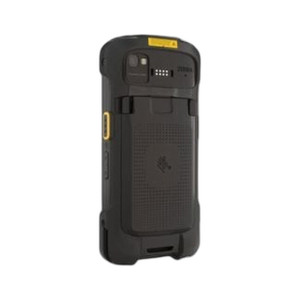
Zebra WCMTA-H55D8BBK1-NA HC55 6" Android Mobile Computer
Overview
The Zebra WCMTA-H55D8BBK1-NA is a rugged 6-inch Android mobile computer engineered for warehouse, logistics, and retail field operations. This device consolidates a touchscreen interface, integrated 1D/2D barcode scanning, and dual cellular connectivity into a single handset form factor — eliminating the need to carry separate devices and reducing management overhead. The combination of Wi-Fi 6E connectivity, 4G/5G cellular backup, and an integrated SE4720 scan engine enables real-time inventory capture and transaction processing even in locations without fixed wireless infrastructure.
Key Features
- 6-Inch Touchscreen Display: Sized for readability in variable warehouse lighting and designed for gloved operation. The larger screen reduces the learning curve for operators transitioning from desktop terminals and supports complex form-based workflows without constant scrolling.
- Integrated SE4720 Scan Engine: Captures linear codes (1D), 2D matrices (QR, Data Matrix), and PDF417 formats without external imaging modules. Eliminates the weight and cost of a separate barcode scanner and reduces device failure points during daily handling.
- Wi-Fi 6E Connectivity: Operates on 2.4 GHz, 5 GHz, and 6 GHz bands with reduced latency compared to Wi-Fi 5. In high-density warehouse environments with overlapping access points, 6 GHz operation cuts interference and improves sustained throughput for real-time order management.
- Dual Cellular (4G/5G): Integrated WAN connection ensures operations continue in dead zones and outdoor yards where Wi-Fi coverage is sparse or unavailable. Network failover between Wi-Fi and cellular is automatic, preventing transaction loss during access point maintenance or congestion.
- 128 GB Internal Storage: Capacity for offline transaction queuing, local database caching, and operational data (routing tables, compliance documentation) ensures the device continues processing during Wi-Fi or cellular outages. Reduces bandwidth consumption on initial shift synchronization when dozens of devices reconnect simultaneously.
- Android Operating System: Native support for custom Java/Kotlin applications, containerized terminal emulation (Citrix, RDP), and integration with major mobile device management platforms (MobileIron, AirWatch, Microsoft Intune). Legacy host-based workflows migrate without full application rewrites.
- microSD Expansion: Supports removable storage for offline maps, compliance records, or backup transaction logs. Simplifies device replacement — swap the card into a new device and resume operations without re-provisioning.
Integration and Deployment Considerations
The WCMTA-H55D8BBK1-NA (often searched as WCMTA H55D8BBK1 NA) integrates with enterprise resource planning platforms including SAP, Oracle NetSuite, and Microsoft Dynamics through REST APIs and custom mobile apps. Mobile device management platforms enforce security policies, distribute updates, and enable remote troubleshooting without field technician visits. The device operates across temperature ranges typical of climate-controlled warehouses and heated vehicles; sealed connectors support brief moisture exposure common in loading dock environments.
Push-to-talk capability over cellular networks enables team coordination in large facilities without separate radio infrastructure. Battery management supports staged charging during operational pauses (lunch, shift handoff), extending device lifespan in high-utilization deployments where devices are in-use 8–10 hours daily.
When to Choose a Different Model
If your operations require extended outdoor range (yards exceeding 500 meters from Wi-Fi) with minimal cellular signal, consider a dedicated rugged handheld with larger antenna arrays. If you need wearable form factors (arm-mounted or clip-on), evaluate the Zebra mobile computer family for compact variants. For environments requiring sealed submersion (wet-wash operations) beyond splash resistance, specify devices with IP67 or higher ratings.
Frequently Asked Questions
Q: What barcode formats does the SE4720 scan engine support?
A: Linear codes (1D), 2D matrices (QR, Data Matrix, PDF417), and high-density variations. It captures both standard retail barcodes and industrial warehouse labels without adjustment.
Q: Does the WCMTA-H55D8BBK1-NA work with legacy SAP or Oracle implementations?
A: Yes. Android containerization supports terminal emulation clients (Citrix, RDP) for host-based workflows. You can also develop custom mobile apps using REST APIs and deploy through MDM.
Q: What happens if Wi-Fi drops during a transaction?
A: The device automatically fails over to 4G/5G cellular if available. If neither connection is available, transactions queue locally in the 128 GB storage and sync when connectivity returns.
Q: Can I expand storage on the WCMTA-H55D8BBK1-NA?
A: Yes. microSD expansion allows you to add offline maps, compliance records, or backup logs without re-provisioning the device.
Q: Is the 6-inch screen suitable for outdoor use in bright sunlight?
A: The touchscreen is optimized for field readability in variable lighting. For sustained direct sunlight use, consider protective screen overlays or positioning to reduce glare.
Q: Which MDM platforms does the HC55 support?
A: Major platforms including MobileIron, AirWatch, and Microsoft Intune. Verify your specific MDM version compatibility during pilot testing.
Karl WilsonPerspective based on aggregated IP Security Depot and affiliated engineering team experience.
The WCMTA-H55D8BBK1-NA solves a real integration problem: warehouse operations typically juggle a mobile computer for transactions, a separate scanner gun, and a radio for team coordination. The HC55 consolidates the first two into one device. The 128 GB internal storage is the unsung spec here — in my experience, that buffer prevents cascading transaction failures when your warehouse Wi-Fi hits 80% utilization during shift changes, which happens predictably on Mondays.
Technical Highlights:
- SE4720 Scan Engine: Handles both dense (high-DPI) warehouse labels and standard retail barcodes without refocus delays. Eliminates a separate imager in your deployment bill and training load.
- Wi-Fi 6E + Dual Cellular: The 6 GHz band is not marketing vapor in high-density warehouses; it genuinely reduces co-channel interference. Cellular failover means your yard operations don't stop when the access point reboots.
- 128 GB Local Storage: Queues 10,000+ transactions offline. In a 500-user warehouse with intermittent connectivity, that buffer is the difference between a 15-minute slowdown and a 2-hour outage.
Deployment Considerations:
- Plan your MDM rollout early — MobileIron and Intune behave differently with containerized terminal services. Test with 10 devices before full-scale rollout.
- The 6-inch screen is readable but watch out: operators moving between this and larger desktop monitors often complain about data entry fatigue. Budget for task-specific training on form navigation.
- If your cellular provider has blind spots in your facility (common in older metal-frame buildings), conduct a signal survey before committing to the HC55 as a primary device in those zones.
This device is strongest in mixed-connectivity environments: climate-controlled warehouses with Wi-Fi plus yard operations where cellular is the backup. If you run a single facility with enterprise-grade Wi-Fi coverage and no outdoor yards, you might over-spec the cellular component. If your operations are primarily outdoor with sparse Wi-Fi, the cellular modem is essential.