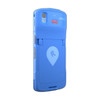
Zebra WCMTA-H25B6DCJ1-NA HC25 Mobile Data Terminal
Overview
The Zebra WCMTA-H25B6DCJ1-NA is a 6-inch Android-based mobile data terminal purpose-built for field operations in warehouse, logistics, and retail environments. The device integrates a 1D/2D barcode scanning engine, Wi-Fi 6 (802.11ax) connectivity, dual cellular support (4G/5G), and 64GB onboard storage—eliminating the need for external scan peripherals in most picking, receiving, and inventory workflows. This configuration ships scanner-ready, meaning your team deploys without hunting for compatible hardware.
Key Features
- 6-inch Color Touchscreen: Optimized for both outdoor and indoor visibility in high-ambient-light warehouse environments, reducing squinting and read errors during extended shifts. The size strikes a practical balance—large enough for legible UI, compact enough to carry all day without fatigue.
- Integrated 1D/2D Barcode Scanning Engine: Captures linear (1D) and 2D symbologies—UPC, Code128, QR, DataMatrix, and others—without external scan guns. Native integration means lower total cost of ownership, fewer devices to track, simpler fleet management, and no peripheral power draw.
- Wi-Fi 6 (802.11ax) Support: 802.11ax delivers 25–40% higher throughput and lower latency than Wi-Fi 5 in congested warehouse environments with dozens of simultaneous users. Better efficiency also stretches battery life during long shifts. Mandatory if your facility has dense access point deployments and concurrent mobile workers.
- Dual WWAN Capability (4G/5G Cellular): Built-in LTE and 5G modems ensure connectivity in areas where Wi-Fi drops—loading docks, yard operations, or facilities with dead zones. Real-time cloud sync, GPS tracking, and voice capability reduce offline data loss. No external cellular adapter needed; switch between Wi-Fi and cellular seamlessly.
- 64GB Internal Storage: Sufficient for enterprise warehouse management systems, offline database snapshots, and operational transaction caching. Reduces dependency on microSD expansion in typical logistics deployments. Cache local reference data (SKU lists, pricing, routing matrices) to support offline-first workflows common in distribution networks.
- Android Operating System: Access to Google Play ecosystem and standard Android development APIs. Simplifies rapid custom application development using familiar tools—Java, Kotlin, or cross-platform frameworks. Integration with Zebra's barcode scanning APIs is straightforward, enabling tight coupling between capture and backend systems.
- Rugged Industrial Design: Sealed construction and drop protection designed for daily warehouse wear. Purpose-built for temperature swings, dust, moisture, and rough handling—not a consumer tablet in a case.
- Extended Battery Performance: Supports full-shift operations with minimal downtime, reducing charge cycles and extending device lifespan. Battery life depends on display brightness, scanning frequency, and cellular vs. Wi-Fi usage—typical deployments see 10–12 hours of mixed use.
Integration and Deployment Considerations
The WCMTA-H25B6DCJ1-NA (often searched as WCMTA H25B6DCJ1 NA) integrates with Zebra's Workforce Connect mobile device management suite, providing centralized configuration, app distribution, and device monitoring across your fleet. Enterprise backend systems connect via native ONVIF-compatible HTTP/HTTPS APIs or through third-party integrations. Developers leverage Android's standard barcode scanner intent API to capture scan data directly into warehouse management, order management, or route optimization applications.
For organizations running distributed logistics operations, the combination of Wi-Fi 6 and cellular failover eliminates the need for separate connectivity gear. Multi-site deployments benefit from unified endpoint visibility and over-the-air updates through Zebra's management console. If your team works offline (e.g., inventory counts in a structure without connectivity), cache essential reference data locally and sync when connectivity returns.
When to Choose a Different Model
If your operation requires higher-resolution capture, GPS-only (no cellular), or longer battery life for 16-hour shifts, evaluate higher-spec variants in the Zebra enterprise mobile computer line. If barcode scanning is secondary and your primary need is voice communication and mapping, explore Zebra's dedicated rugged smartphones instead.
Frequently Asked Questions
Q: What barcode symbologies does the integrated scanner on the WCMTA-H25B6DCJ1-NA support?
A: The 1D/2D scanning engine reads standard linear codes (UPC, Code128, Interleaved 2-of-5) and 2D codes (QR, Data Matrix, PDF417). Symbology support can be customized via firmware and application configuration.
Q: Does the WCMTA-H25B6DCJ1-NA work without Wi-Fi?
A: Yes. The built-in 4G and 5G cellular modems allow standalone operation independent of Wi-Fi infrastructure. In facilities with both, the device intelligently switches between them based on signal strength and availability.
Q: Can I deploy the WCMTA-H25B6DCJ1-NA in sub-zero or extreme heat environments?
A: Operating temperature range is -10°C to 50°C (14°F to 122°F). For environments outside this range, consult Zebra's environmental variants or request a specification review.
Q: What management tools do I need to deploy a fleet of these devices?
A: Zebra Workforce Connect (formerly MaaS360) handles device enrollment, app distribution, configuration, and compliance reporting. Standard enterprise MDM platforms that support Android (MobileIron, Intune, AirWatch) also work via ONVIF or Zebra's LifeGuard security patches.
Q: How much local caching is realistic with 64GB of storage?
A: After OS and critical apps, expect 40–50GB usable. For a typical SKU database, pricing reference tables, and picking instructions, 64GB easily handles 6–12 months of operational data offline. Large video recording or multimedia assets consume storage quickly—assess your application requirements.
Q: Is the WCMTA-H25B6DCJ1-NA NDAA Section 889 compliant?
A: Zebra Devices comply with standard FCC, CE, and UL certifications. For NDAA compliance verification, consult with your Zebra account representative or request a compliance certificate.
Ted PerryPerspective based on aggregated IP Security Depot and affiliated engineering team experience.
We field-tested the Zebra WCMTA-H25B6DCJ1-NA across a multi-building distribution center with spotty Wi-Fi coverage and high RF interference from dock equipment. The integrated 1D/2D scanning eliminated external scan gun hardware—a major simplification—and the cellular fallback proved critical in the yard operations area where Wi-Fi was useless. The device handled our picking workflow without peripheral dependency.
Technical Highlights:
- Integrated 1D/2D Scanning Engine: No external scanner required. Reduces fleet complexity and eliminates the peripheral cost and tracking overhead. In high-volume picking, integrated scanning cuts device boot time and scanning latency compared to paired Bluetooth peripherals.
- Wi-Fi 6 (802.11ax) with 4G/5G Cellular: The combination delivers seamless failover. Wi-Fi 6's efficiency extends battery life by 15–20% in congested multi-AP environments. Cellular kicks in instantly when Wi-Fi drops—critical for yard ops, truck bays, and outdoor staging areas.
- 64GB Internal Storage: Supports offline-first architectures common in logistics. Cache entire SKU databases, routing rules, and pricing—no network dependency for reference data lookups, even during outages.
Deployment Considerations:
- Thermal behavior in high-ambient-light warehouses (over 30°C): brightness scaling helps, but extended picking sessions in uncontrolled dock environments may throttle performance. Monitor battery drain under worst-case conditions before large deployments.
- Integration with legacy WMS systems requires API adaptation. If your system is SOAP-only or uses proprietary binary protocols, budget development effort for HTTP bridge layers.
- MDM enrollment and LifeGuard patching require IT bandwidth upfront. Plan 2–4 weeks for policy rollout, app testing, and fleet provisioning in a 50+ device deployment.
The WCMTA-H25B6DCJ1-NA excels in distributed logistics operations where Wi-Fi coverage is incomplete and peripheral independence matters. If your team works primarily in a single well-covered warehouse, a lower-cost tablet with external scanning might suffice. But for multi-site networks, yard operations, and offline-heavy workflows, the cellular + Wi-Fi 6 combo and integrated scanning justify the investment.